Vranov nad Dyji Chateau
A baroque house on a crag over the Dyje, with an oval Hall of Ancestors by Fischer von Erlach.
Updated 19 October 2026
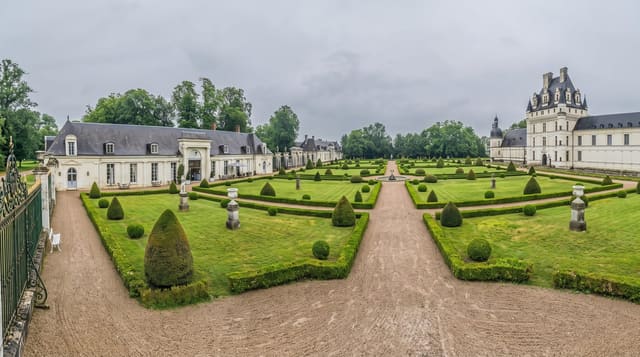
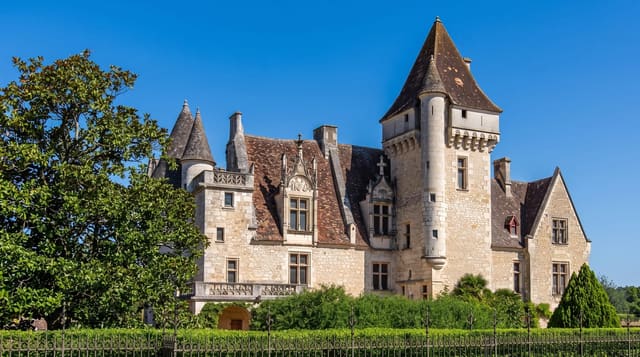
Vranov stands on a rock high above a bend of the Dyje and was rebuilt from 1687 for the Althann family by Johann Bernhard Fischer von Erlach, at the start of his career, after a fire destroyed the medieval castle. His Hall of Ancestors is the reason to come: a tall oval room projecting from the rock face, with a dome frescoed by Johann Michael Rottmayr and statues of the family's forebears in niches, arranged so the room reads as a dynastic argument, and it is one of the finest baroque interiors in Moravia. There is a chapel by the same architect. Later owners, the Mniszek family, added a ceramics factory whose products are shown. The chateau appears above the Vranov reservoir in every photograph of the lake, and the Podyji national park begins downstream. The village below is a summer resort.
History
Cosmas of Prague first mentions Vranov in 1100 as a border castle, built by the dukes of Bohemia to defend the southern edge of Moravia against raids from the Austrian March. It stayed royal until 1323, when King John pawned it to Jindřich of Lipá; in 1421 the Lichtenburg family took control of the castle and market town, King Vladislaus II granted it to them as a hereditary possession in 1499, and they held it until 1516. In the 16th century it changed hands often, passing through the Lords of Boskovice, the Pernštejns, the Lords of Lomnice, the Kraigers of Krajk and the Dietrichsteins. Wolf Dietrich of Althann bought it in 1614, lost it seven years later for his part in the rebellion of the Bohemian Estates, and it was sold to Johann Ernst of Scherfenberg; Michael Johann II Althann recovered it in 1680 and commissioned Johann Bernhard Fischer von Erlach to design the Hall of the Ancestors, an oval hall under a great cupola built between 1687 and 1695, with statues of the ancestors by Tobias Kracker and a glorification of the family painted in the dome by Johann Michael Rottmayr, and a Baroque chapel of the Holy Trinity with the family vault. In 1799 the castle passed to Count Stanislaw Mniszech (1774-1846), then by inheritance to the Stadnicki family, and later to the von der Wense family from Brunswick-Lüneburg (Wikipedia, Vranov nad Dyjí Castle).
What's there
- The Hall of Ancestors - an oval room with a Rottmayr dome and family statues.
- Fischer von Erlach's early work - the rebuilding begun in 1687 after a fire.
- A crag above the Dyje - the position that makes the silhouette.
- Mniszek ceramics - the estate factory's products shown in the house.
When to go
April to October. Half a day.
Before you go
Guided tours only, seasonal, with separate routes for the hall and the ceramics. Closed Mondays. The village is a busy resort in July and August. Photography inside is restricted.
Nearby
Bitov castle is upstream; Podyji National Park begins below the dam.
Key facts
Source: Wikidata, item Q1417125, read on 18 October 2026.
What to pack for Vranov nad Dyji Chateau
Chosen from what this place is for. Tap a kit for the full checklist.
- Comfortable walking shoes - Sightseeing means kilometres of pavement and cobbles daily. Find on Amazon
- A slim anti-theft daypack - Zips that close properly; keep it in front in crowds and on transit. Find on Amazon
- A refillable water bottle - Many cities have public fountains; save money and plastic. Find on Amazon
- A light layer + compact umbrella - For museum air-con and a sudden shower. Find on Amazon
Some links on this page are Amazon affiliate links - if you buy through them we may earn a small commission at no extra cost to you.
All packing kitsPlan your trip
Where to start if Vranov nad Dyji Chateau is going on the list.
Booking links on this page are affiliate links - if you book through them we may earn a small commission at no extra cost to you. It never changes what we write about a place.
Opening times, ticket prices and seasonal closures change - check the official source before you go: official site.