Kynzvart Chateau
Metternich's country house, holding his library and a cabinet of curiosities with a mummy in it.
Updated 21 October 2026
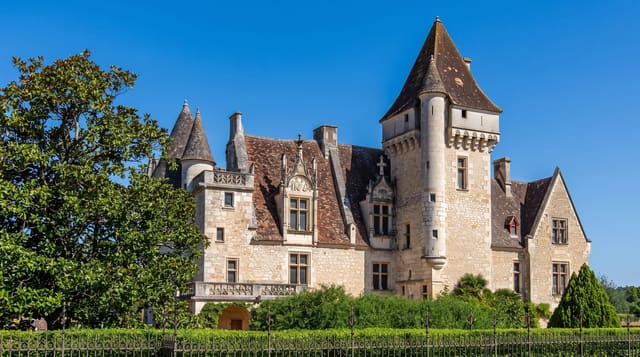
Kynzvart was rebuilt between 1821 and 1836 for Klemens von Metternich, the Austrian chancellor who ran European diplomacy after 1815, to designs by Pietro Nobile in a restrained Empire manner, and he used it as his country retreat. What makes it worth the trip is what he put in it. The library runs to about twenty-four thousand volumes with manuscripts and incunabula. The museum room is a genuine nineteenth-century cabinet of curiosities, assembled by Metternich and his son: Egyptian antiquities including a mummy and coffins, ethnographic material, natural history specimens, autographs of Napoleon, Goethe and Beethoven, and oddities collected for their strangeness. Very few such cabinets survive intact anywhere. There is a portrait gallery and state rooms. The park around, laid out in the English manner, runs to about two hundred and fifty hectares.
History
The first Schloss Königswart, built before 1600, collapsed, and after the Battle of White Mountain its remains were confiscated and by 1630 granted to the Metternich family. From 1682 to 1691 Count Philipp Emmerich von Metternich (1621-1698) turned the decayed ruins into a Baroque residence, and from 1821 to 1836 the Austrian chancellor Klemens Wenzel von Metternich remodelled it in neoclassical style with the architect Pietro Nobile. Its library includes over 200 incunabula, medieval manuscripts, prints and scientific works, and in 1828 a museum was founded for the natural science collections, coins, historical and technical curiosities, manuscripts, ancient Egyptian monuments, marble sculpture and Oriental art. Since 1830 the house has held the mummified remains of Qenamūn, an Egyptian man who most likely lived in the Eighteenth Dynasty, and it also holds those of Pentahutres, probably of the Twenty-first Dynasty (Wikipedia, Kynžvart Castle).
The main sights
- Metternich's library - about twenty-four thousand volumes with manuscripts.
- An intact cabinet of curiosities - Egyptian material, a mummy, and collected oddities.
- Autographs - Napoleon, Goethe and Beethoven among the papers.
- A 250-hectare English park - laid out around the Empire-style house.
When to go
April to October. Half a day.
Before you go
Guided tours only, seasonal, on several routes with separate tickets. Closed Mondays. Photography inside is restricted. The Egyptian human remains are displayed frankly and some visitors find that uncomfortable.
Nearby
Marianske Lazne is eight kilometres east; Becov is north.
Key facts
Source: Wikidata, item Q143018, read on 18 October 2026.
What to pack for Kynzvart Chateau
Chosen from what this place is for. Tap a kit for the full checklist.
- Comfortable walking shoes - Sightseeing means kilometres of pavement and cobbles daily. Find on Amazon
- A slim anti-theft daypack - Zips that close properly; keep it in front in crowds and on transit. Find on Amazon
- A refillable water bottle - Many cities have public fountains; save money and plastic. Find on Amazon
- A light layer + compact umbrella - For museum air-con and a sudden shower. Find on Amazon
Some links on this page are Amazon affiliate links - if you buy through them we may earn a small commission at no extra cost to you.
All packing kitsPlan your trip
Where to start if Kynzvart Chateau is going on the list.
Booking links on this page are affiliate links - if you book through them we may earn a small commission at no extra cost to you. It never changes what we write about a place.
Opening times, ticket prices and seasonal closures change - check the official source before you go: official site.