Dolni Vitkovice
A preserved ironworks in Ostrava with blast furnaces, gantries and a gasholder converted into a concert hall, open to walk through.
Updated 19 October 2026
AI illustration
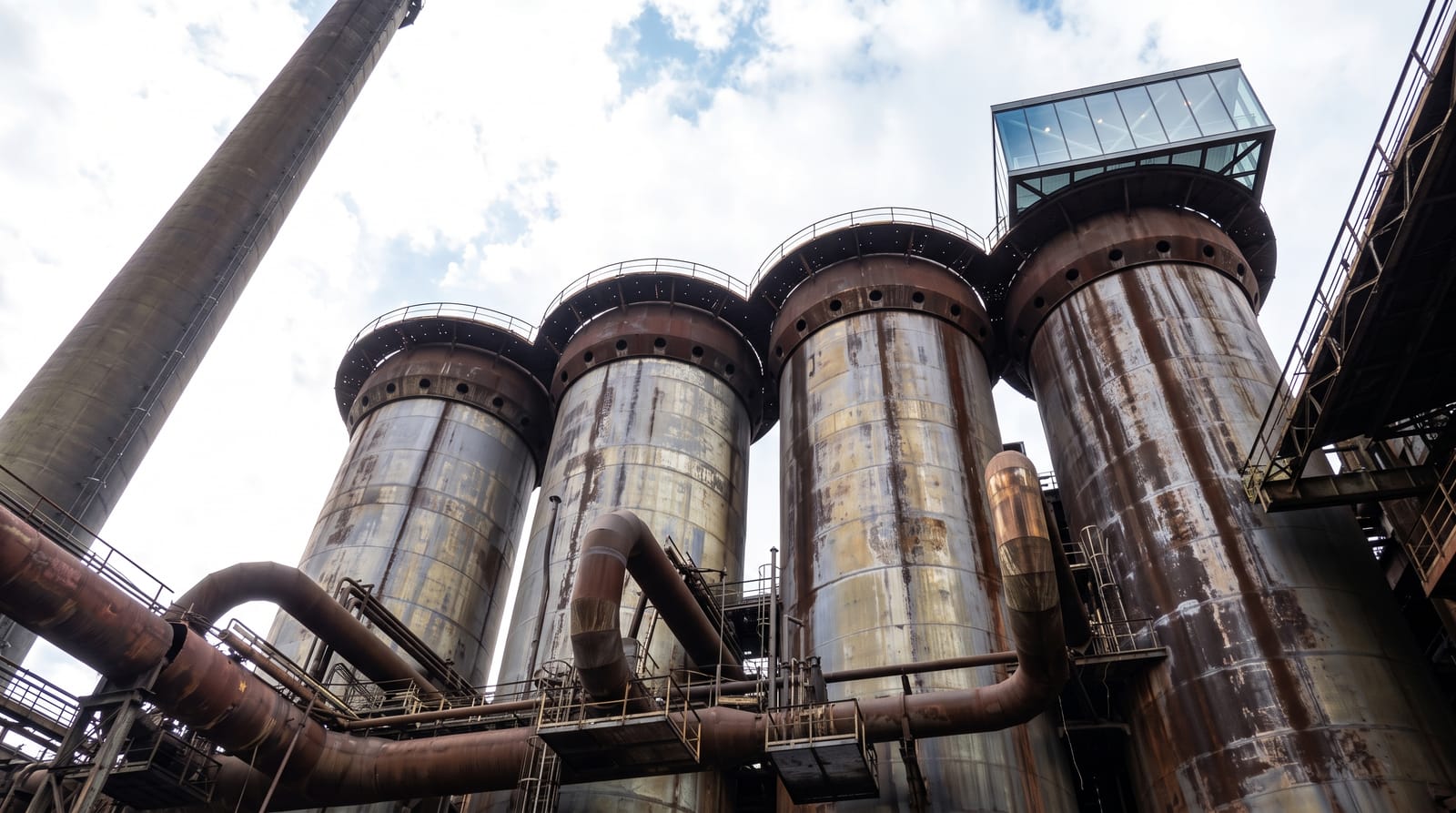
For a century and a half Ostrava made iron, and when the furnaces went cold in the 1990s the plant was left standing instead of being cleared. The result is an intact industrial landscape in the middle of a city: blast furnaces, hot-blast stoves, gantries, conveyor bridges and a mine headframe, all rust red and open to walk among. A guided route climbs one of the furnaces on external stairs to a glazed viewing box added on top, looking over the works and the flat Silesian country beyond. The old gasholder has been rebuilt as an auditorium, and a former energy building now houses a large hands-on science museum aimed mainly at children.
History
The Vítkovice ironworks began with an initiative of Archbishop Rudolf of Olomouc in December 1828; his smelter, the Rudolfshütte, started work in mid-September 1830, and a coke plant followed a year later. The first coke-fired blast furnace was lit in 1836 and a second two years later, and by 1852 the works had its own mine. Over time six blast furnaces operated, shut down one by one until the last tapping on 27 September 1998. The surviving complex of mine, coke ovens and blast furnaces, nicknamed the "Ostrava Hradčany", is listed as European cultural heritage and has been on UNESCO's tentative list since 2001 (Wikipedia, Lower Vítkovice).
What to look for
- The blast furnace climb - external stairs up the furnace to the glazed lookout added on top.
- The ironworks walk - yards, gantries and conveyor bridges left in place between the furnaces.
- The gasholder auditorium - the round gas tank rebuilt as a concert and conference hall.
- The science centre - the interactive museum filling the former energy building.
When to go
April to October for the outdoor tours, which run in most weather but are unpleasant in cold or rain; the science centre works year round. Furnace tours are timed and limited in group size, so book on busy weekends. Summer evenings bring concerts, and a large music festival takes over the site in July.
Good to know
The furnace tour is a long climb on open metal stairs with a lift only part of the way, and it will not suit anyone uneasy with heights. Commentary is often Czech-only outside booked English slots. Ostrava is a heavy industrial city and the surrounding district is bleak. Wear closed shoes.
Nearby
The Landek Park mining museum with its underground tour is on the north side of the city.
Key facts
Source: Wikidata, item Q12016587, read on 18 October 2026.
What to pack for Dolni Vitkovice
Chosen from what this place is for. Tap a kit for the full checklist.
- Head torch + spare batteries - Hands-free light is essential; caves are truly dark. Find on Amazon
- Comfortable walking shoes - Sightseeing means kilometres of pavement and cobbles daily. Find on Amazon
- Grippy closed shoes - Cave floors are wet, muddy and slick with formations. Find on Amazon
- A slim anti-theft daypack - Zips that close properly; keep it in front in crowds and on transit. Find on Amazon
Some links on this page are Amazon affiliate links - if you buy through them we may earn a small commission at no extra cost to you.
All packing kitsPlan your trip
Where to start if Dolni Vitkovice is going on the list.
Booking links on this page are affiliate links - if you book through them we may earn a small commission at no extra cost to you. It never changes what we write about a place.
Opening times, ticket prices and seasonal closures change - check the official source before you go: official site.