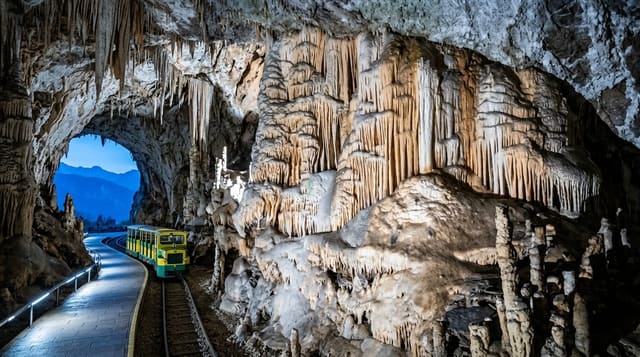
Cuevas de Bellamar
A limestone cave system near Matanzas, found by a slave in 1861 and open to visitors ever since.
Updated 1 September 2026
The Bellamar caves were found in 1861 when a worker quarrying limestone broke through into a chamber, and they were opened to visitors within a few years, which makes them among the oldest show caves in the Americas. Around three kilometres have been surveyed and a section is lit and walkable. The formations are the draw: crystal-lined galleries, the twelve-metre column called the Manto de Colon, and needle-like helictites growing against gravity. Tours run to a fixed schedule with a guide.
The landscape
- The Manto de Colon - a column of around twelve metres in the main gallery.
- The crystal galleries - chambers lined with calcite crystal, which is what the cave is known for.
- The helictites - fine formations growing sideways and upward against gravity.
- The lit route - a walkable section with steps and handrails, covered on the guided tour.
When to go
Year-round, since the cave temperature is constant and the humidity high. Tours run at set times through the day. It is a good option when the weather outside is poor.
Things to know
The stair down and back is steep and there are a lot of steps. Humidity inside is close to saturation and it is uncomfortable for some visitors. The tour is guided only, in Spanish unless arranged otherwise, and the lighting has seen better days.
Nearby
Matanzas is ten minutes northwest, and the Saturno cave is east towards Varadero.
Key facts
Source: Wikidata, item Q23804776, read on 18 October 2026.
What to pack for Cuevas de Bellamar
Chosen from what this place is for. Tap a kit for the full checklist.
- Head torch + spare batteries - Hands-free light is essential; caves are truly dark. Find on Amazon
- Strong insect repellent - DEET or picaridin; the jungle is where bites and disease risk are highest. Find on Amazon
- Grippy closed shoes - Cave floors are wet, muddy and slick with formations. Find on Amazon
- Long, light, quick-dry clothing - Covers skin from insects and sun without cooking you in the humidity. Find on Amazon
Some links on this page are Amazon affiliate links - if you buy through them we may earn a small commission at no extra cost to you.
All packing kitsPlan your trip
Where to start if Cuevas de Bellamar is going on the list.
Booking links on this page are affiliate links - if you book through them we may earn a small commission at no extra cost to you. It never changes what we write about a place.
Opening times, ticket prices and seasonal closures change - check the official source before you go: official site.