Zagreb and the Upper Town
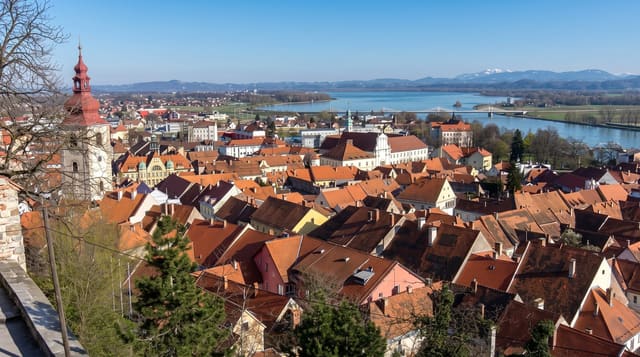
Croatia's capital, an easygoing city of Austro-Hungarian boulevards below a medieval hilltop old town of red roofs, a tiled church and a funicular.
Updated 30 August 2026

AI illustration
Zagreb, the Croatian capital, is often skipped by visitors racing to the coast, but it is a relaxed, cultured and genuinely likeable city that rewards a day or two. Its historic heart is the Upper Town, or Gornji Grad, a hilltop of cobbled medieval streets reached on foot or by a tiny, steep funicular, one of the shortest public railways in the world, where the church of St Mark wears a famously colourful tiled roof bearing coats of arms, and gas lamps are still lit by hand at dusk. Below spreads the nineteenth-century Lower Town, a grid of grand Austro-Hungarian buildings, leafy squares and a green horseshoe of parks and galleries. Zagreb has a strong café culture, a lively central market at Dolac, and an outsized collection of museums, from the moving Museum of Broken Relationships to fine art. In December it is famous for one of Europe's most celebrated Christmas markets, when the whole centre fills with lights and stalls.
Highlights
- St Mark's Church - the medieval church with its colourful tiled coat-of-arms roof.
- The funicular and Upper Town - the steep little railway up to the cobbled hilltop streets.
- Dolac Market - the bustling central produce market below the cathedral.
- The Lower Town museums - from fine art to the Museum of Broken Relationships.
When to go
Spring and autumn are mild and pleasant for wandering; summer is warm and quieter as locals head to the coast, and December brings the celebrated Advent Christmas market. The city is walkable year-round. Cafés spill onto the streets in the warmer months, part of the local ritual.
Practical notes
Zagreb is a real working capital rather than a coastal showpiece, so those expecting Adriatic glamour should adjust expectations; its pleasures are cafés, museums and atmosphere rather than big sights, and the centre is compact enough to see in a day or two. Many visitors treat it only as an airport stopover, which sells it short. Some museums keep limited hours, so check ahead.
Nearby
The Plitvice Lakes are a couple of hours south; the Zagorje region's castles and spa towns lie to the north.
What to pack for Zagreb and the Upper Town
Chosen from what this place is for. Tap a kit for the full checklist.
- Comfortable walking shoes - Sightseeing means kilometres of pavement and cobbles daily. Find on Amazon
- Modest clothing - Shoulders and knees covered - the single most common requirement. Find on Amazon
- A slim anti-theft daypack - Zips that close properly; keep it in front in crowds and on transit. Find on Amazon
- A scarf or shawl - To cover the head or shoulders on entry; women especially at mosques. Find on Amazon
Some links on this page are Amazon affiliate links - if you buy through them we may earn a small commission at no extra cost to you.
All packing kitsPlan your trip
Where to start if Zagreb and the Upper Town is going on the list.
Booking links on this page are affiliate links - if you book through them we may earn a small commission at no extra cost to you. It never changes what we write about a place.
Opening times, ticket prices and seasonal closures change - check the official source before you go: official site.