Šibenik Cathedral
A cathedral built entirely of interlocking stone without mortar or timber, ringed by seventy-one carved heads of ordinary fifteenth-century faces.
Updated 18 October 2026
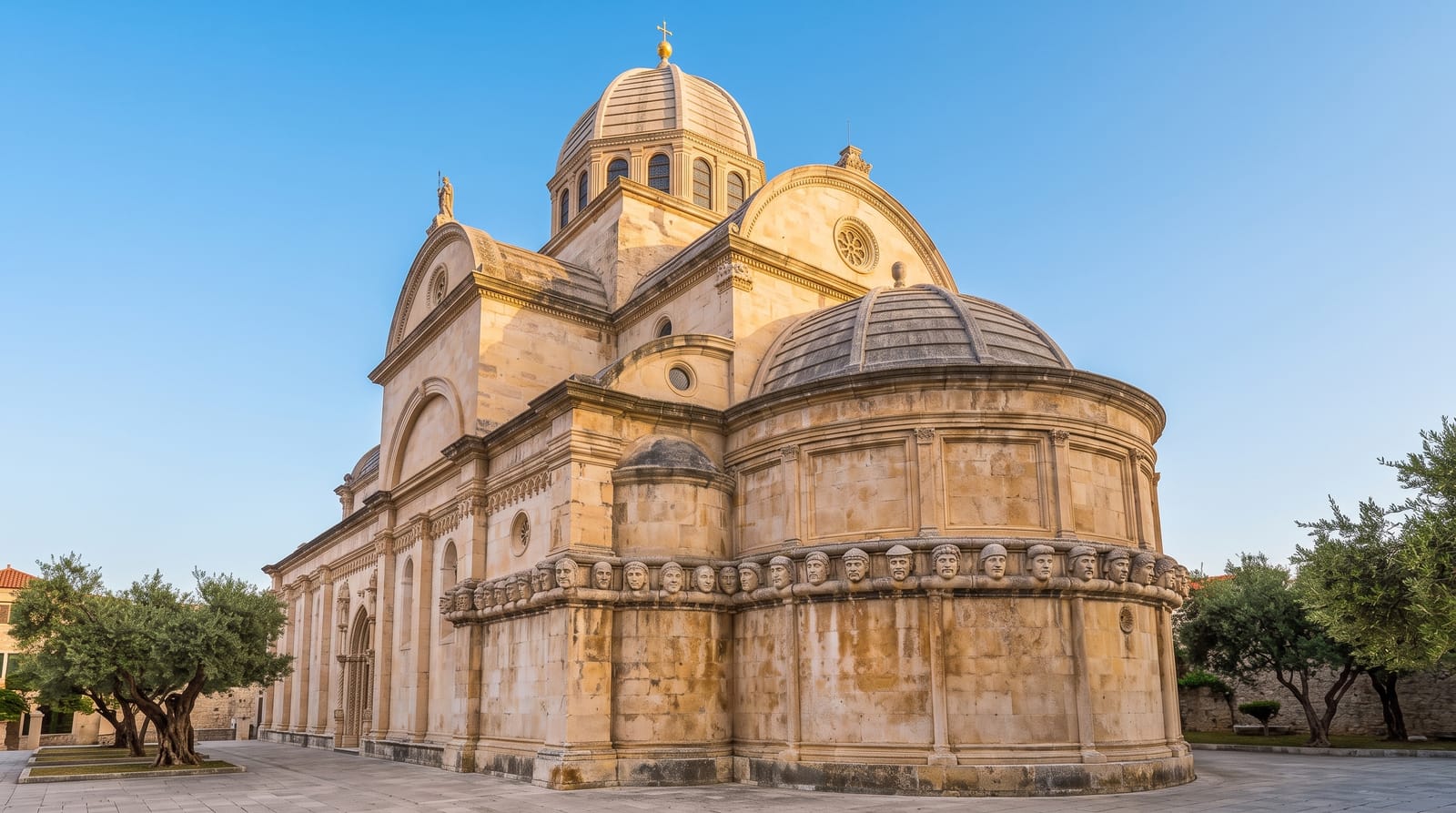
AI illustration
UNESCO World Heritage
The Cathedral of St James in Šibenik is a structural oddity that became a masterpiece. Built between 1431 and 1536, it is constructed entirely from interlocking stone slabs, with no brick, no mortar in the vaults and no timber anywhere in the roof or dome, a technique that has no real parallel in Europe. Two architects shaped it, the Venetian-trained Giorgio da Sebenico and the Tuscan Niccolò di Giovanni Fiorentino, and the join between Gothic below and Renaissance above is visible as you look up. Its most famous feature runs around the outside of the apses: a frieze of seventy-one carved stone heads, portraits of Šibenik townspeople of the 1400s, some serene, some scowling, one apparently mid-complaint. It is one of the few places where you can look a fifteenth-century crowd in the face.
History
Šibenik is first recorded in 1066, in a document of King Petar Krešimir IV, and it won broad autonomy from King Béla IV in 1251 and its own bishopric from Pope Boniface VIII on 1 May 1298. On 10 April 1402, at the initiative of Bishop Bogdan Pulšić, a council of citizens decided to replace the old Romanesque church of St James with a cathedral that would be wider, taller and grander; Venetian Gothic architects and local stonemasons began the walls, the lower facade and the portals, but war with Venice in 1409-1412 diverted the stone to the city's fortifications, and work resumed only in 1424. In May 1430 the bishop signed an agreement with the Venetian master builder Francesco di Giacomo to direct the building, which was then shaped above all by Juraj Dalmatinac and Nikola Firentinac and built entirely of stone between 1431 and 1536 (Wikipedia, Šibenik Cathedral).
What's there
- The seventy-one heads - the exterior frieze of carved townspeople around the apses.
- The stone-slab dome - assembled without timber or mortar, best appreciated from inside.
- The baptistery - a small vaulted chamber of dense carved stonework beneath the church.
- St Michael's Fortress - above the old town, with a summer stage and a view over the channel.
When to go
May, June, September and October give warm weather without the August crush on the coast. The fortresses above the town host summer concerts. Midday light flattens the carved heads; morning or late afternoon shows them properly.
What to expect
Šibenik is often skipped between Split and Zadar, which is its advantage and the reason it stays manageable. The old town is steep and stepped, hard going in heat and unsuitable for wheels. The cathedral interior is plainer than the exterior promises; the carving outside is the reason to come.
Nearby
Krka National Park is inland; the Kornati archipelago sails from the coast here.
Key facts
Source: Wikidata, item Q391973, read on 18 October 2026.
What to pack for Šibenik Cathedral
Chosen from what this place is for. Tap a kit for the full checklist.
- Comfortable walking shoes - Sightseeing means kilometres of pavement and cobbles daily. Find on Amazon
- Modest clothing - Shoulders and knees covered - the single most common requirement. Find on Amazon
- A slim anti-theft daypack - Zips that close properly; keep it in front in crowds and on transit. Find on Amazon
- A scarf or shawl - To cover the head or shoulders on entry; women especially at mosques. Find on Amazon
Some links on this page are Amazon affiliate links - if you buy through them we may earn a small commission at no extra cost to you.
All packing kitsPlan your trip
Where to start if Šibenik Cathedral is going on the list.
Booking links on this page are affiliate links - if you book through them we may earn a small commission at no extra cost to you. It never changes what we write about a place.
Opening times, ticket prices and seasonal closures change - check the official source before you go: official site.


