Tamarindo
Guanacaste's busiest beach town, a reliable beginner surf break with an estuary of crocodiles and howler monkeys at one end.
Updated 19 October 2026
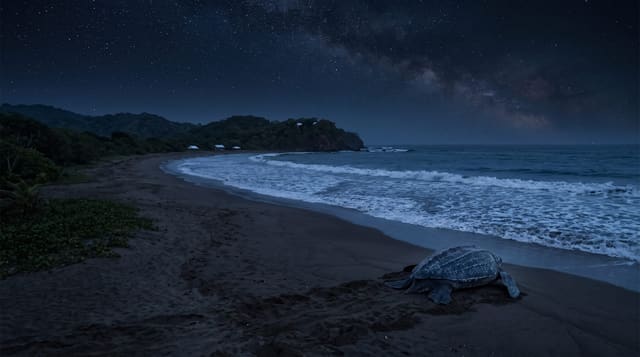
AI illustration
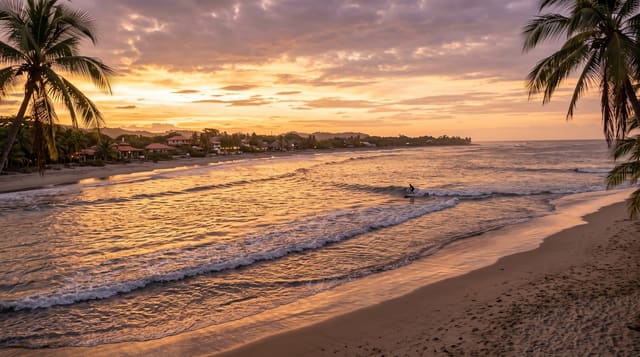
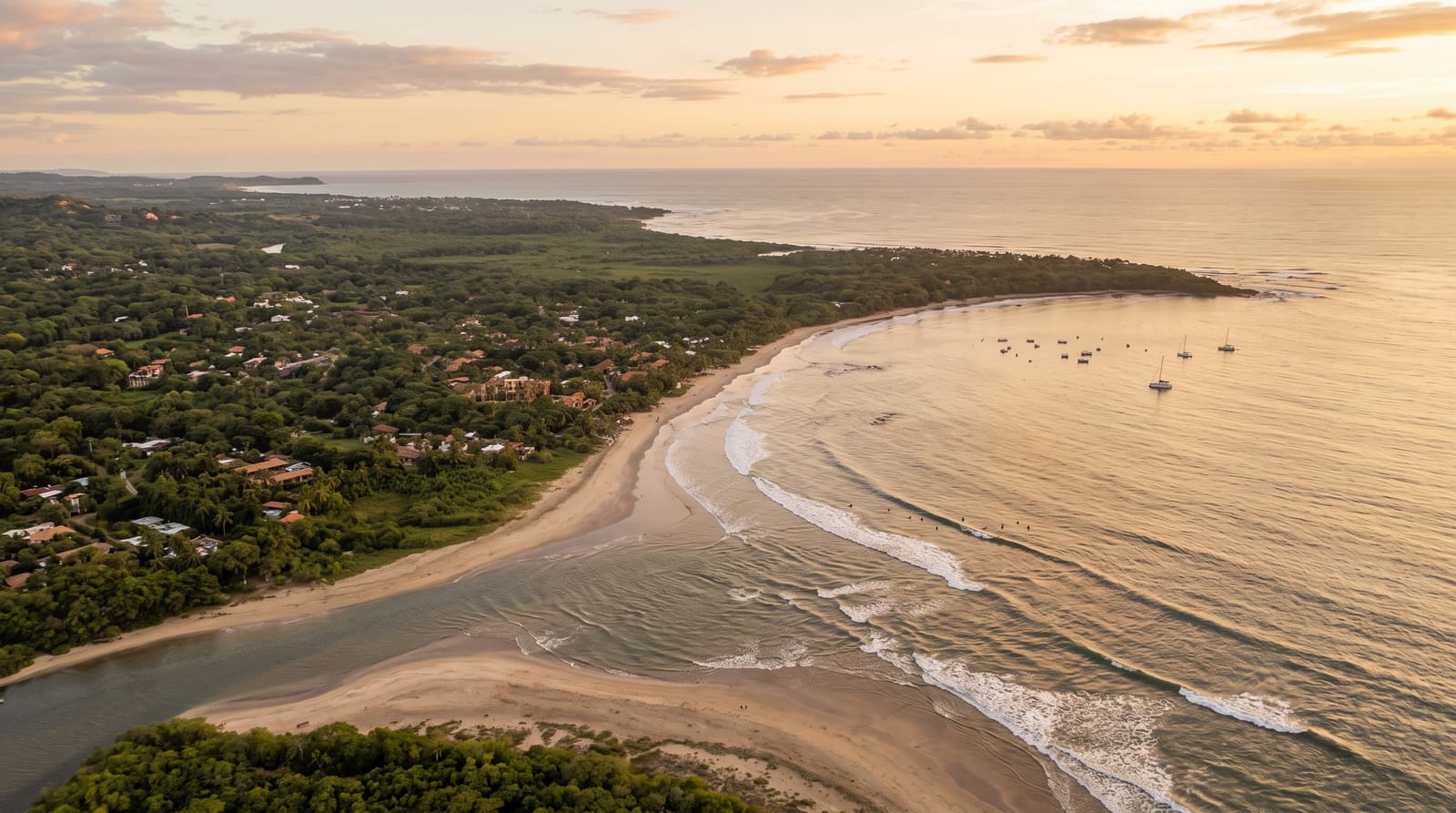
Tamarindo is the most developed beach town on the northern Pacific coast, built around a long sandy bay with a break that is forgiving enough to have made it the country's main place to learn to surf. The town behind it is a strip of surf schools, restaurants and hotels with a large foreign resident population, and it has grown very fast. At the northern end the Matapalo estuary separates it from Playa Grande and the leatherback park, and boat trips up it find crocodiles, howler monkeys and abundant birds within a few hundred metres of the bars. Sunset on the beach is the daily fixture.
History
Tamarindo began as a small village of a few families who lived largely by fishing. In 1985 the Texas businessman Russell Wenrich bought land there and began building beachside cabins; five years later he met Robert August, star of the 1966 surf film The Endless Summer, who moved to the town, and Wenrich then persuaded the Costa Rican tourism agency to support filming in Tamarindo for the 1994 sequel The Endless Summer II. The film opened with scenes from Tamarindo and is generally credited with starting the boom that turned the fishing village into a tourist centre. Tamarindo was made a town by executive decree on 27 November 1995, and from 2003 international flights into nearby Liberia brought it within a few hours of Miami. Its beach lost the Blue Flag for pollution in 2004, regained it in 2006, lost it again the next year and, after years of work, won it back in 2018 (Wikipedia, Tamarindo, Costa Rica).
What's there
- The surf break - forgiving beach and river-mouth waves for beginners.
- The estuary - crocodiles and howlers a few hundred metres from town.
- Sunset - the daily gathering on the sand.
- Playa Langosta - the quieter beach immediately south.
When to go
December to April is the dry season, hot and busy. May to November is greener, much quieter and considerably cheaper, with afternoon rain and better surf on some swells. Christmas and Easter book out entirely.
What to expect
Development has run ahead of infrastructure and water quality at the beach has been a documented problem, particularly in the wet season when runoff enters the bay; check current advisories. The town is heavily commercialised and touting on the beach is constant. Riptides at the river mouth are strong. Prices are among the highest in the country.
Nearby
Playa Grande and Las Baulas are across the estuary; Playa Conchal is half an hour north.
What to pack for Tamarindo
Chosen from what this place is for. Tap a kit for the full checklist.
- Travel rod + reel - A packable multi-piece rod fits in a case and covers most holiday fishing. Find on Amazon
- Reef-safe sunscreen - High SPF that will not bleach the coral you are swimming over. Find on Amazon
- Quick-dry clothing - Board shorts or synthetics that shrug off spray and dry fast. Find on Amazon
- A small tackle selection - Hooks, weights, line and a few lures or flies suited to local waters. Find on Amazon
Some links on this page are Amazon affiliate links - if you buy through them we may earn a small commission at no extra cost to you.
All packing kitsPlan your trip
Where to start if Tamarindo is going on the list.
Booking links on this page are affiliate links - if you book through them we may earn a small commission at no extra cost to you. It never changes what we write about a place.
Opening times, ticket prices and seasonal closures change - check the official source before you go: official site.