El Fosil Museum
A museum built over a Cretaceous marine reptile left in the ground where it was found in 1977, nearly complete.
Updated 30 August 2026
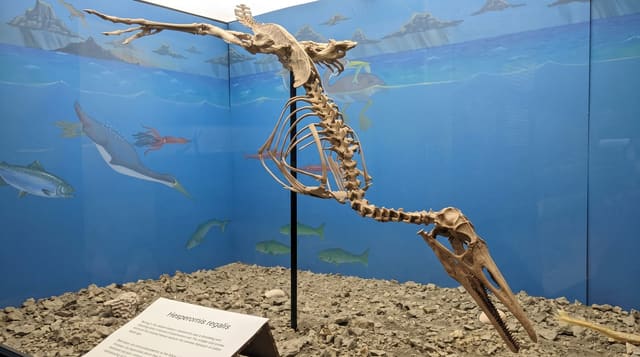
A farmer ploughing near Villa de Leyva in 1977 struck bone, and what was uncovered was a marine reptile of the pliosaur group about seven metres long, from around 110 to 120 million years ago when this high plateau was seabed. The decision taken was to leave it where it lay rather than excavate and move it - a building was put up over the specimen and it is displayed in the rock, on its side, with the skull, jaw and much of the body articulated as it was buried. That is unusual and worth more than a mounted skeleton would be. Smaller ammonites and other fossils from the valley are shown alongside. The area is dense with Cretaceous marine fossils and several other sites and museums are within a few kilometres.
Highlights
- A pliosaur about seven metres long - left in the rock where it was found.
- Skull and body articulated - as it was buried, not remounted.
- Rock from 110 to 120 million years ago - when the plateau was seabed.
- Ammonites from the valley - shown alongside.
When to go
Year round. An hour.
What to expect
It is one specimen and a small display - the visit is short. Labelling is in Spanish. The larger Centro de Investigaciones Paleontologicas nearby is more substantial. A taxi or bicycle is needed from Villa de Leyva.
Nearby
Villa de Leyva is east; El Infiernito is between.
What to pack for El Fosil Museum
Chosen from what this place is for. Tap a kit for the full checklist.
- Padded shorts - The one thing that makes a full day in the saddle bearable. Find on Amazon
- Comfortable walking shoes - Sightseeing means kilometres of pavement and cobbles daily. Find on Amazon
- Helmet - Bring your own if you have a good one; rentals vary wildly. Find on Amazon
- A slim anti-theft daypack - Zips that close properly; keep it in front in crowds and on transit. Find on Amazon
Some links on this page are Amazon affiliate links - if you buy through them we may earn a small commission at no extra cost to you.
All packing kitsPlan your trip
Where to start if El Fosil Museum is going on the list.
Booking links on this page are affiliate links - if you book through them we may earn a small commission at no extra cost to you. It never changes what we write about a place.
Opening times, ticket prices and seasonal closures change - check the official source before you go: official site.