The Barranquilla Carnival
Four days of masked parades, cumbia and marimonda costumes on the Caribbean coast, recognised by UNESCO as a masterpiece of intangible heritage.
Updated 19 October 2026
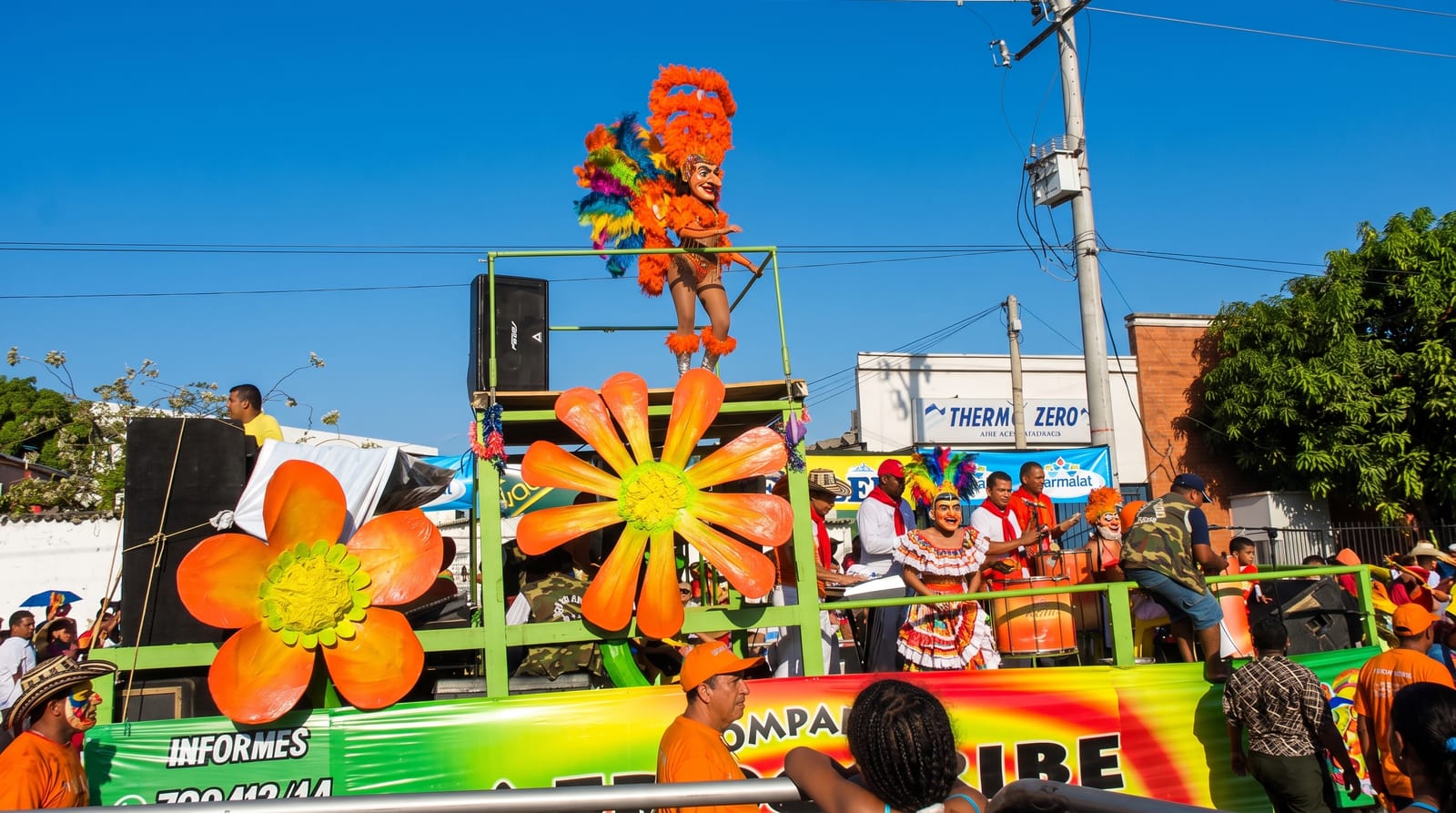
AI illustration
UNESCO Intangible Cultural Heritage
Barranquilla's carnival is the great popular festival of the Colombian Caribbean, held over the four days before Ash Wednesday, and UNESCO recognises it as intangible cultural heritage for the way it fuses African, Indigenous and European traditions into something entirely its own. Its opening parade, the Batalla de Flores, sends decorated floats and dance troupes along a long avenue lined with stands, followed on subsequent days by the Gran Parada of traditional groups, where the older dances are performed without floats. The costumes are the heart of it: the marimonda, a mask of a big-nosed, big-eared creature invented as a joke at the expense of the wealthy, along with jaguars, congo dancers in feathered headdresses, and the garabato figure who dances with Death. Cumbia, mapalé and champeta play everywhere, and the whole city stops working for four days.
History
The carnival's origins are uncertain - a blend of European, African and Indigenous traditions, at first a holiday for enslaved people - but its recorded history begins in 1888, when the figure of King Momo appeared. The first Battle of Flowers parade was held in 1903, the first carnival queen was chosen in 1918, the carnival was institutionalised in 1923, the Great Parade began in 1967 and the Guacherna in 1974; Colombia's Congress named it a cultural masterpiece of the nation in 2002, and UNESCO proclaimed it a Masterpiece of the Oral and Intangible Heritage of Humanity on 7 November 2003 (Wikipedia, Barranquilla Carnival).
What's there
- Batalla de Flores - the opening parade of floats, queens and dance troupes.
- Gran Parada de Tradición - the day given over to the older traditional groups.
- The marimonda - the big-nosed satirical mask that has become the carnival's emblem.
- Cumbia and congo dancing - the traditional dances performed through the streets.
When to go
The carnival falls on the four days before Ash Wednesday, so in February or early March depending on the year; the surrounding weeks hold pre-carnival events. Book flights and rooms months ahead, as the city fills and prices rise sharply. Grandstand seats along the parade routes are worth buying in advance.
Good to know
It is hot, extremely crowded and boisterous, with foam spray, flour and drink flying, so wear clothes you do not care about and keep phones and wallets secure or leave them behind. Street sections can get rough late in the day, and grandstand seats are the sensible option for a first visit. Barranquilla outside carnival is an industrial port city with little for visitors, so time the trip to the festival itself.
Nearby
Cartagena is two hours west along the coast; Santa Marta and Tayrona lie to the east.
Key facts
Source: Wikidata, item Q1122008, read on 18 October 2026.
What to pack for The Barranquilla Carnival
Chosen from what this place is for. Tap a kit for the full checklist.
- Comfortable walking shoes - Sightseeing means kilometres of pavement and cobbles daily. Find on Amazon
- A slim anti-theft daypack - Zips that close properly; keep it in front in crowds and on transit. Find on Amazon
- A refillable water bottle - Many cities have public fountains; save money and plastic. Find on Amazon
- A light layer + compact umbrella - For museum air-con and a sudden shower. Find on Amazon
Some links on this page are Amazon affiliate links - if you buy through them we may earn a small commission at no extra cost to you.
All packing kitsPlan your trip
Where to start if The Barranquilla Carnival is going on the list.
Booking links on this page are affiliate links - if you book through them we may earn a small commission at no extra cost to you. It never changes what we write about a place.
Opening times, ticket prices and seasonal closures change - check the official source before you go: official site.