Tianya Haijiao
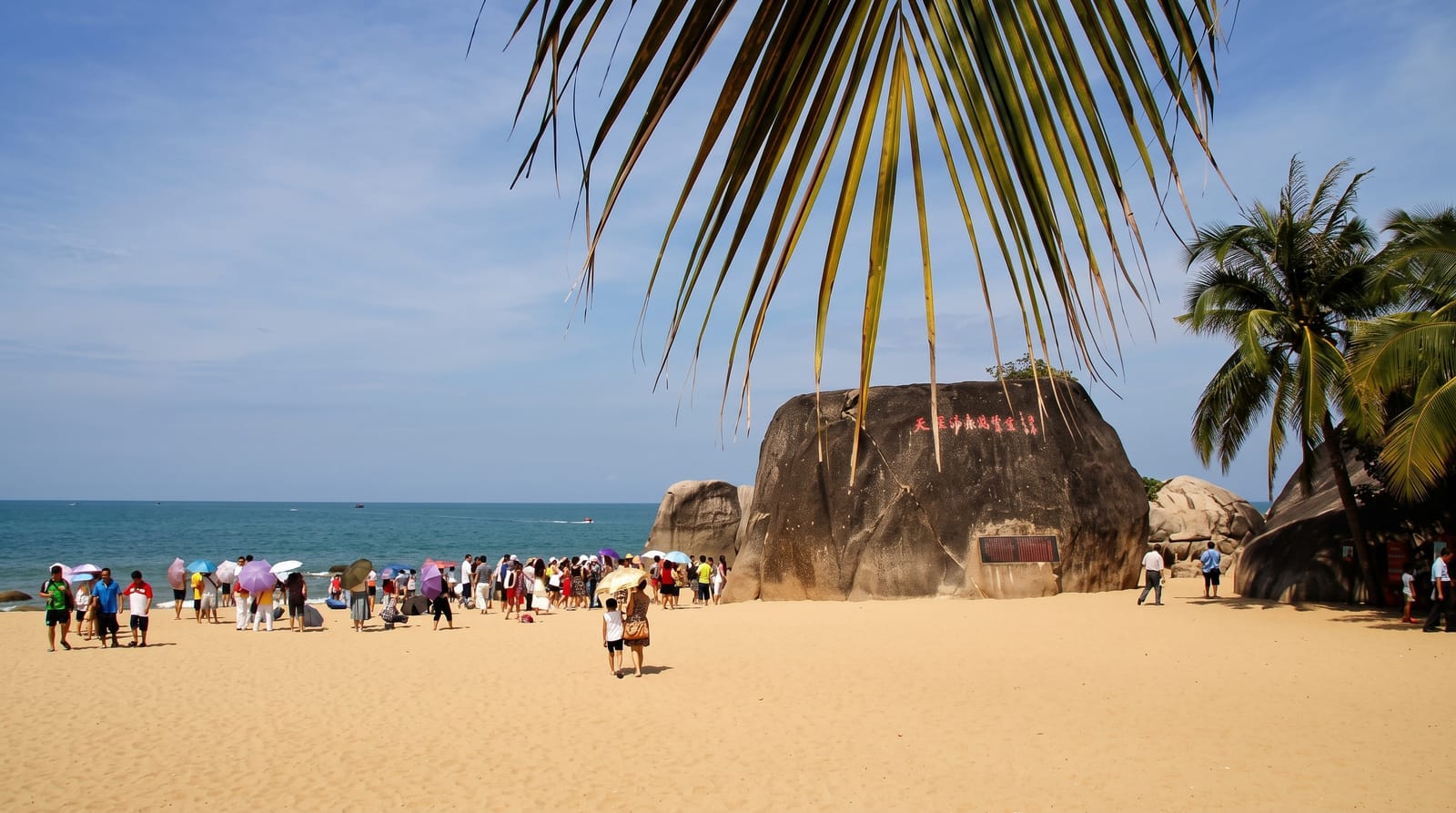
Boulders carved with characters meaning the edge of the sky and the corner of the sea, once China's symbol of exile.
Updated 4 September 2026
AI illustration
For most of imperial history Hainan was the end of the empire, the place officials were banished to, and the phrase tianya haijiao, the edge of the sky and the corner of the sea, came to mean the furthest point a person could be sent. Two large granite boulders on this beach carry the characters, carved in the Qing, and they became one of the most photographed spots in China, printed on stamps and banknotes, and now visited as much by couples for the romance the phrase acquired as by anyone thinking about exile. The beach is a scatter of rounded boulders under coconut palms with the sea beyond.
The main sights
- The carved boulders - the Qing inscriptions on granite by the water.
- The boulder beach - rounded rocks and palms along the shore.
- The exile history - the meaning of the phrase in imperial times.
- The photo ritual - couples queueing for the same shot.
When to go
November to April for the dry season; summer is hot with typhoon risk. Early morning avoids both crowds and the worst heat, and gives better light on the stones.
What to expect
It is essentially two inscribed rocks with long queues to photograph them, and many visitors find the entry price hard to justify. The park is commercialised with shuttle carts and stalls.
Nearby
Nanshan Temple lies west; Sanya is east.
Key facts
Source: Wikidata, item Q857031, read on 18 October 2026.
What to pack for Tianya Haijiao
Chosen from what this place is for. Tap a kit for the full checklist.
- Comfortable walking shoes - Sightseeing means kilometres of pavement and cobbles daily. Find on Amazon
- Modest clothing - Shoulders and knees covered - the single most common requirement. Find on Amazon
- A slim anti-theft daypack - Zips that close properly; keep it in front in crowds and on transit. Find on Amazon
- A scarf or shawl - To cover the head or shoulders on entry; women especially at mosques. Find on Amazon
Some links on this page are Amazon affiliate links - if you buy through them we may earn a small commission at no extra cost to you.
All packing kitsPlan your trip
Where to start if Tianya Haijiao is going on the list.
Booking links on this page are affiliate links - if you book through them we may earn a small commission at no extra cost to you. It never changes what we write about a place.
Opening times, ticket prices and seasonal closures change - check the official source before you go: official site.

