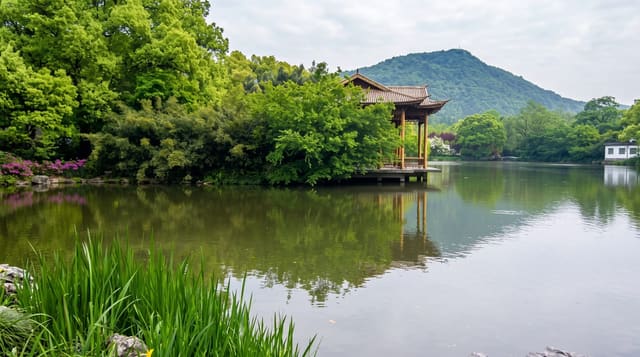
Lingyin Temple
One of China's largest Buddhist temples, beside a limestone hill carved with hundreds of rock Buddhas.
Updated 19 October 2026
AI illustration
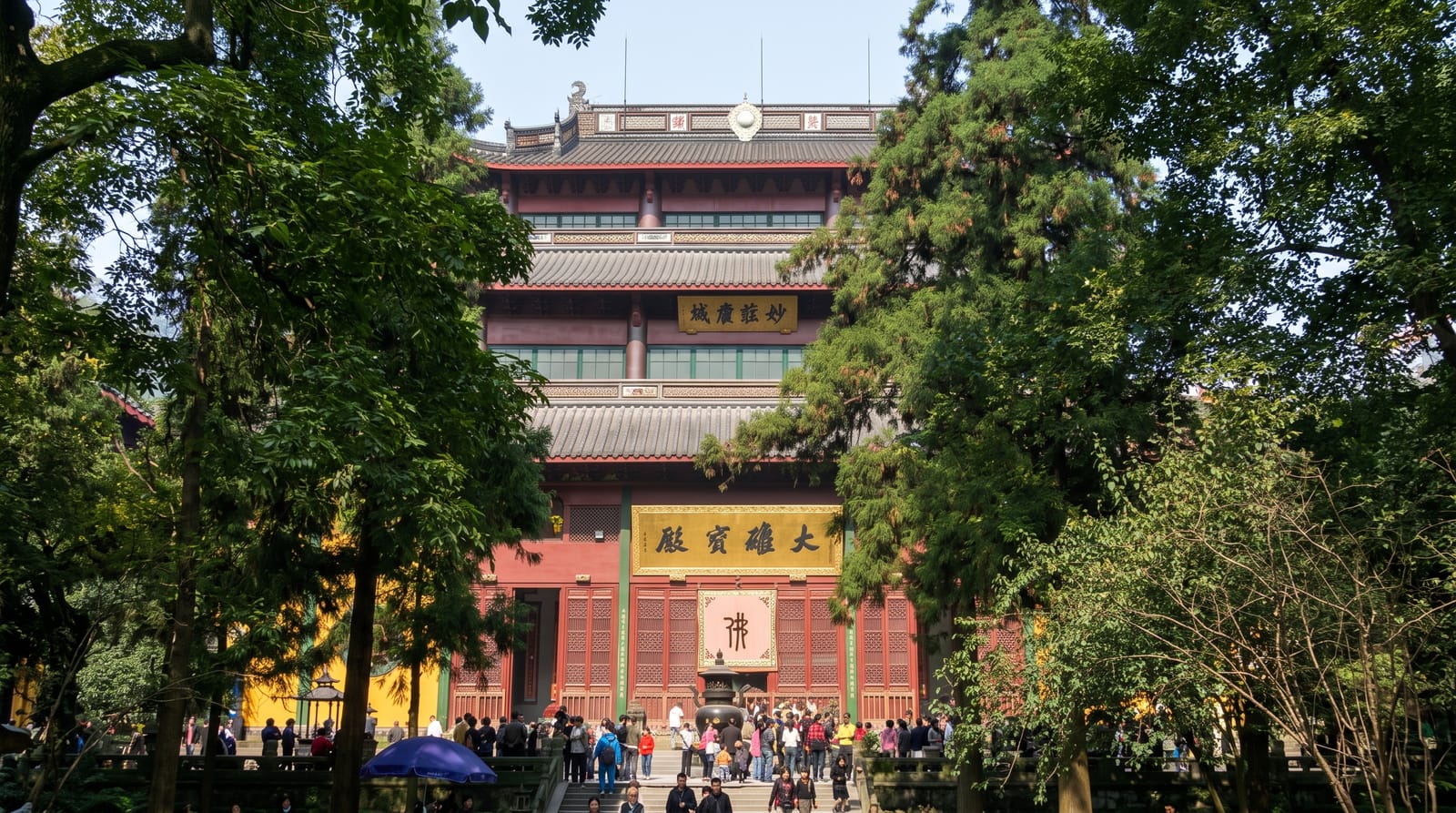
Lingyin was founded in 326 by an Indian monk and has been destroyed and rebuilt repeatedly, most recently in the nineteenth and twentieth centuries; it remains one of the largest and wealthiest Buddhist temples in China, with halls rising up a wooded slope and a twenty-four-metre camphor-wood Sakyamuni in the main hall. In front of it, the Feilai Feng, the peak that flew here, is a limestone outcrop carved between the tenth and fourteenth centuries with around three hundred and forty rock sculptures in niches and caves, including a laughing Maitreya with attendants that is among the best-known Buddhist carvings in southern China. The stream and grottoes are walked before reaching the temple.
History
Tradition says an Indian monk known in Chinese as Huili founded the temple in the Eastern Jin dynasty, and it was famous in the Jiangnan region from the start. At its height under the Wuyue Kingdom (907-978) it had 18 pavilions, 72 halls, more than 1,300 dormitory rooms and over 3,000 monks, and many of the carvings of Feilai Feng date from then; under the Southern Song it was one of the ten great Chan temples of Jiangnan, it has been rebuilt at least sixteen times, and much of what stands today was restored in the late Qing (Wikipedia, Lingyin Temple).
What's there
- The Feilai Feng carvings - some 340 rock sculptures in the limestone outcrop.
- The laughing Maitreya - the famous Song carving among the grottoes.
- The camphor-wood Buddha - the twenty-four-metre figure in the main hall.
- The hillside halls - the temple rising in stages up the slope.
When to go
March to May and September to November; Hangzhou is hot and humid in summer. Buddhist festival days and holidays bring very large crowds. Early morning is much calmer.
Before you go
Two tickets are needed, one for the scenic area and one for the temple itself. Crowds are heavy and incense smoke thick. Photography inside halls is restricted. Some carvings have been damaged over the centuries.
Nearby
West Lake lies east; the Longjing tea villages are south.
Key facts
Source: Wikidata, item Q1070228, read on 18 October 2026.
What to pack for Lingyin Temple
Chosen from what this place is for. Tap a kit for the full checklist.
- Head torch + spare batteries - Hands-free light is essential; caves are truly dark. Find on Amazon
- Strong insect repellent - DEET or picaridin; the jungle is where bites and disease risk are highest. Find on Amazon
- Comfortable walking shoes - Sightseeing means kilometres of pavement and cobbles daily. Find on Amazon
- Modest clothing - Shoulders and knees covered - the single most common requirement. Find on Amazon
Some links on this page are Amazon affiliate links - if you buy through them we may earn a small commission at no extra cost to you.
All packing kitsPlan your trip
Where to start if Lingyin Temple is going on the list.
Booking links on this page are affiliate links - if you book through them we may earn a small commission at no extra cost to you. It never changes what we write about a place.
Opening times, ticket prices and seasonal closures change - check the official source before you go: official site.