Lake Tai
One of China's largest freshwater lakes, source of the perforated rocks that shape every classical garden.
Updated 4 September 2026
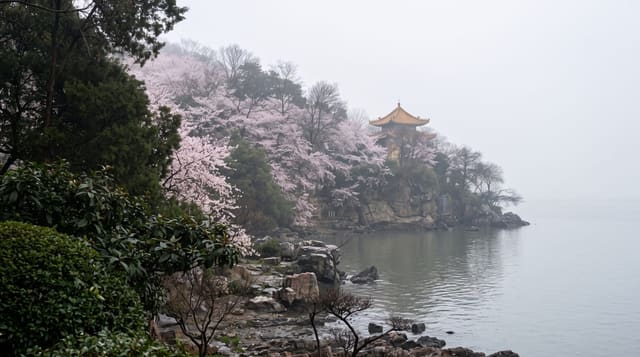
AI illustration
Taihu covers around two thousand three hundred square kilometres between Jiangsu and Zhejiang, shallow, island-studded and central to the culture of the Jiangnan region. Its limestone shores produced the taihu stones, rocks eroded by water into perforated, contorted forms, quarried for centuries and placed as focal points in gardens from Suzhou to Beijing; the best were left in the water for years to weather further. The lake supports fishing, tea growing on the surrounding hills, and the Dongshan and Xishan peninsulas with orchards and old villages. Severe algal blooms since the 2000s, driven by nutrient pollution, have been a persistent problem and have prompted large clean-up programmes.
What you'll find
- The taihu stones - the perforated rocks that furnish classical gardens.
- The island shores - Xishan, Dongshan and the lake's many islets.
- The tea and orchard hills - biluochun tea and fruit grown around the shores.
- The scale - one of the largest freshwater lakes in China.
When to go
March to May and September to November; algal blooms are worst in the hot months from June to September, when parts of the lake turn green and smell. Spring blossom on the peninsulas and autumn are the best windows.
Good to know
Water quality is a long-standing problem and summer blooms can be unpleasant. Access is fragmented between separate ticketed scenic areas. Swimming is not advisable. The lake is large and seeing it properly needs a car.
Nearby
Yuantouzhu is on the Wuxi shore; Suzhou lies east.
Key facts
Source: Wikidata, item Q140712, read on 18 October 2026.
What to pack for Lake Tai
Chosen from what this place is for. Tap a kit for the full checklist.
- Broken-in walking shoes or boots - Grip and ankle support matter more than looks; never hike in brand-new boots. Find on Amazon
- Travel rod + reel - A packable multi-piece rod fits in a case and covers most holiday fishing. Find on Amazon
- Reef-safe sunscreen - High SPF that will not bleach the coral you are swimming over. Find on Amazon
- Layers + a waterproof shell - Mountain weather turns fast; a packable rain jacket saves the day. Find on Amazon
Some links on this page are Amazon affiliate links - if you buy through them we may earn a small commission at no extra cost to you.
All packing kitsPlan your trip
Where to start if Lake Tai is going on the list.
Booking links on this page are affiliate links - if you book through them we may earn a small commission at no extra cost to you. It never changes what we write about a place.
Opening times, ticket prices and seasonal closures change - check the official source before you go: official site.