Jinci Temple
An ancient shrine outside Taiyuan holding Song dynasty sculptures of palace maids considered among China's finest.
Updated 4 September 2026
AI illustration
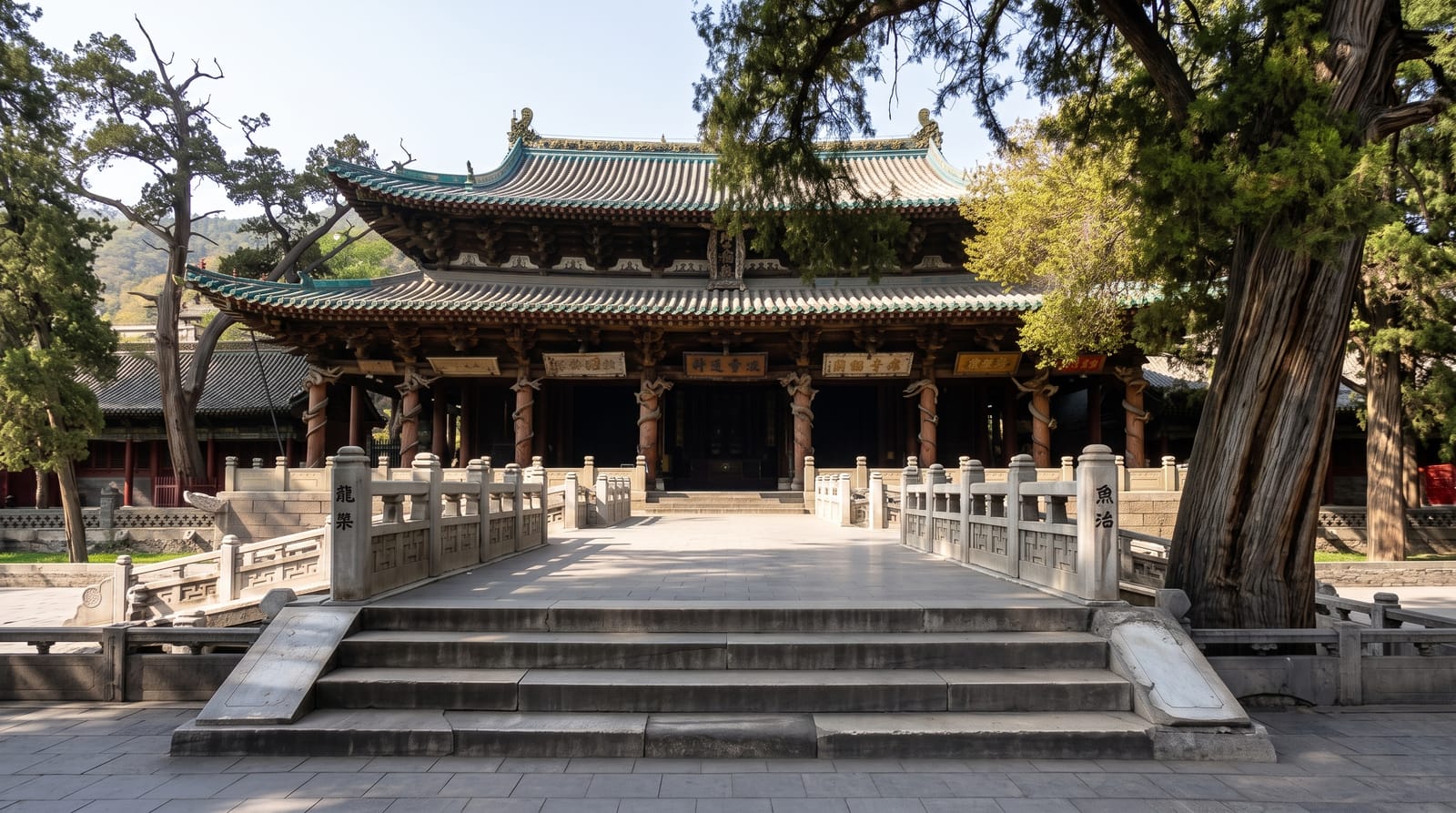
Jinci grew around springs at the foot of Xuanweng Mountain and has been a shrine for well over a thousand years, with buildings spanning many dynasties. Its centrepiece is the Hall of the Holy Mother, built in 1023 to 1032, one of the oldest surviving Song timber halls, fronted by columns wound with carved wooden dragons and containing forty-three painted clay figures of palace attendants from the same period, each individual in posture and expression, regarded as among the finest surviving Song sculpture. In front stands the Flying Bridge Across the Fish Pond, a cross-shaped Song bridge unique in China, and cypresses in the grounds are said to be around three thousand years old.
What you'll find
- The Hall of the Holy Mother - a Song timber hall of the 1020s with dragon columns.
- The forty-three attendant figures - painted Song clay sculptures inside the hall.
- The cross-shaped bridge - the Flying Bridge over the fish pond, unique in form.
- The ancient cypresses - trees in the grounds said to be three millennia old.
When to go
April to October for the best weather; Taiyuan is cold in winter. Weekends bring domestic visitors. The complex is large and takes two to three hours to walk properly.
Before you go
The famous sculptures are behind railings in a dim hall and photography is restricted. Taiyuan itself is a heavily industrial city with poor air on many days. English interpretation is limited.
Nearby
Taiyuan lies northeast; Pingyao is south along the rail line.
Key facts
Source: Wikidata, item Q1413164, read on 18 October 2026.
What to pack for Jinci Temple
Chosen from what this place is for. Tap a kit for the full checklist.
- Comfortable walking shoes - Sightseeing means kilometres of pavement and cobbles daily. Find on Amazon
- Modest clothing - Shoulders and knees covered - the single most common requirement. Find on Amazon
- A slim anti-theft daypack - Zips that close properly; keep it in front in crowds and on transit. Find on Amazon
- A scarf or shawl - To cover the head or shoulders on entry; women especially at mosques. Find on Amazon
Some links on this page are Amazon affiliate links - if you buy through them we may earn a small commission at no extra cost to you.
All packing kitsPlan your trip
Where to start if Jinci Temple is going on the list.
Booking links on this page are affiliate links - if you book through them we may earn a small commission at no extra cost to you. It never changes what we write about a place.
Opening times, ticket prices and seasonal closures change - check the official source before you go: official site.