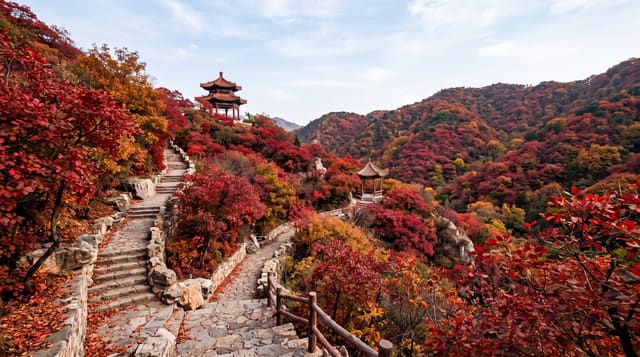
Fahai Temple
A small temple in western Beijing holding Ming murals of a quality that rivals Dunhuang, viewed by torchlight.
Updated 19 October 2026
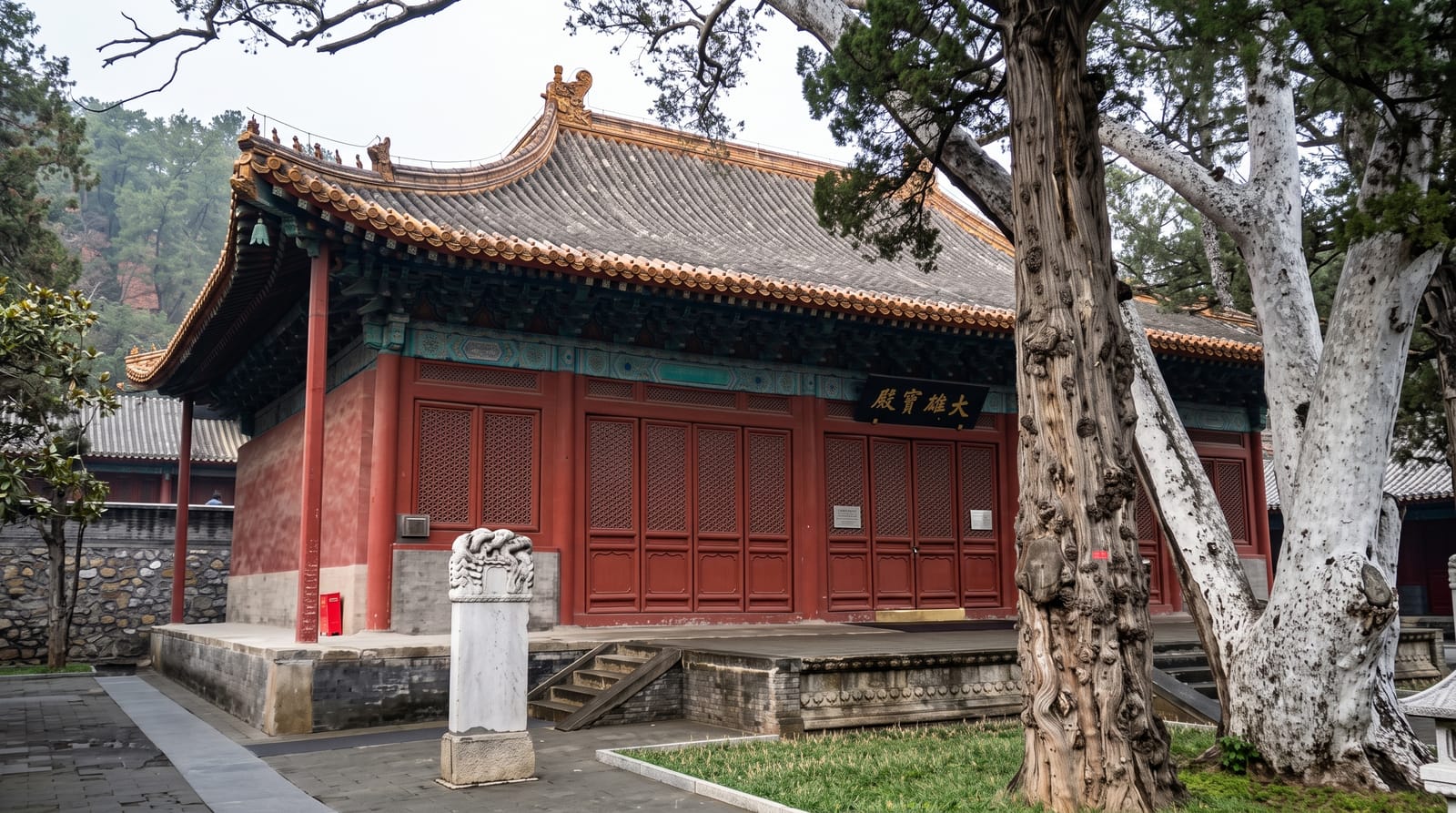
AI illustration
Fahai Temple was built in 1439 under imperial patronage, and its main hall contains murals painted by court artists between 1443 and 1444 that are among the finest surviving Ming wall paintings in China. Covering some two hundred square metres, they show Buddhist deities, attendants and animals in mineral pigments with gold outlining, and details such as the near-transparent gauze over a bodhisattva's shoulder are cited as technical achievements without parallel in the period. To protect them the hall is kept dark and unlit; visitors enter in small groups with a guide who lights sections with a torch, which makes the viewing slow, deliberate and unusually memorable.
History
Building of the Fahai Temple began in 1439, under the Ming dynasty, and was completed in 1443; in 1988 it was declared a national cultural relic protection unit, and it now stands within the Fahai Temple Forest Park at the foot of Cuiwei Mountain (Wikipedia, Fahai Temple).
The main sights
- The Ming murals - two hundred square metres of 1440s court painting.
- The torchlight viewing - guides lighting sections in a darkened hall.
- The gold detailing - fine gold line work over mineral pigment.
- The temple setting - a small complex in the hills west of the city.
When to go
April to May and September to October; the temple is far from the centre and rarely busy, but visitor numbers into the mural hall are capped and groups are timed. Checking opening days before travelling matters, since the hall closes periodically.
Practical notes
Photography inside is completely prohibited. The hall is dark by design and only lit in sections, so the experience is fragmentary. Reaching the temple takes over an hour from central Beijing. Tickets for the mural hall cost considerably more than general entry.
Nearby
Tanzhe Temple lies further west in the hills; central Beijing is east.
Key facts
Source: Wikidata, item Q1392042, read on 18 October 2026.
What to pack for Fahai Temple
Chosen from what this place is for. Tap a kit for the full checklist.
- Comfortable walking shoes - Sightseeing means kilometres of pavement and cobbles daily. Find on Amazon
- Modest clothing - Shoulders and knees covered - the single most common requirement. Find on Amazon
- A slim anti-theft daypack - Zips that close properly; keep it in front in crowds and on transit. Find on Amazon
- A scarf or shawl - To cover the head or shoulders on entry; women especially at mosques. Find on Amazon
Some links on this page are Amazon affiliate links - if you buy through them we may earn a small commission at no extra cost to you.
All packing kitsPlan your trip
Where to start if Fahai Temple is going on the list.
Booking links on this page are affiliate links - if you book through them we may earn a small commission at no extra cost to you. It never changes what we write about a place.
Opening times, ticket prices and seasonal closures change - check the official source before you go: official site.