Dujiangyan Irrigation System
A working water diversion built without a dam on the Min River, splitting the flow to irrigate the Chengdu plain.
Updated 18 October 2026
AI illustration
UNESCO World Heritage
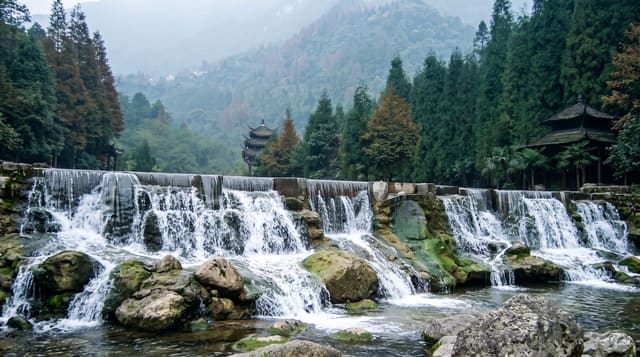
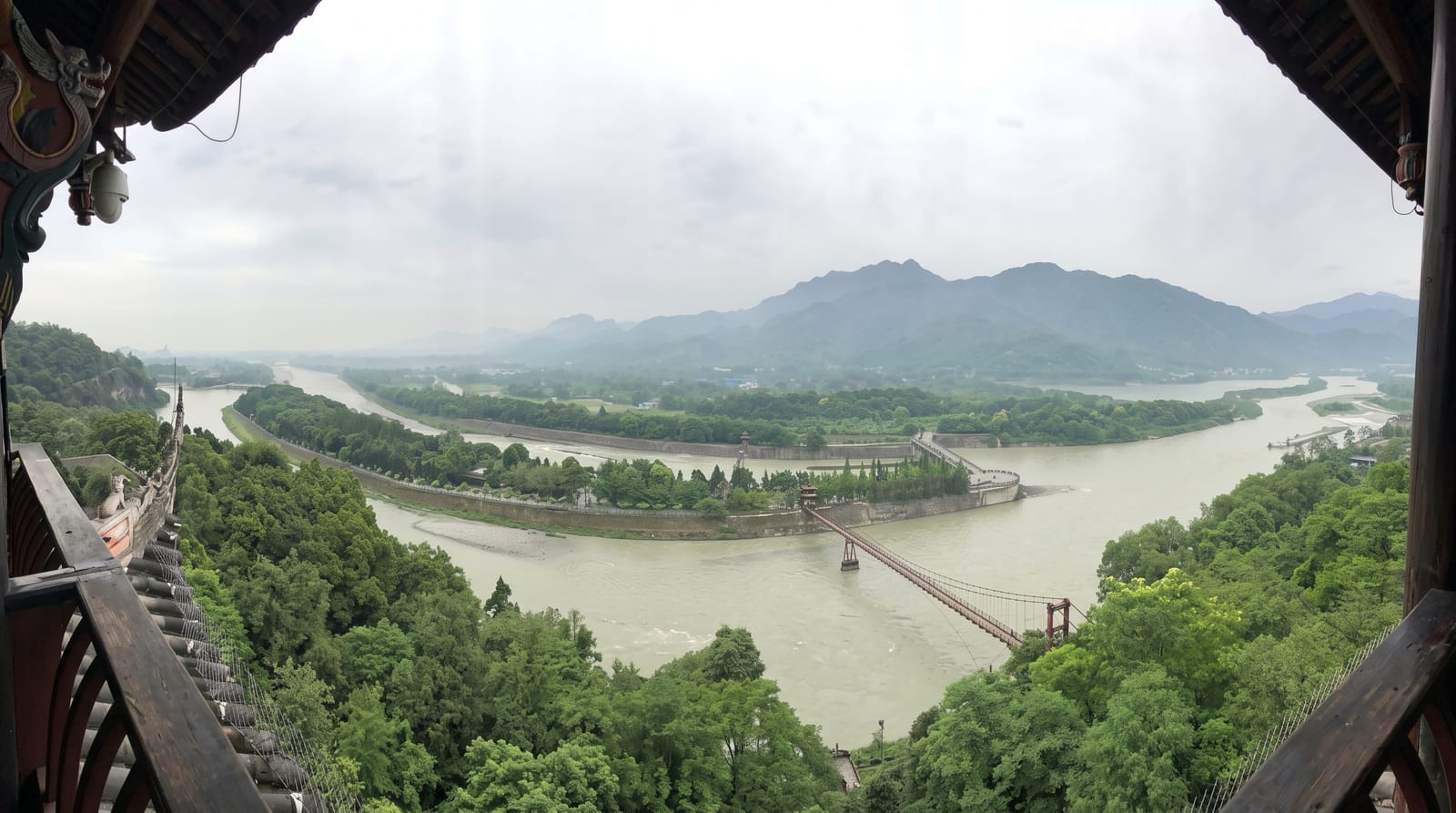
Dujiangyan is an irrigation scheme that has been in continuous use for more than two thousand years and works without a dam. A stone-nosed levee shaped like a fish mouth splits the Min River into an inner and an outer channel; a spillway lets flood water and silt spill back out; and a cut through the rock, the Bottle Neck, meters how much water reaches the Chengdu plain. Together they irrigate a very large area of farmland and are much of the reason the plain became so productive. The site is now a park, with paths along the levee, a cable footbridge over the river and a terraced temple on the slope above dedicated to the engineer and his son.
History
Around 256 BC the State of Qin, under King Zhao, set the hydrologist Li Bing to tame the Min River, whose spring meltwater flooded the silted plain below; since a dam would have blocked military boats, he built a levee shaped like a fish's mouth from bamboo baskets of stone, which took four years, and cut a channel 20 metres wide through Mount Yulei in eight years by heating the rock with fire and cracking it with water. The system ended the floods and for a time made Sichuan the most productive farming region in China, but it decayed in the turmoil of the Ming-Qing transition after 1644. The Diexi earthquake of 1933 wrecked the original works, which were rebuilt by Zhang Yuan and his sons; Dujiangyan became a World Heritage Site in 2000, and in the Sichuan earthquake of 12 May 2008 the levee cracked but kept dividing the river (Wikipedia, Dujiangyan).
The main sights
- The Fish Mouth levee - the stone spur that splits the river into two channels.
- The Bottle Neck channel - the cut through the rock that meters water onto the plain.
- The Anlan cable bridge - a swaying footbridge across both channels.
- Erwang Temple - terraced halls on the hillside above, with a view down over the whole works.
When to go
April to June and September to November. Summer brings high water, which makes the levee more impressive but also heavy rain and mist. The park is large and mostly outdoors, so avoid the midday heat. It works as a half day from Chengdu, either on its own or paired with Mount Qingcheng on the same rail line.
Before you go
Much of what you walk on is modern reconstruction, and unless you follow the hydraulics the site reads as a pleasant riverside park with a temple attached. The cable bridge is crowded and swaying, with queues at both ends. Signage explains the engineering thinly. Summer floods can close sections of path, and mist often hides the layout entirely.
Nearby
Mount Qingcheng is a short ride away and the Chengdu panda bases are about an hour east.
Key facts
Source: Wikidata, item Q824157, read on 18 October 2026.
What to pack for Dujiangyan Irrigation System
Chosen from what this place is for. Tap a kit for the full checklist.
- Comfortable walking shoes - Sightseeing means kilometres of pavement and cobbles daily. Find on Amazon
- Modest clothing - Shoulders and knees covered - the single most common requirement. Find on Amazon
- A slim anti-theft daypack - Zips that close properly; keep it in front in crowds and on transit. Find on Amazon
- A scarf or shawl - To cover the head or shoulders on entry; women especially at mosques. Find on Amazon
Some links on this page are Amazon affiliate links - if you buy through them we may earn a small commission at no extra cost to you.
All packing kitsPlan your trip
Where to start if Dujiangyan Irrigation System is going on the list.
Booking links on this page are affiliate links - if you book through them we may earn a small commission at no extra cost to you. It never changes what we write about a place.
Opening times, ticket prices and seasonal closures change - check the official source before you go: official site.