Chinese Calligraphy
Brush writing treated as the senior art form, judged on line, rhythm and balance rather than on what the characters actually say.
Updated 4 September 2026
AI illustration
UNESCO Intangible Cultural Heritage
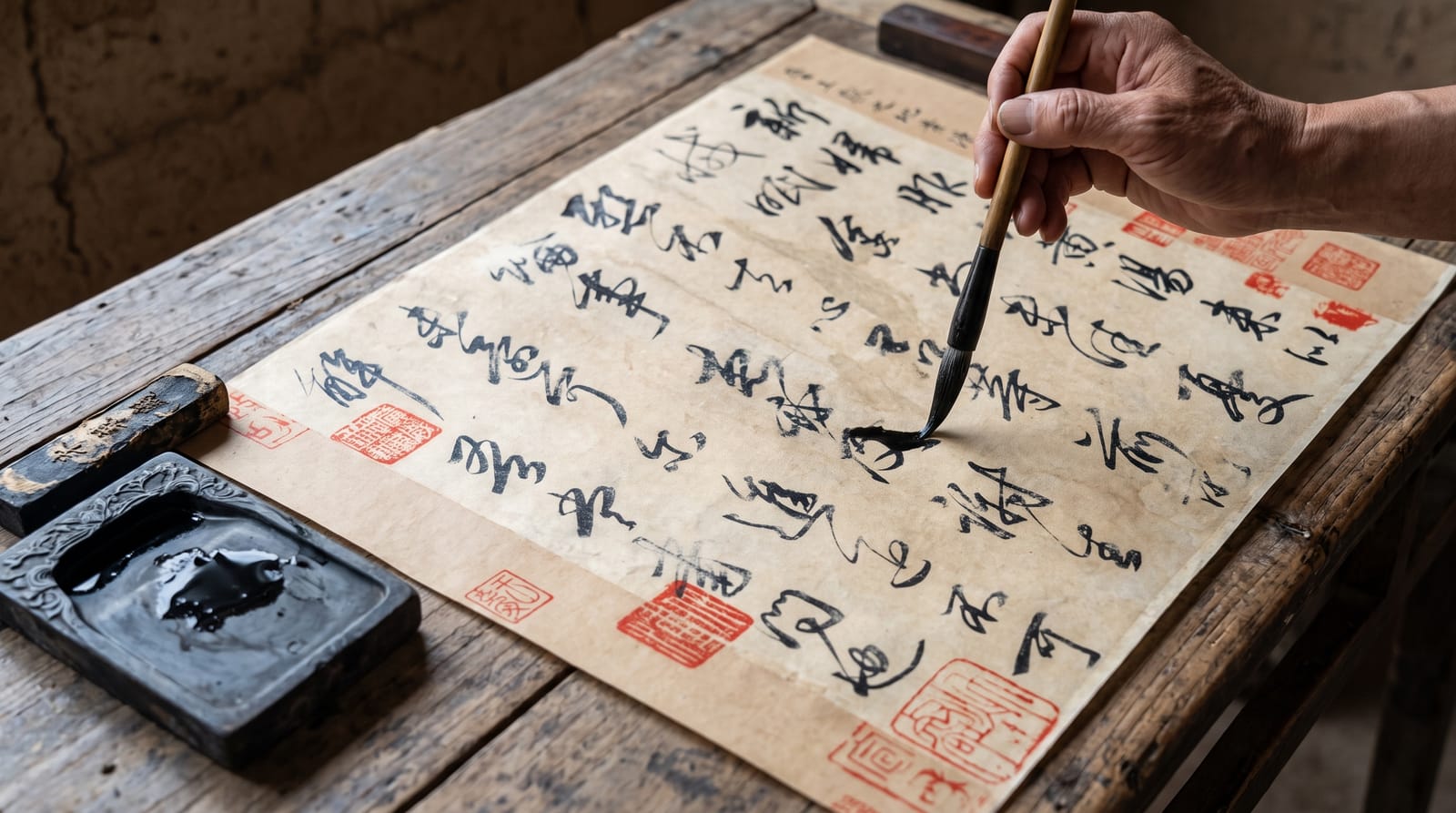
Calligraphy has ranked above painting in China for most of recorded history, and the vocabulary used to judge it is physical: bone, sinew, blood, breath. The tools are the four treasures of the study, a brush of wolf or goat hair, an ink stick ground on a stone with water, absorbent paper and the inkstone itself. Five main scripts run from the formal seal and clerical hands through regular script to running and wild cursive, where characters dissolve into one unbroken movement and become unreadable to most Chinese readers as well. In Xi'an the Forest of Stone Steles holds thousands of engraved slabs, and in city parks men write with water on paving at dawn and let it evaporate.
What's there
- The five scripts - seal, clerical, regular, running and cursive, in rising order of speed.
- The four treasures - brush, ink stick, inkstone and paper, still sold together in old shops.
- Stone steles - engraved slabs at Xi'an and at temples, the source of rubbings and copybooks.
- Water calligraphy - characters written on park paving with a sponge brush, gone in minutes.
When to go
Park calligraphers work early, roughly six to eight, and again at dusk, and the writing dries within minutes, so you have to be there. Museum calligraphy galleries rotate their scrolls and keep light low for conservation. Beginner classes run an afternoon in most tourist cities and cover grip, stroke order and a single character.
Practical notes
Without reading Chinese you are judging line quality alone, which is a real limit, and gallery labels rarely translate the text or explain why one hand is famous. Original scrolls are shown briefly and seldom. Souvenir shops sell machine-printed work as hand-brushed, and name seals carved while you wait are usually cut by machine.
Nearby
The Forest of Stone Steles sits inside Xi'an's walls, and every major provincial museum has a calligraphy hall.
What to pack for Chinese Calligraphy
Chosen from what this place is for. Tap a kit for the full checklist.
- Comfortable walking shoes - Sightseeing means kilometres of pavement and cobbles daily. Find on Amazon
- Modest clothing - Shoulders and knees covered - the single most common requirement. Find on Amazon
- A slim anti-theft daypack - Zips that close properly; keep it in front in crowds and on transit. Find on Amazon
- A scarf or shawl - To cover the head or shoulders on entry; women especially at mosques. Find on Amazon
Some links on this page are Amazon affiliate links - if you buy through them we may earn a small commission at no extra cost to you.
All packing kitsPlan your trip
Where to start if Chinese Calligraphy is going on the list.
Booking links on this page are affiliate links - if you book through them we may earn a small commission at no extra cost to you. It never changes what we write about a place.
Opening times, ticket prices and seasonal closures change - check the official source before you go: official site.