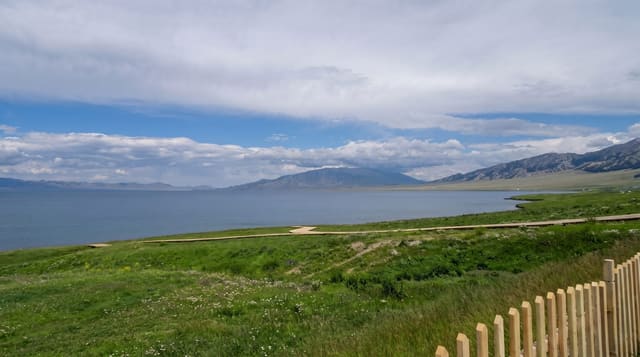
Bayinbuluke
A high basin where a river meanders in tight loops that hold several suns at once at dusk, and swans breed.
Updated 4 September 2026

AI illustration
Bayinbuluke is a grassland basin at around 2,500 metres enclosed by the Tian Shan, wet enough to hold extensive marsh, and it is China's main breeding ground for whooper swans, protected as a reserve where hundreds nest and feed in the shallows through the summer. Its other well-known feature is the Kaidu river, which meanders across the flat basin in such tight loops that from the viewing ridge at sunset the low sun is reflected in several bends at once, producing the nine-bend eighteen-suns effect that photographers come for. Mongol herders graze the basin, and horse racing features at summer festivals.
What's there
- The whooper swans - China's main breeding population on the marshes.
- The nine bends - the Kaidu river looping across the basin.
- The sunset reflections - the sun repeated in several bends at once.
- The Mongol pastures - herds and camps across the grassland.
When to go
June to September, when swans are present and the grass is green; the sunset effect needs a clear evening, which is not guaranteed. Winter is severe and access difficult.
Before you go
Entry and shuttle are expensive and the viewing ridge crowds at sunset. Swans are seen at a distance and binoculars help. The basin is remote and roads in take most of a day.
Nearby
The Duku Highway passes nearby; Narat lies north over the range.
What to pack for Bayinbuluke
Chosen from what this place is for. Tap a kit for the full checklist.
- Broken-in walking shoes or boots - Grip and ankle support matter more than looks; never hike in brand-new boots. Find on Amazon
- Layers for big temperature swings - Warm sun by day, near-freezing at night, even near the equator. Find on Amazon
- Layers + a waterproof shell - Mountain weather turns fast; a packable rain jacket saves the day. Find on Amazon
- Extra-strong sun protection - Thin air means fierce UV; hat, sunglasses and high-SPF sunscreen. Find on Amazon
Some links on this page are Amazon affiliate links - if you buy through them we may earn a small commission at no extra cost to you.
All packing kitsPlan your trip
Where to start if Bayinbuluke is going on the list.
Booking links on this page are affiliate links - if you book through them we may earn a small commission at no extra cost to you. It never changes what we write about a place.
Opening times, ticket prices and seasonal closures change - check the official source before you go: official site.