Old Town Lunenburg
A UNESCO-listed British colonial port on Nova Scotia's South Shore, its brightly painted timber houses laid out on the original 18th-century grid.
Updated 18 October 2026
AI illustration
UNESCO World Heritage
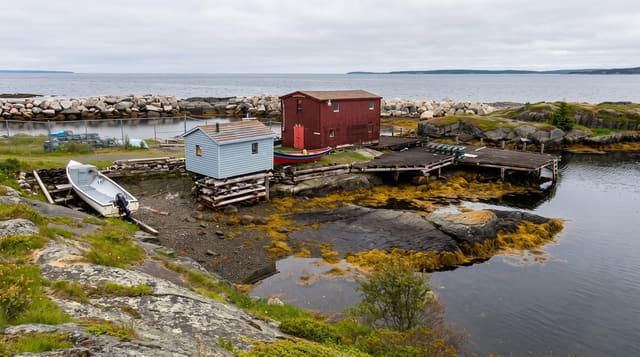
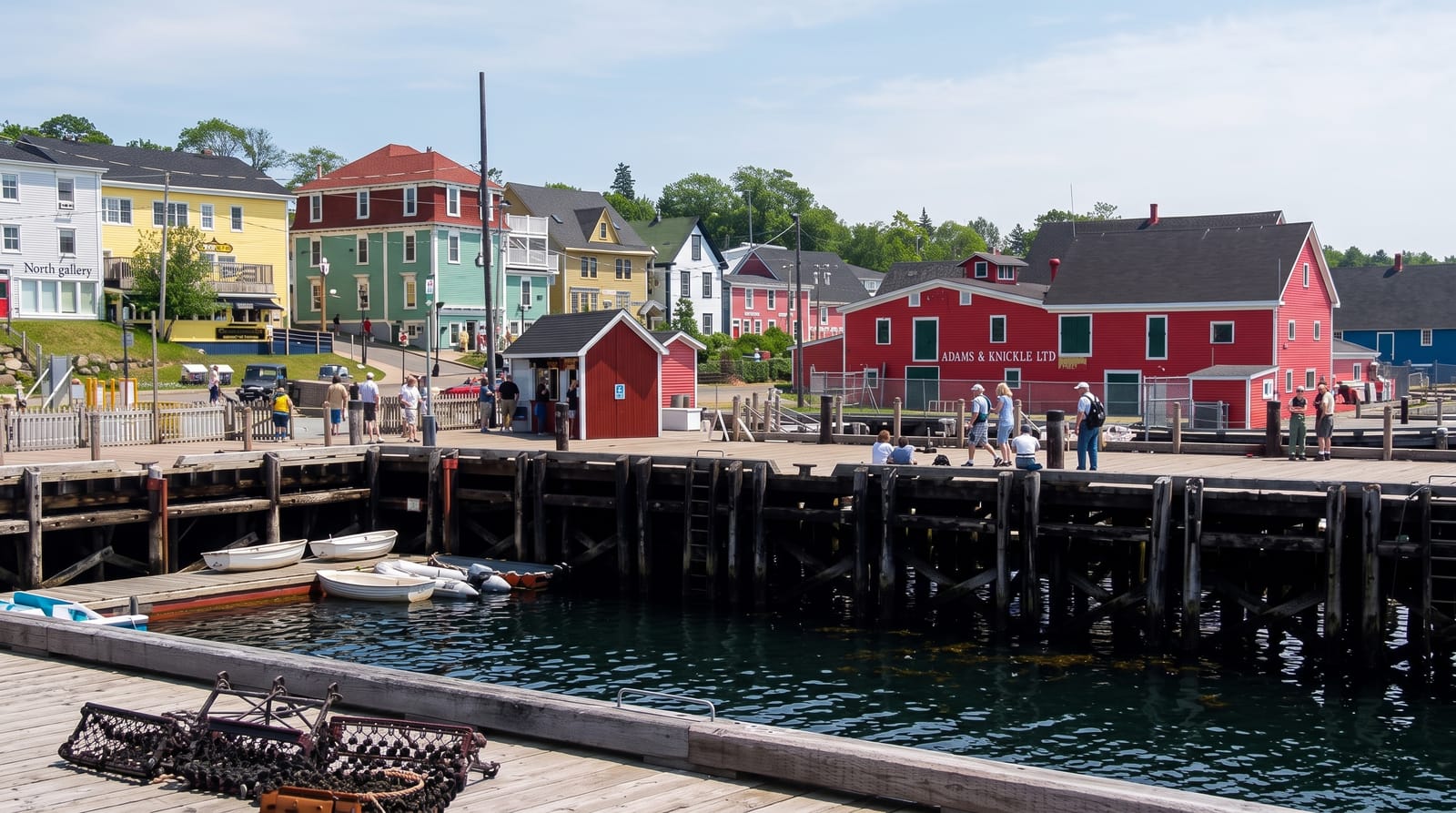
Lunenburg is the best-preserved example of a planned British colonial settlement in North America, which is why its old town is a World Heritage Site. Laid out in 1753 on a rigid grid that ignores the steep hillside it climbs, it is a town of brightly painted wooden houses, many in the distinctive local style with an overhanging central dormer called the Lunenburg bump. Its wealth came from the sea, from fishing and shipbuilding, and the waterfront still works, home port of the Bluenose II, the replica of the famous racing schooner that appears on the Canadian dime. The Fisheries Museum of the Atlantic tells that story on the wharf. Compact, colourful and steeply walkable, it is one of the prettiest small towns in Atlantic Canada.
History
The Mi'kmaq lived along this coast, up to 300 of them at the site in summer, and Acadians settled here around the 1620s; in 1749 the new governor, Edward Cornwallis, found Mi'kmaq and Acadian families living together at Mirliguèche in comfortable houses. In 1753 the British brought more than 1,400 Foreign Protestants, mostly artisans and farmers from Europe, to settle the site under Charles Lawrence, with about 160 soldiers, prefabricated blockhouses and a palisade across the neck of land; the settlers' anger over provisions led to the short-lived Lunenburg Rebellion, put down by troops under Colonel Robert Monckton. The town was raided in 1756 by Mi'kmaq and Maliseet fighters and in 1782 by privateers from the rebelling American colonies, prospered in the late 1800s on the offshore fishery, and was designated a World Heritage Site in 1995 as the best example of a planned British colonial settlement in North America (Wikipedia, Lunenburg, Nova Scotia).
What's there
- The painted old town - the colourful timber houses on the 18th-century grid.
- The working waterfront - wharves, warehouses and the Bluenose II when in port.
- The Fisheries Museum of the Atlantic - the region's fishing and shipbuilding heritage.
- St John's Anglican Church - the ornate wooden church, rebuilt after a fire, above the town.
When to go
May to October for open museums, tours and the best weather; summer is liveliest and the Bluenose II is most likely to be in port then, though it sails, so check. Autumn is quieter with colour on the hills. Winter is very quiet with limited services.
Things to know
The streets are genuinely steep, which the rigid grid makes unavoidable, so comfortable shoes help. It is small and a visit is a few hours rather than a full day. In peak summer the waterfront gets busy with visitors, and the Bluenose II is often away sailing rather than at its berth, so do not count on seeing it.
Nearby
Mahone Bay and Chester are close along the South Shore; Peggy's Cove and Halifax lie to the northeast.
Key facts
Source: Wikidata, item Q105441, read on 18 October 2026.
What to pack for Old Town Lunenburg
Chosen from what this place is for. Tap a kit for the full checklist.
- Travel rod + reel - A packable multi-piece rod fits in a case and covers most holiday fishing. Find on Amazon
- Comfortable walking shoes - Sightseeing means kilometres of pavement and cobbles daily. Find on Amazon
- A small tackle selection - Hooks, weights, line and a few lures or flies suited to local waters. Find on Amazon
- A slim anti-theft daypack - Zips that close properly; keep it in front in crowds and on transit. Find on Amazon
Some links on this page are Amazon affiliate links - if you buy through them we may earn a small commission at no extra cost to you.
All packing kitsPlan your trip
Where to start if Old Town Lunenburg is going on the list.
Booking links on this page are affiliate links - if you book through them we may earn a small commission at no extra cost to you. It never changes what we write about a place.
Opening times, ticket prices and seasonal closures change - check the official source before you go: official site.