Maritime Museum of the Atlantic
Titanic wreckage recovered by Halifax ships, and the story of an explosion that levelled the city's north end.
Updated 19 October 2026
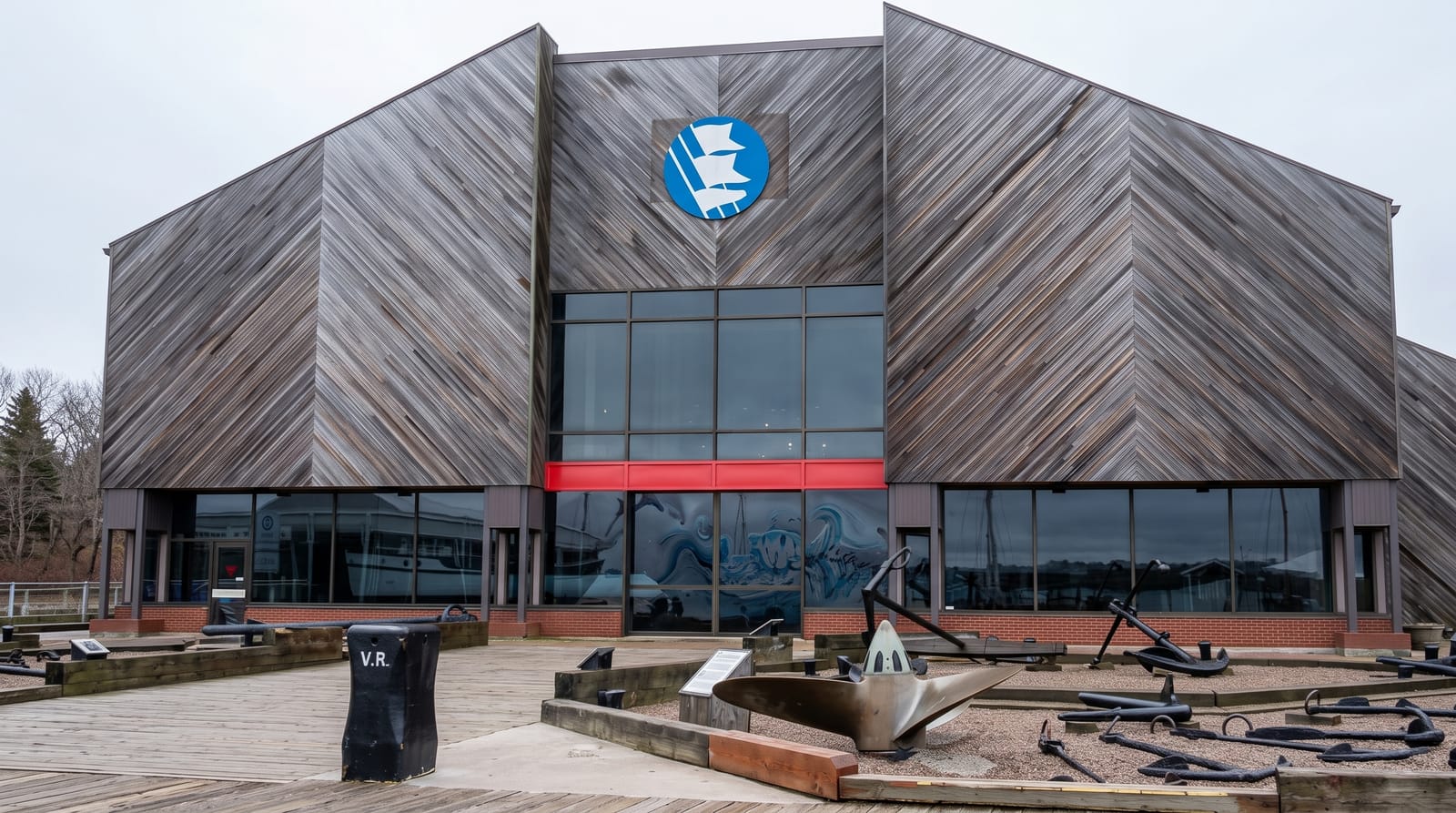
AI illustration
Halifax was the closest major port to the Titanic sinking in 1912, and ships sent from here recovered three hundred and twenty-eight bodies; one hundred and fifty are buried in the city's cemeteries. The museum holds one of the largest collections of wooden Titanic artefacts anywhere, including a deck chair and fragments of panelling. Its other central story is local: on 6 December 1917 a munitions ship collided in the harbour and detonated, killing around two thousand people and flattening the north end in the largest man-made explosion before nuclear weapons. The museum also keeps CSS Acadia, a survey ship afloat since 1913.
History
The museum was founded in 1948 as the Maritime Museum of Canada at HMC Dockyard, the naval base on Halifax Harbour, with naval officers as volunteer chairs until 1959, when Niels Jannasch became its founding director, serving until 1985. After several moves its present building went up in 1981 as part of a waterfront redevelopment, the CSS Acadia, a 180-foot hydrographic survey ship launched in 1913, joined it in 1982, and it is now the oldest and largest maritime museum in Canada, with over 30,000 artefacts (Wikipedia, Maritime Museum of the Atlantic).
What's there
- The Titanic artefacts - a deck chair and wooden fragments recovered by Halifax ships.
- The Halifax Explosion gallery - the 1917 blast that levelled the north end.
- CSS Acadia - a 1913 survey ship moored alongside and open to board.
- The small craft collection - Nova Scotia boats and shipbuilding history.
When to go
Year-round; the museum closes Mondays in winter. CSS Acadia is open in the warmer months only. The waterfront boardwalk outside is pleasant in summer.
Before you go
CSS Acadia is closed for much of the year. The Titanic collection is objects and documents rather than large wreckage. The museum is compact and takes about two hours.
Nearby
Pier 21 lies south along the waterfront; the Public Gardens are inland.
Key facts
Source: Wikidata, item Q6765824, read on 18 October 2026.
What to pack for Maritime Museum of the Atlantic
Chosen from what this place is for. Tap a kit for the full checklist.
- Comfortable walking shoes - Sightseeing means kilometres of pavement and cobbles daily. Find on Amazon
- A slim anti-theft daypack - Zips that close properly; keep it in front in crowds and on transit. Find on Amazon
- A refillable water bottle - Many cities have public fountains; save money and plastic. Find on Amazon
- A light layer + compact umbrella - For museum air-con and a sudden shower. Find on Amazon
Some links on this page are Amazon affiliate links - if you buy through them we may earn a small commission at no extra cost to you.
All packing kitsPlan your trip
Where to start if Maritime Museum of the Atlantic is going on the list.
Booking links on this page are affiliate links - if you book through them we may earn a small commission at no extra cost to you. It never changes what we write about a place.
Opening times, ticket prices and seasonal closures change - check the official source before you go: official site.