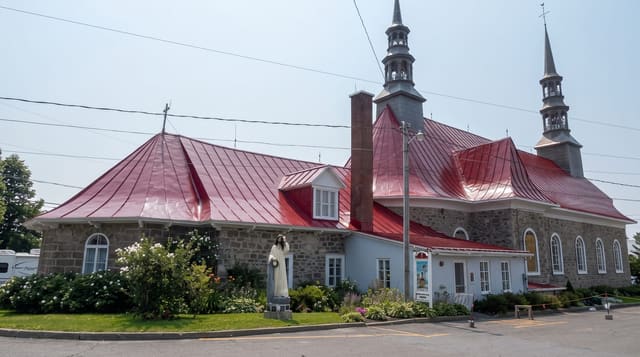
Kamouraska
A village of painted houses with a distinctive flared roofline, facing sunsets over the widening St. Lawrence.
Updated 19 October 2026
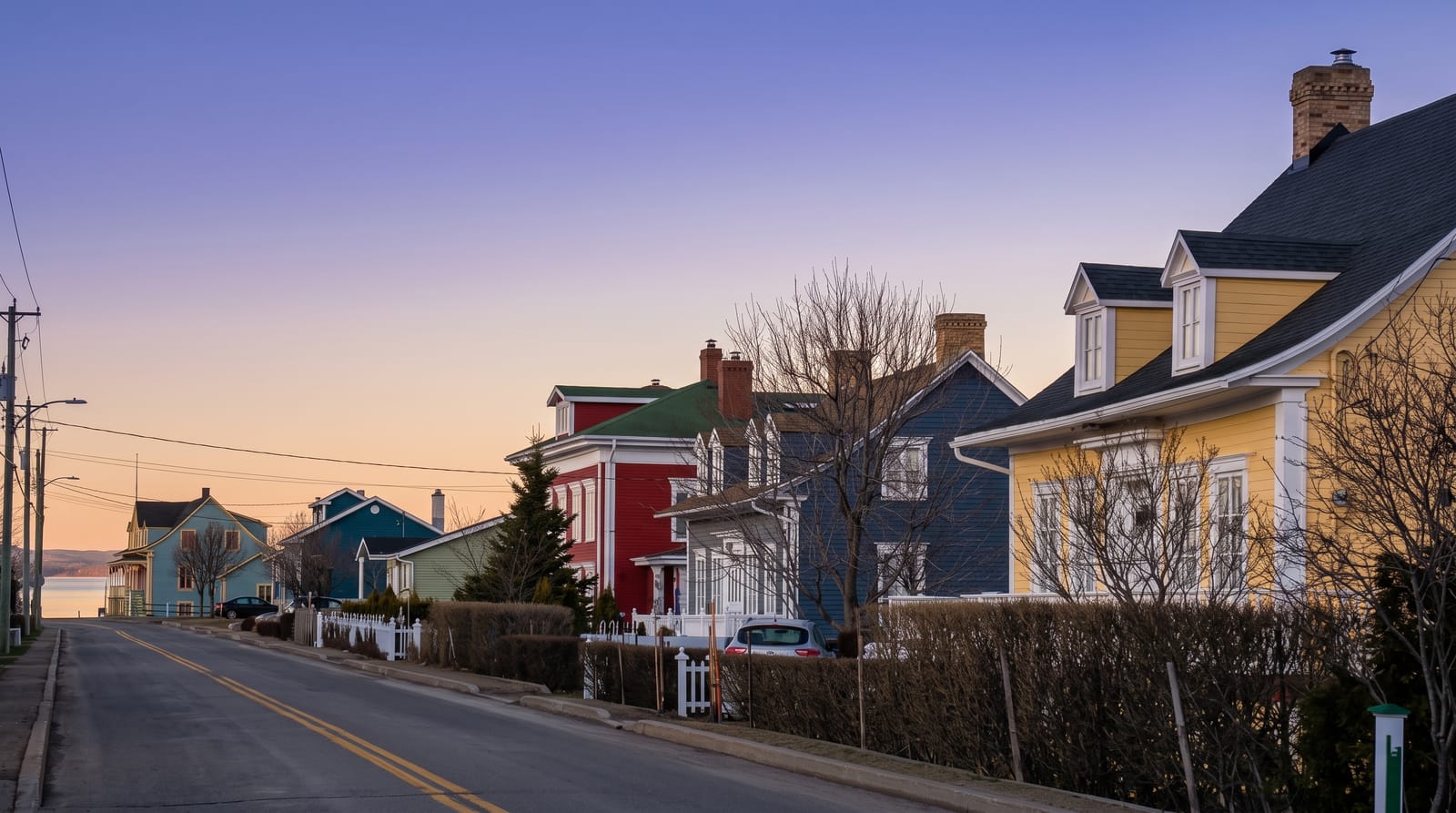
AI illustration
Kamouraska sits where the St. Lawrence is wide enough to feel like a sea, and it was a summer resort for Quebec City families from the early nineteenth century. Its houses show the Kamouraska roof, a steep pitch that flares outward at the eaves into a bell curve, sheltering the walls and giving a distinctive silhouette repeated along the street. Anne Hébert's 1970 novel Kamouraska, based on a real nineteenth-century murder case in the village, made the name known across the francophone world. Eel fishing with tidal weirs was a local trade, and the flats are exposed at low tide with the weir posts still standing.
History
The name comes from an Algonquin word meaning where rushes grow at the water's edge. French colonists settled the area in the late 17th century, it was made the Seigneury de Kamouraska in 1674, and eel fishing has a long tradition here, explained at an interpretive centre in the village (Wikipedia, Kamouraska, Quebec).
What's there
- The flared roofs - the Kamouraska bell-curve eave on the village houses.
- The eel weirs - fishing structures exposed on the flats at low tide.
- The sunsets - the wide river facing west from the shore.
- The Anne Hébert connection - the village of her 1970 novel.
When to go
June to September; the village is quiet and largely shut in winter. Low tide exposes the flats and weirs. Sunsets are the reason many people time an evening here.
Good to know
The village is very small and walked in half an hour. Most houses are private. Services are limited outside summer.
Nearby
Rivière-du-Loup lies northeast; Saint-Jean-Port-Joli is southwest.
Key facts
Source: Wikidata, item Q1103923, read on 18 October 2026.
What to pack for Kamouraska
Chosen from what this place is for. Tap a kit for the full checklist.
- Travel rod + reel - A packable multi-piece rod fits in a case and covers most holiday fishing. Find on Amazon
- Comfortable walking shoes - Sightseeing means kilometres of pavement and cobbles daily. Find on Amazon
- A small tackle selection - Hooks, weights, line and a few lures or flies suited to local waters. Find on Amazon
- A slim anti-theft daypack - Zips that close properly; keep it in front in crowds and on transit. Find on Amazon
Some links on this page are Amazon affiliate links - if you buy through them we may earn a small commission at no extra cost to you.
All packing kitsPlan your trip
Where to start if Kamouraska is going on the list.
Booking links on this page are affiliate links - if you book through them we may earn a small commission at no extra cost to you. It never changes what we write about a place.
Opening times, ticket prices and seasonal closures change - check the official source before you go: official site.