Fort Walsh
The Mounted Police fort built after a massacre, and where Sitting Bull's people camped after Little Bighorn.
Updated 4 September 2026
AI illustration
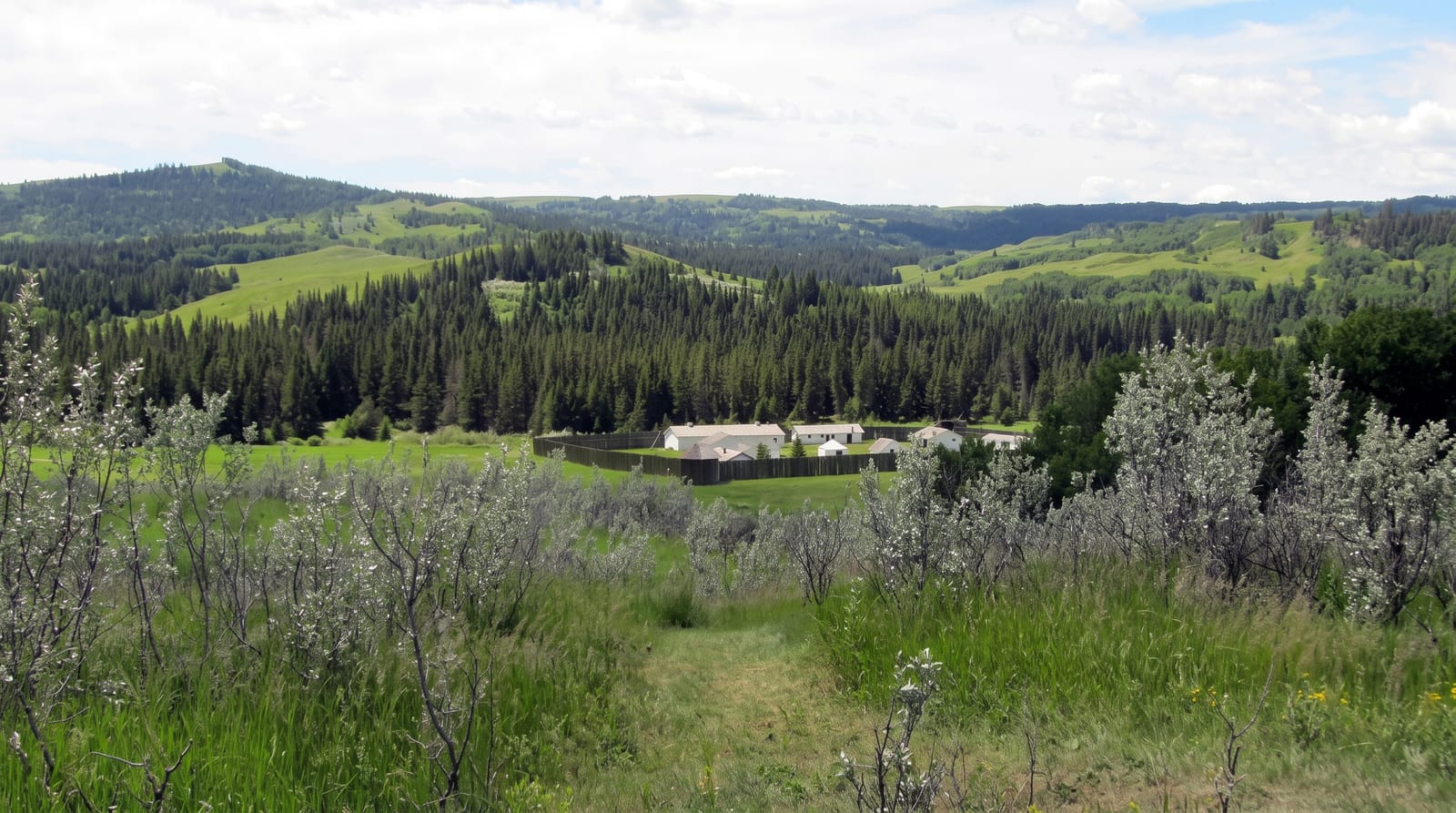
In 1873 American wolf hunters killed a group of Nakoda people in the Cypress Hills, and the incident accelerated the creation and westward march of the North-West Mounted Police; Fort Walsh was built in 1875 in response and served as force headquarters for several years. After the Battle of the Little Bighorn in 1876, Sitting Bull brought several thousand Lakota across the border and they camped in this region for four years while the police tried to manage a situation neither government wanted. The fort was reconstructed on its original site and Parks Canada presents the Nakoda and Lakota sides alongside the police one.
The main sights
- The reconstructed fort - palisade and buildings on the original 1875 site.
- The massacre site - the location of the 1873 killings interpreted nearby.
- The Sitting Bull years - the Lakota exile in Canada told as part of the story.
- The Cypress Hills setting - forested plateau country around the fort.
When to go
May to September; the site closes for winter. Access is by shuttle from the visitor centre on some schedules. The road in from Maple Creek is partly gravel.
Practical notes
Closed roughly October to May. The buildings are reconstructions. The site is remote, an hour from the nearest town of any size.
Nearby
The Cypress Hills park surrounds it; Maple Creek lies northeast.
Key facts
Source: Wikidata, item Q3078102, read on 18 October 2026.
What to pack for Fort Walsh
Chosen from what this place is for. Tap a kit for the full checklist.
- Comfortable walking shoes - Sightseeing means kilometres of pavement and cobbles daily. Find on Amazon
- A slim anti-theft daypack - Zips that close properly; keep it in front in crowds and on transit. Find on Amazon
- A refillable water bottle - Many cities have public fountains; save money and plastic. Find on Amazon
- A light layer + compact umbrella - For museum air-con and a sudden shower. Find on Amazon
Some links on this page are Amazon affiliate links - if you buy through them we may earn a small commission at no extra cost to you.
All packing kitsPlan your trip
Where to start if Fort Walsh is going on the list.
Booking links on this page are affiliate links - if you book through them we may earn a small commission at no extra cost to you. It never changes what we write about a place.
Opening times, ticket prices and seasonal closures change - check the official source before you go: official site.