Fort Chambly
A French stone fort on the Richelieu rapids, the best preserved of its kind in North America.
Updated 19 October 2026
AI illustration
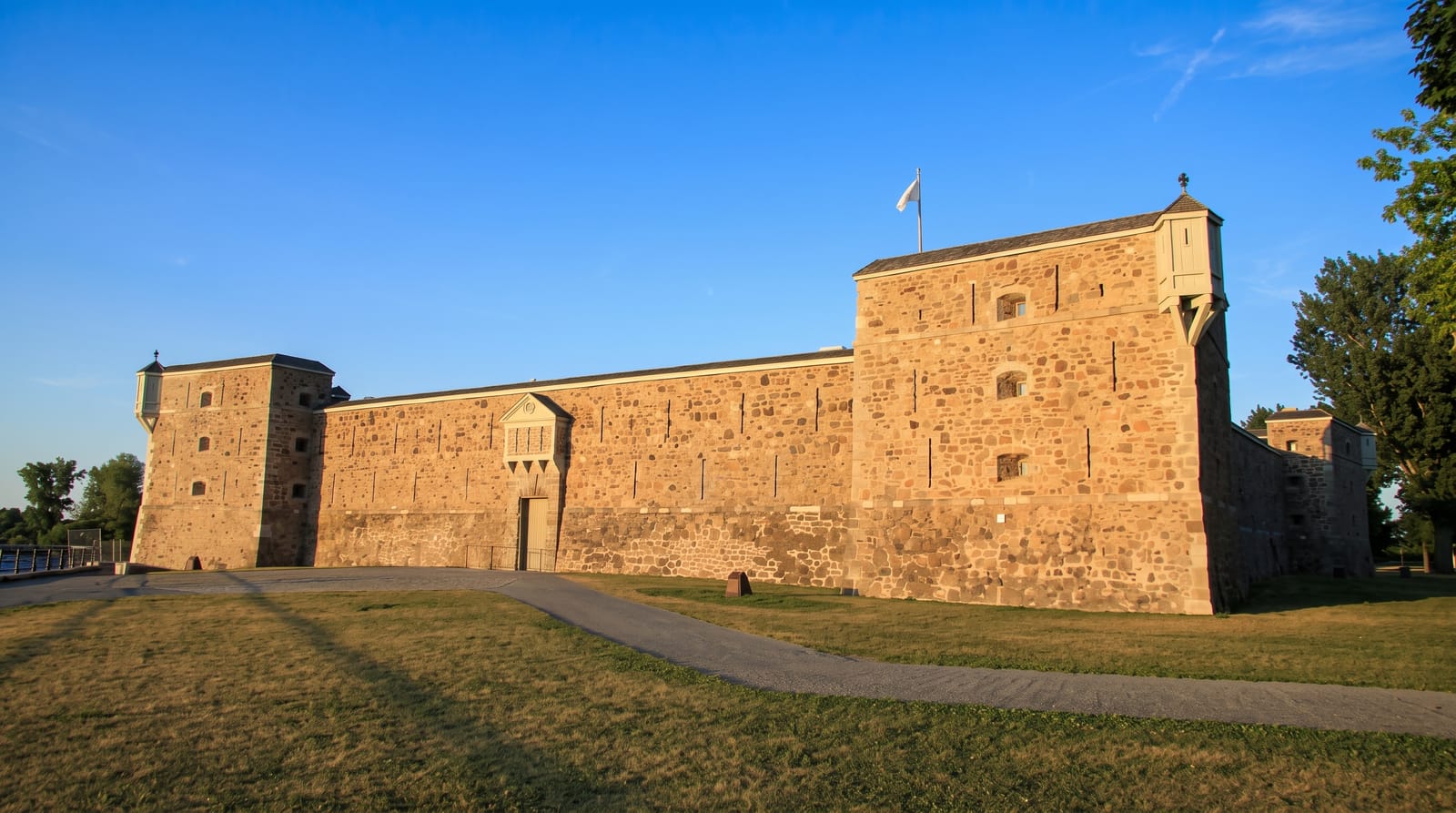
The French built a wooden fort here in 1665 to control the Richelieu, the invasion route between New France and the Iroquois and later the English colonies, and replaced it in stone between 1709 and 1711 to a design by the engineer Josué Boisberthelot de Beaucours; it is the best preserved French colonial fort in North America. The rapids beside it were the reason for the site, since boats had to be portaged. It later passed to the British, held American prisoners and served in the war of 1812 and the 1837 rebellions. The fort sits in a park on the river with the rapids running past.
History
The first fort on this site, Fort Saint Louis, was built in 1665 by Captain Jacques de Chambly to protect New France from Iroquois attacks; burned in 1702, it was rebuilt the same year and then, on the orders of Governor Philippe de Rigaud Vaudreuil, in stone from 1709, to the designs of the engineer Josué Boisberthelot de Beaucours, who also improved it between 1718 and 1720. Once forts were built farther south, at Saint-Frédéric in 1731 and Saint-Jean in 1748, Chambly became a warehouse and rallying point, though it was never abandoned, and it passed to the British in August 1760 (Wikipedia, Fort Chambly).
What's there
- The stone fort - the best preserved French colonial fort on the continent.
- The Richelieu rapids - the obstacle that made the site strategic.
- The bastioned walls - a compact square fort with four corner bastions.
- The riverside park - grounds along the water beside the fort.
When to go
May to October for full opening; the fort reduces hours or closes in winter. Summer brings costumed programming and a period music festival in the grounds.
Good to know
The interior is largely bare rooms with exhibits rather than furnished spaces. It is compact and takes about ninety minutes. Winter access is limited.
Nearby
Montreal lies northwest; the Richelieu valley runs south.
Key facts
Source: Wikidata, item Q2277786, read on 18 October 2026.
What to pack for Fort Chambly
Chosen from what this place is for. Tap a kit for the full checklist.
- Comfortable walking shoes - Sightseeing means kilometres of pavement and cobbles daily. Find on Amazon
- A slim anti-theft daypack - Zips that close properly; keep it in front in crowds and on transit. Find on Amazon
- A refillable water bottle - Many cities have public fountains; save money and plastic. Find on Amazon
- A light layer + compact umbrella - For museum air-con and a sudden shower. Find on Amazon
Some links on this page are Amazon affiliate links - if you buy through them we may earn a small commission at no extra cost to you.
All packing kitsPlan your trip
Where to start if Fort Chambly is going on the list.
Booking links on this page are affiliate links - if you book through them we may earn a small commission at no extra cost to you. It never changes what we write about a place.
Opening times, ticket prices and seasonal closures change - check the official source before you go: official site.