Fisgard Lighthouse
The first lighthouse on Canada's west coast, lit in 1860 with a keeper brought out from England.
Updated 19 October 2026
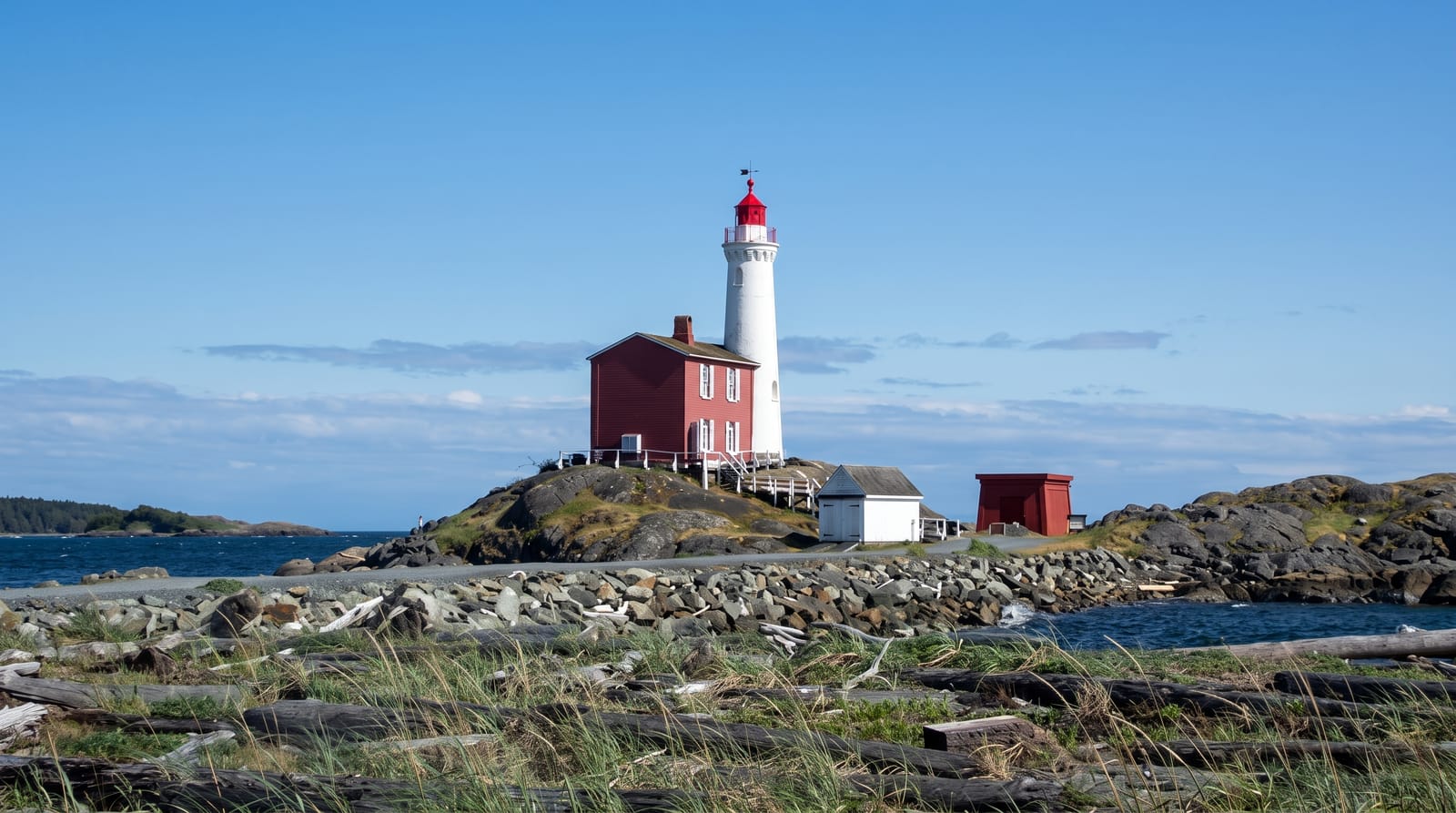
AI illustration
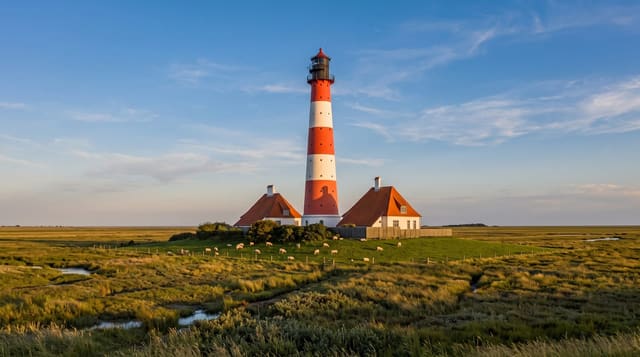
Fisgard was lit on 16 November 1860 to guide ships into Esquimalt Harbour, the first permanent light on the Canadian Pacific coast, built of local brick and stone, though legend says the brick came from England as ballast, and its first keeper, George Davies, came out from England with the lens and lantern. It stands on a small island joined to the shore by a causeway, white tower on a red brick keeper's house, and was automated in 1928; the keeper's rooms are now a small museum on wrecks and the lighthouse service. The site shares a ticket with Fort Rodd Hill, a coastal artillery battery built in the 1890s to defend the naval base, with gun emplacements, magazines and searchlight positions still in place.
History
Governor James Douglas asked the British government for a lighthouse here, and Fisgard Island, named after HMS Fisgard, which had surveyed it in 1848, was chosen; with its sister station at Race Rocks it was built in 1859-60 to guide naval ships into Esquimalt Harbour and merchant ships into Victoria Harbour. John Wright and Hermann Otto Tiedemann designed the tower and its gothic red-brick house, built from local brick and stone rather than, as legend has it, ballast from Britain, and the first keeper, George Davies, came out from England with the lens and lantern; it was first lit at sunset on 16 November 1860, and after a fire gutted its interior in 1957 it was restored and declared a National Historic Site the following year (Wikipedia, Fisgard Lighthouse National Historic Site).
What's there
- The 1860 tower - the first permanent light on Canada's west coast.
- The keeper's house - brick rooms with displays on wrecks and the service.
- Fort Rodd Hill - three artillery batteries with guns, magazines and tunnels.
- The harbour view - naval traffic entering Esquimalt past the point.
When to go
April to October for full opening; the site reduces hours in winter. Storm-watching in autumn suits the exposed causeway. Sunset light on the red brick is good.
Things to know
The causeway floods and closes in high seas and storms. The tower interior is small and the climb is a narrow spiral. Fort Rodd Hill takes as long as the lighthouse.
Nearby
Victoria lies east; the Juan de Fuca coast runs west.
Key facts
Source: Wikidata, item Q1420045, read on 18 October 2026.
What to pack for Fisgard Lighthouse
Chosen from what this place is for. Tap a kit for the full checklist.
- Comfortable walking shoes - Sightseeing means kilometres of pavement and cobbles daily. Find on Amazon
- A slim anti-theft daypack - Zips that close properly; keep it in front in crowds and on transit. Find on Amazon
- A refillable water bottle - Many cities have public fountains; save money and plastic. Find on Amazon
- A light layer + compact umbrella - For museum air-con and a sudden shower. Find on Amazon
Some links on this page are Amazon affiliate links - if you buy through them we may earn a small commission at no extra cost to you.
All packing kitsPlan your trip
Where to start if Fisgard Lighthouse is going on the list.
Booking links on this page are affiliate links - if you book through them we may earn a small commission at no extra cost to you. It never changes what we write about a place.
Opening times, ticket prices and seasonal closures change - check the official source before you go: official site.