Adams River Salmon Run
Millions of sockeye turning the river red every fourth autumn, at the end of a four-hundred kilometre swim.
Updated 4 September 2026
AI illustration
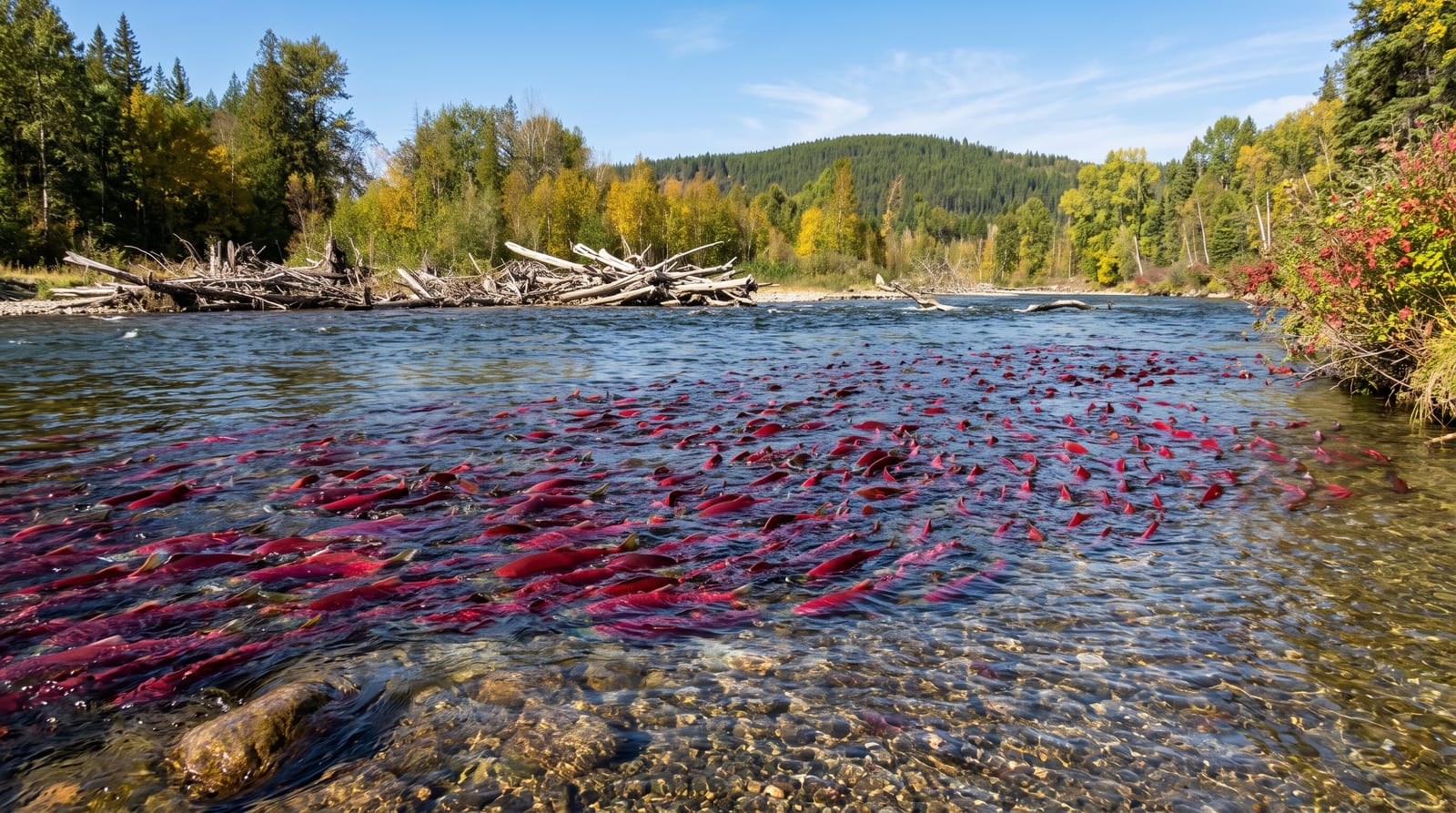
Adams River sockeye run on a four-year cycle, and in the dominant years, which fall in 2026, 2030 and so on, the return can reach several million fish; in the intervening years the run is a fraction of that. The fish hatch here, go to sea for two years and come back about four hundred kilometres up the Fraser and Thompson without feeding, turning deep red with green heads as they mature. They spawn in the gravel and die within days, and the carcasses feed eagles, bears and the forest itself. Viewing platforms and gravel paths run along the river through Roderick Haig-Brown Provincial Park, with an interpretive event, the Salute to the Sockeye, in dominant years.
What you'll find
- The red fish - sockeye in spawning colour packed into the shallows.
- The spawning gravel - females cutting nests and males fighting over them.
- The scavengers - eagles, gulls and bears working the dead fish.
- The riverside paths - platforms and gravel trails along the spawning reach.
When to go
October, peaking mid-month, and only worth a special trip in a dominant year; the next are 2026 and 2030. Off-cycle years still have fish but in far smaller numbers.
Things to know
Three years out of four the run is a small fraction of the spectacle, which catches many visitors out. Dominant years bring very heavy traffic and paid parking. The smell of dying fish is strong.
Nearby
Shuswap Lake lies east; Kamloops is west.
What to pack for Adams River Salmon Run
Chosen from what this place is for. Tap a kit for the full checklist.
- Broken-in walking shoes or boots - Grip and ankle support matter more than looks; never hike in brand-new boots. Find on Amazon
- Layers + a waterproof shell - Mountain weather turns fast; a packable rain jacket saves the day. Find on Amazon
- Daypack with rain cover - 20-30 litres holds water, snacks, layers and a first-aid kit. Find on Amazon
- Offline maps + a power bank - Download the trail before you lose signal; carry backup charge. Find on Amazon
Some links on this page are Amazon affiliate links - if you buy through them we may earn a small commission at no extra cost to you.
All packing kitsPlan your trip
Where to start if Adams River Salmon Run is going on the list.
Booking links on this page are affiliate links - if you book through them we may earn a small commission at no extra cost to you. It never changes what we write about a place.
Opening times, ticket prices and seasonal closures change - check the official source before you go: official site.


