Faro National Park
A remote northern savanna park on the Nigerian border, along the Faro and Deo rivers.
Updated 21 October 2026
Faro covers around three thousand three hundred square kilometres of wooded savanna and riverine forest in the north-west against the Nigerian border, drained by the Faro and Deo rivers, and it is the least accessible of the northern parks. Hippopotamus and crocodile occupy the rivers, and the savanna holds giant eland, buffalo, kob, hartebeest and lion. It was among the last places in Cameroon where black rhinoceros survived; the western black rhino was declared extinct in 2011 and none remain. The park has very little infrastructure and is visited mainly by researchers and by hunters using the surrounding zones, with tracks passable only in the dry months.
History
The park was part of the Lamido de Tchamba forest reserve, protected since 1947, and became a national park in the 1980s, covering 3,418 square kilometres. Across the Nigerian border it continues as Gashaka Gumti National Park, part of a wider protected landscape (Wikipedia, Faro National Park).
The landscape
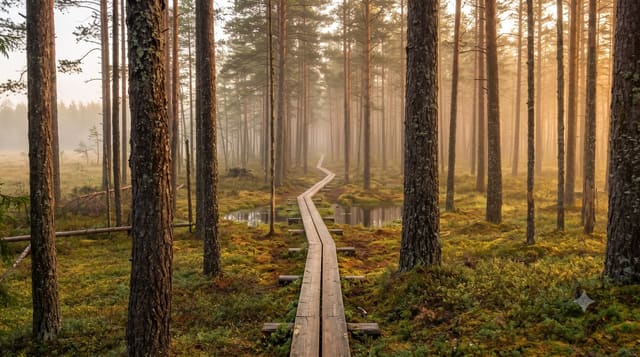
- The Faro and Deo rivers - the water running through the savanna.
- Hippos and crocodiles - the river species of the park.
- Giant eland and buffalo - the large savanna mammals.
- Riverine gallery forest - the wooded strips along the water.
When to go
January to April, the driest months. Two to three days. Access requires permits, guides and a capable vehicle arranged in advance.
Good to know
This is the hardest of the northern parks to reach and has almost no visitor infrastructure. The western black rhino that once lived here is extinct. Tracks are impassable for much of the year.
Nearby
Poli is east; the Nigerian border lies west.
Key facts
Source: Wikidata, item Q1397016, read on 18 October 2026.
What to pack for Faro National Park
Chosen from what this place is for. Tap a kit for the full checklist.
- Broken-in walking shoes or boots - Grip and ankle support matter more than looks; never hike in brand-new boots. Find on Amazon
- Binoculars - The single best wildlife tool - even a compact pair transforms a sighting. Find on Amazon
- Layers + a waterproof shell - Mountain weather turns fast; a packable rain jacket saves the day. Find on Amazon
- A zoom camera or long lens - Animals rarely come close; reach beats megapixels. Find on Amazon
Some links on this page are Amazon affiliate links - if you buy through them we may earn a small commission at no extra cost to you.
All packing kitsPlan your trip
Where to start if Faro National Park is going on the list.
Booking links on this page are affiliate links - if you book through them we may earn a small commission at no extra cost to you. It never changes what we write about a place.
Opening times, ticket prices and seasonal closures change - check the official source before you go: official site.