Phnom Chisor
An eleventh-century hilltop temple south of Phnom Penh, reached by a long stairway with rice paddies spread out below.
Updated 21 October 2026
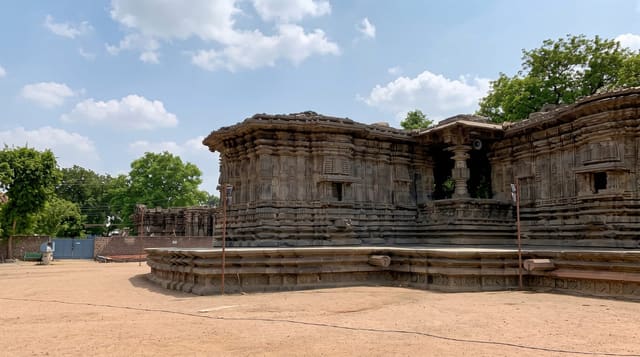
Phnom Chisor stands on a hill about a hundred metres above the Takeo plain, a Hindu temple of the early eleventh century built of laterite and brick with sandstone lintels, its sanctuary still holding images and a working monastery alongside. The original approach was a stone stairway on the eastern side running down to a gate and a baray, and looking along that line from the top, with two smaller temples on the axis and the paddies stretching away, is the thing to see; most visitors now climb a newer stairway of several hundred steps instead. Carved lintels survive over several doorways. The site is quiet, sees few foreign visitors, and combines with Tonle Bati on a day out from the capital.
What's there
- The hilltop sanctuary - the eleventh-century temple and its images.
- The eastern axis - the old stairway, gate and baray in a straight line.
- Carved lintels - surviving sandstone carving over the doorways.
- The paddy panorama - the Takeo plain from the summit.
When to go
November to March; the climb is hard in the hot season. Early morning is coolest and the light along the eastern axis is best then. Holy days bring local worshippers.
Before you go
The stairway is several hundred steps with little shade. The temple is ruined in parts and the modern monastery buildings sit awkwardly against it. Facilities are minimal and vendors work the stairs. Interpretation is nonexistent.
Nearby
Tonle Bati lies north; Phnom Penh is beyond it.
Key facts
Source: Wikidata, item Q1628273, read on 18 October 2026.
What to pack for Phnom Chisor
Chosen from what this place is for. Tap a kit for the full checklist.
- Comfortable walking shoes - Sightseeing means kilometres of pavement and cobbles daily. Find on Amazon
- Modest clothing - Shoulders and knees covered - the single most common requirement. Find on Amazon
- A slim anti-theft daypack - Zips that close properly; keep it in front in crowds and on transit. Find on Amazon
- A scarf or shawl - To cover the head or shoulders on entry; women especially at mosques. Find on Amazon
Some links on this page are Amazon affiliate links - if you buy through them we may earn a small commission at no extra cost to you.
All packing kitsPlan your trip
Where to start if Phnom Chisor is going on the list.
Booking links on this page are affiliate links - if you book through them we may earn a small commission at no extra cost to you. It never changes what we write about a place.
Opening times, ticket prices and seasonal closures change - check the official source before you go: official site.