The Rila Monastery
The spiritual heart of Bulgaria - a magnificent Orthodox monastery of striped arcades and dazzling frescoes set deep in forested mountains, the largest and most revered in the country, a UNESCO site.
Updated 18 October 2026
AI illustration
UNESCO World Heritage
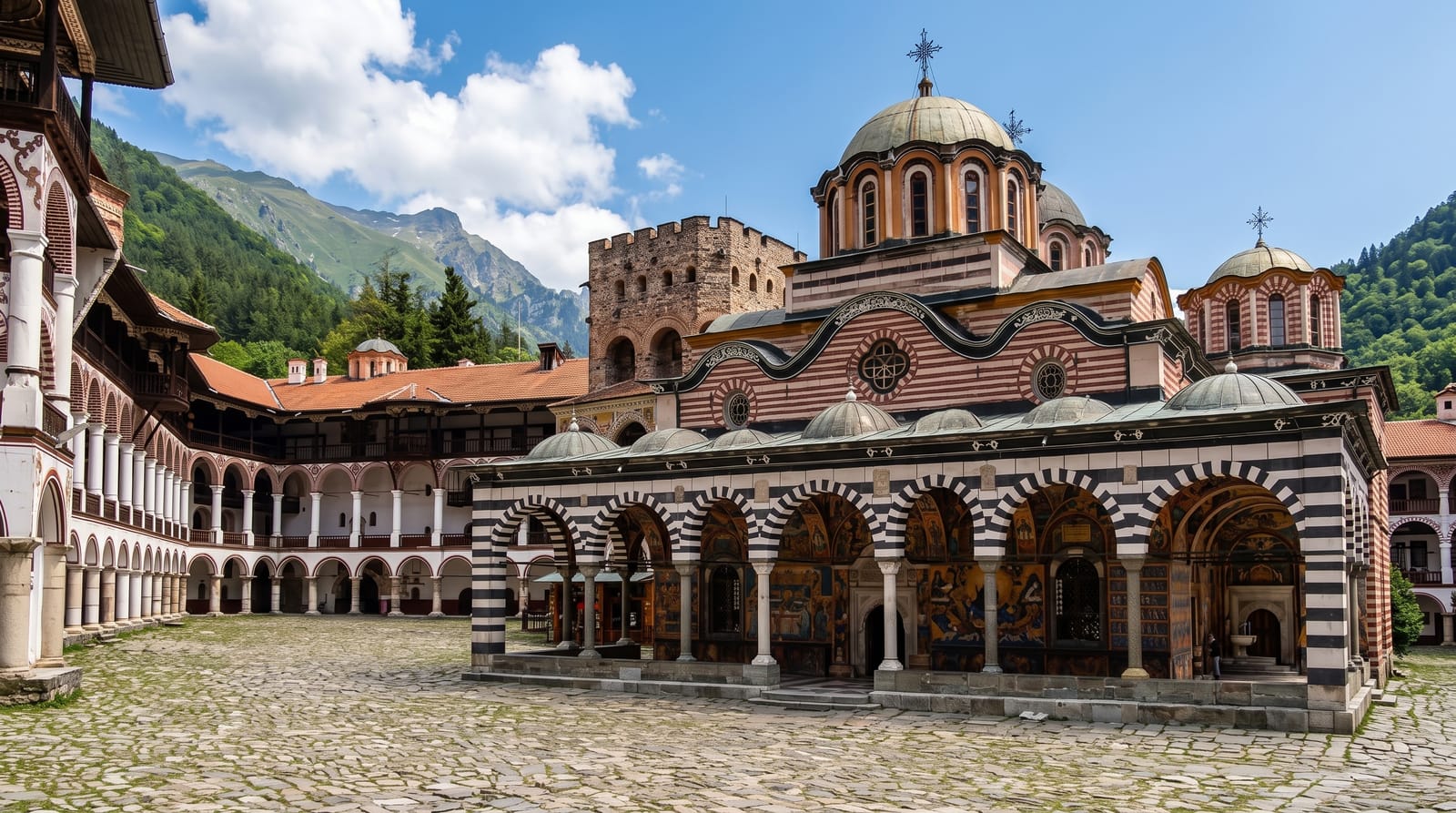
The Rila Monastery, set deep in a forested valley of the Rila Mountains, is the largest and most important Orthodox monastery in Bulgaria and the spiritual heart of the nation, a UNESCO site founded over a thousand years ago. Rebuilt in the nineteenth century as a symbol of Bulgarian identity, its striking main courtyard is ringed by tiers of black-and-white striped arcades, and its church blazes with vivid, exquisitely detailed frescoes, both inside and out, one of the most beautiful and revered sights in the country.
History
Tradition holds that the monastery was founded by the hermit Saint Ivan of Rila (876-946) in the reign of Tsar Peter I, though the hermit himself lived in a cave nearby and the complex was built by his students. The feudal lord Hrelja re-erected it on its present site in the first half of the 14th century, when the Tower of Hrelja (1334-1335) was built; after Ottoman raids laid it waste in the mid-15th century it was rebuilt at the end of that century with donations from Sultana Mara Branković, the Russian Orthodox Church and the Rossikon monastery on Mount Athos, and in 1469 the relics of Saint Ivan were brought back from Tarnovo. After a fire in 1833 it was rebuilt between 1834 and 1862 under the architect Alexi Rilets with money from Bulgarians across the country, and it became a national historical monument in 1976 and a World Heritage Site in 1983 (Wikipedia, Rila Monastery).
What you'll find
- The striped courtyard - the tiers of black-and-white arcades.
- The frescoes - the vivid painted scenes covering the church.
- The Hrelyo Tower - the oldest surviving medieval tower.
- The mountain setting - the monastery deep in the forested mountains.
When to go
May to October for the best weather in the mountains; go early to enjoy the courtyard before the tour crowds arrive from Sofia. Autumn brings beautiful colour to the surrounding forest, and it is a peaceful, atmospheric place outside peak times.
What to expect
It is a popular day trip from Sofia, so it can be busy with tour groups by midday; going early or staying in the area gives a calmer, more atmospheric visit. As a working, sacred monastery, modest dress and respectful, quiet behaviour are required. It is a couple of hours' drive from Sofia into the mountains. Its frescoes and setting, though, are genuinely stunning.
Nearby
Sofia, the Seven Rila Lakes and the Rila Mountains are within reach.
Key facts
Source: Wikidata, item Q207945, read on 18 October 2026.
What to pack for The Rila Monastery
Chosen from what this place is for. Tap a kit for the full checklist.
- Head torch + spare batteries - Hands-free light is essential; caves are truly dark. Find on Amazon
- Comfortable walking shoes - Sightseeing means kilometres of pavement and cobbles daily. Find on Amazon
- Modest clothing - Shoulders and knees covered - the single most common requirement. Find on Amazon
- Grippy closed shoes - Cave floors are wet, muddy and slick with formations. Find on Amazon
Some links on this page are Amazon affiliate links - if you buy through them we may earn a small commission at no extra cost to you.
All packing kitsPlan your trip
Where to start if The Rila Monastery is going on the list.
Booking links on this page are affiliate links - if you book through them we may earn a small commission at no extra cost to you. It never changes what we write about a place.
Opening times, ticket prices and seasonal closures change - check the official source before you go: official site.