Tijuca National Park
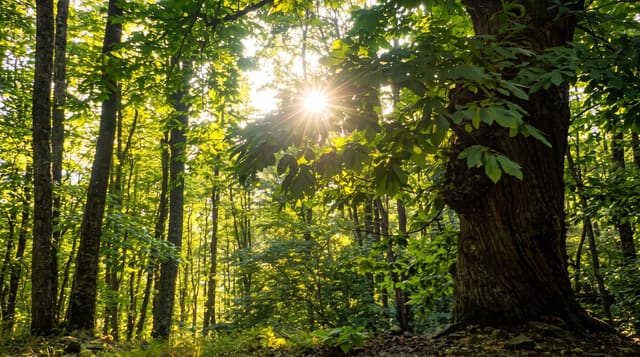
A hand-planted forest inside Rio, replanted from coffee land in the 1860s and now covering the hills above the city.
Updated 18 October 2026
UNESCO World Heritage
Tijuca is often described as the largest urban forest in the world, and the claim needs qualifying: at around thirty-two square kilometres it is smaller than Pedra Branca State Park on the other side of the same city, so what makes Tijuca remarkable is not size but origin. The hills had been cleared for coffee by the mid-nineteenth century, and Rio's water supply failed as a result; from 1861 six enslaved workers under the forest manager, Major Manuel Gomes Archer, replanted them by hand, setting out more than 100,000 trees by 1887. What grew back is now a functioning Atlantic forest with howler monkeys, agoutis, toucans and reintroduced species, and it holds Corcovado, the Cascatinha waterfall, the Chinese View and the Mayrink chapel.
History
In the 1700s the forests around Rio de Janeiro were cleared for fuel, coffee and livestock, and as the streams that fed the city dried up it began to suffer water shortages and flash floods. In 1817 King João VI banned cutting trees around the springs of the Carioca River, about 3,000 seedlings were planted on the slopes of Corcovado in 1846-1847, and in 1861 Emperor Pedro II brought the area under federal control; six enslaved people, Eleutério, Constantino, Manuel, Mateus, Leopoldo and Maria, working under the forest manager Major Manuel Gomes Archer, planted more than 100,000 trees between 1861 and 1887, mostly native hardwoods. Christ the Redeemer was built on Corcovado between 1922 and 1931, the forest was declared a national park in 1961, and in 2012 UNESCO listed the landscapes of Rio de Janeiro, including the park, as a World Heritage Site (Wikipedia, Tijuca National Park).
What you'll find
- A forest planted by hand - replanted from coffee land beginning in 1861.
- Working Atlantic forest - howler monkeys, agoutis and toucans inside the city.
- Cascatinha and the Chinese View - the nineteenth-century park set pieces.
- Corcovado on its ridge - the peak that rises out of the park.
When to go
April to October, the drier months. A day. Start early for the wildlife.
Before you go
The park is split into sectors that are not connected by road, so a day usually means choosing one. Public transport to the entrances is poor and organised transport or taxi is the practical option. Trails are slippery after rain, and some are advised to be walked in groups.
Nearby
Corcovado is inside the park; Santa Teresa and the Botanical Garden are below.
Key facts
Source: Wikidata, item Q1974494, read on 18 October 2026.
What to pack for Tijuca National Park
Chosen from what this place is for. Tap a kit for the full checklist.
- Broken-in walking shoes or boots - Grip and ankle support matter more than looks; never hike in brand-new boots. Find on Amazon
- Binoculars - The single best wildlife tool - even a compact pair transforms a sighting. Find on Amazon
- Layers + a waterproof shell - Mountain weather turns fast; a packable rain jacket saves the day. Find on Amazon
- A zoom camera or long lens - Animals rarely come close; reach beats megapixels. Find on Amazon
Some links on this page are Amazon affiliate links - if you buy through them we may earn a small commission at no extra cost to you.
All packing kitsPlan your trip
Where to start if Tijuca National Park is going on the list.
Booking links on this page are affiliate links - if you book through them we may earn a small commission at no extra cost to you. It never changes what we write about a place.
Opening times, ticket prices and seasonal closures change - check the official source before you go: official site.