Porto de Galinhas
Reef pools reached by wooden raft off the Pernambuco coast, on a beach named for a coded slave trade after abolition.
Updated 19 October 2026
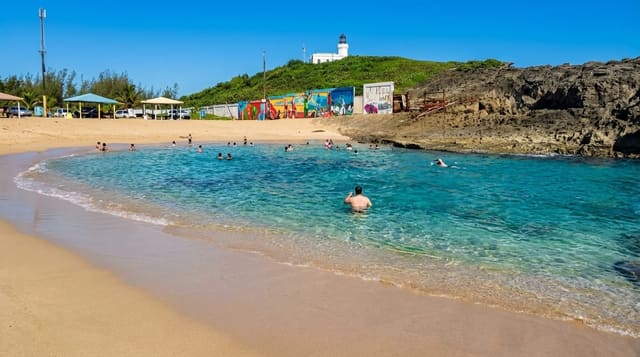
The name means port of chickens, and its origin is not decorative: after Brazil banned the Atlantic slave trade in 1831, enslaved Africans continued to be landed here illegally, and the coded phrase used to signal a delivery referred to Angolan chickens. The beach itself is fringed by a reef about a hundred metres out, and at low tide the water between reef and shore drops to waist depth and clears, forming pools full of reef fish. Jangadas - small wooden rafts - ferry people out to them on a fixed rotation, and the timing is set entirely by the tide tables. Around it are Muro Alto with its calm lagoon, Maracaipe for surf, and a heavily developed strip of resorts, shops and restaurants.
History
By local history the place was called Porto Rico, rich port, until 1850, when it became a landing for enslaved people brought illegally for the sugar plantations. To hide the trade they were shipped together with guineafowl, and the traffickers' password, there are new chickens in the port, gave the beach its name (Wikipedia, Porto de Galinhas).
What to look for
- Reef pools at low tide - clear waist-deep water a hundred metres out.
- Jangada rafts - wooden boats ferrying visitors on a fixed rotation.
- A name from the illegal trade - the code used after the 1831 ban.
- Muro Alto and Maracaipe - the calm lagoon and the surf beach either side.
When to go
September to March. Three days, timed to low tides for the pools.
Practical notes
The pools only work around low tide and are crowded when they do; fish feeding is now restricted, so the show is quieter than the photographs suggest. The village is very developed and commercial. Rafts, buggies and vendors sell constantly.
Nearby
Maracaipe is south; Recife and Olinda are north up the coast.
Key facts
Source: Wikidata, item Q2334856, read on 18 October 2026.
What to pack for Porto de Galinhas
Chosen from what this place is for. Tap a kit for the full checklist.
- Reef-safe sunscreen - High SPF that will not bleach the coral you are swimming over. Find on Amazon
- Quick-dry clothing - Board shorts or synthetics that shrug off spray and dry fast. Find on Amazon
- Quick-dry towel - A microfibre towel packs small and dries in minutes. Find on Amazon
- Secure water shoes or reef boots - Grip on slippery launches and protection on rocky shores. Find on Amazon
Some links on this page are Amazon affiliate links - if you buy through them we may earn a small commission at no extra cost to you.
All packing kitsPlan your trip
Where to start if Porto de Galinhas is going on the list.
Booking links on this page are affiliate links - if you book through them we may earn a small commission at no extra cost to you. It never changes what we write about a place.
Opening times, ticket prices and seasonal closures change - check the official source before you go: official site.