Photographing the Northern Lights
The aurora is easier to shoot than you fear and harder than your phone promises. Settings, kit and fieldcraft for bringing the lights home.
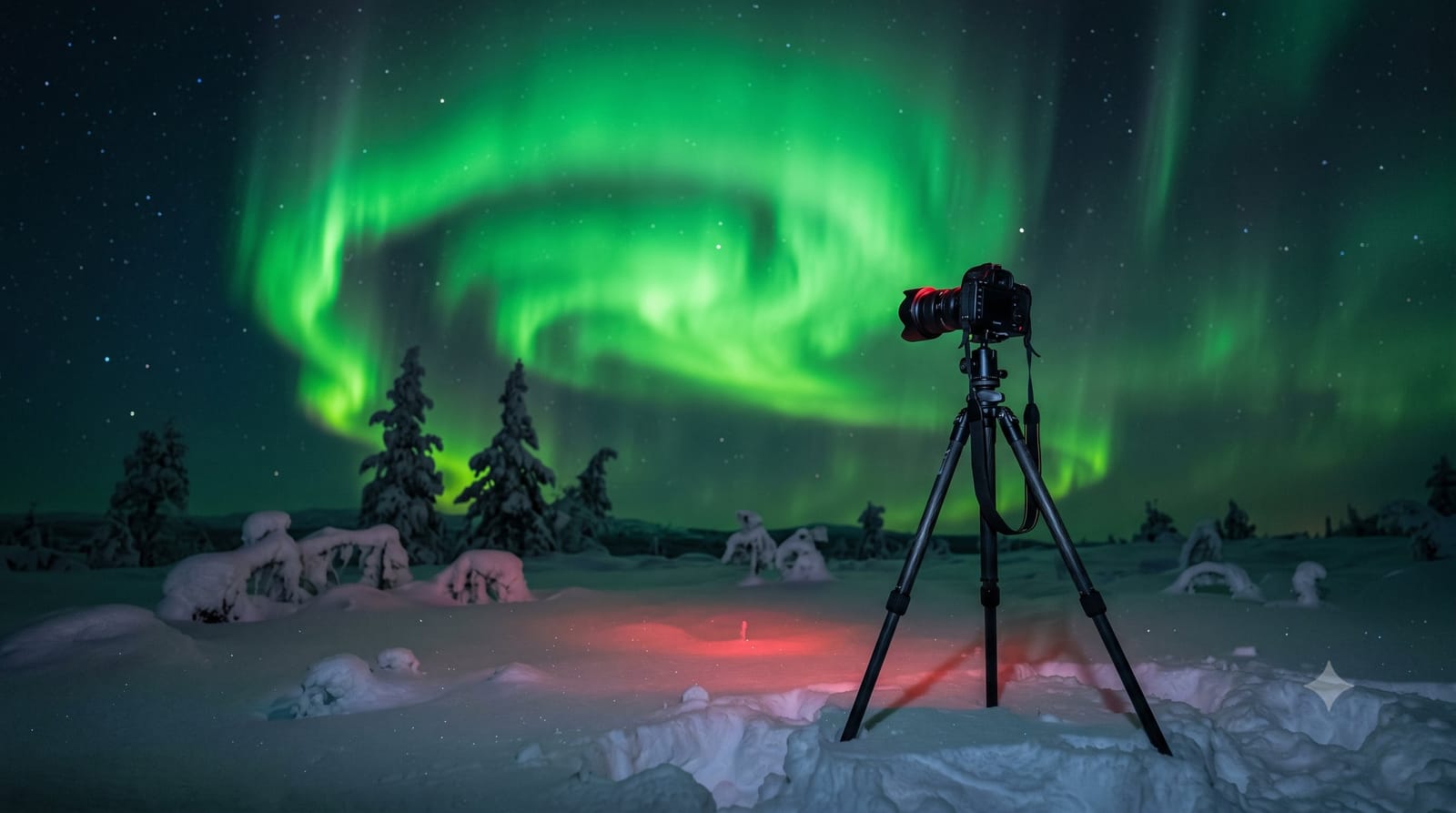
Illustrative image.
Some links on this page are Amazon affiliate links - if you buy through them we may earn a small commission at no extra cost to you. We only list the kind of gear we would pack ourselves.
The northern lights photograph better than they look, which is the good news: the camera gathers colour your eyes cannot. The bad news is that the aurora appears at night, in deep cold, on its own schedule. Here is how to be ready when the sky switches on.
The settings that work
Aurora photography is one recipe with small adjustments:
- Manual mode, manual focus. Autofocus is blind in the dark; focus on a bright star or distant light, or set infinity by day and tape the ring.
- Aperture as wide as the lens goes, f/2.8 or brighter ideally.
- Shutter 3 to 10 seconds: shorter for fast, dancing displays to keep structure; longer for faint glow.
- ISO 1600 to 6400, whatever your camera tolerates.
- Raw format, white balance around 3500-4000 K.
Modern phones with night mode genuinely capture strong displays now - brace the phone on a rock or a small tripod and let the multi-second exposure run.
The kit beyond the camera
A sturdy compact tripod is non-negotiable at multi-second exposures. Cold halves battery life, so carry spares in an inner pocket and swap warm for cold. A head torch with red light preserves night vision, and the full checklist lives in our photography kit. Above all, dress beyond what seems reasonable: aurora watching is standing still at -15°C, and the cold-weather kit plus chemical hand warmers decide how long you last, which decides what you catch.
Fieldcraft beats forecasts
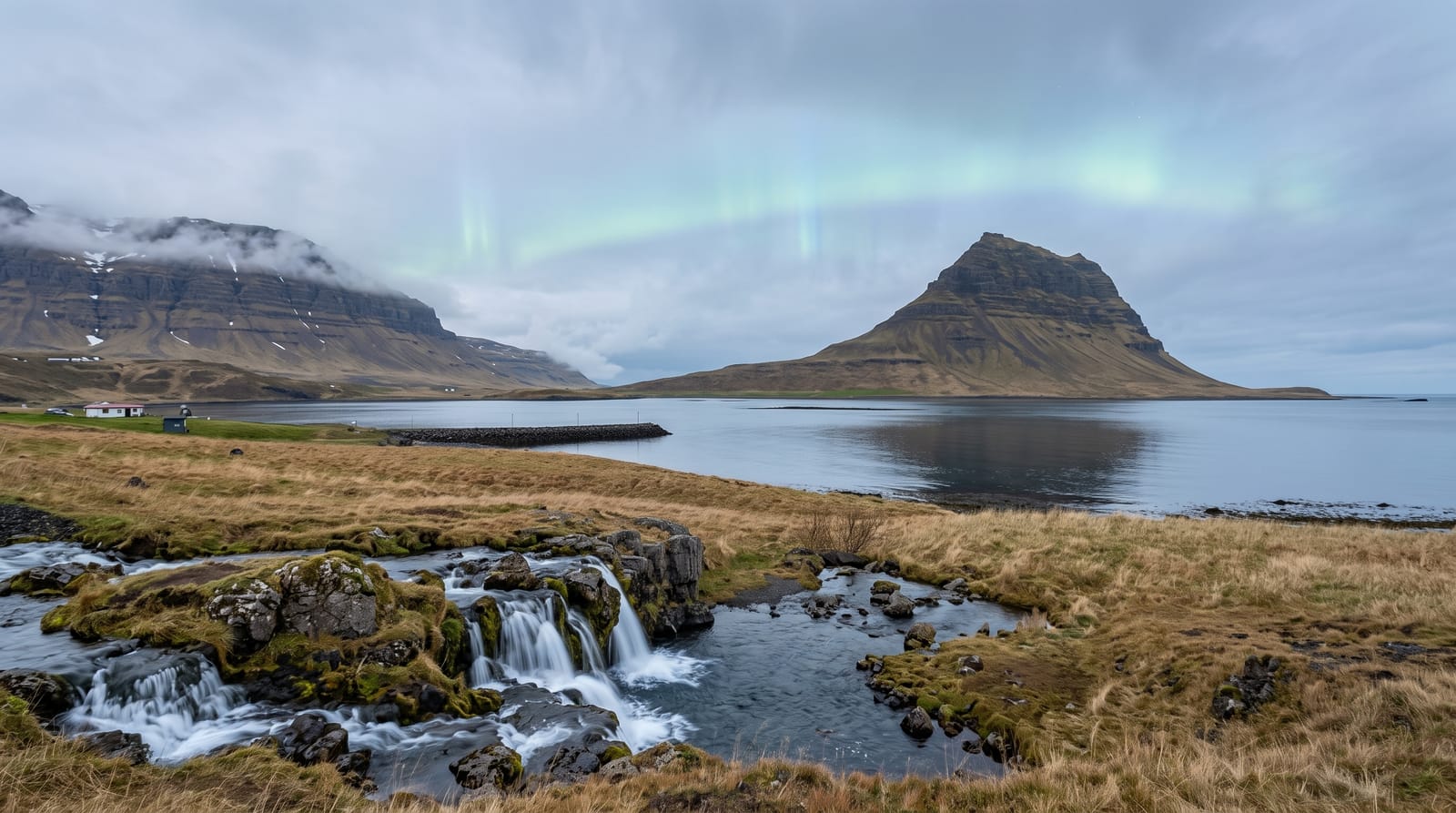
Check the aurora forecast (the Kp index) and the cloud forecast, and trust cloud more: a strong aurora above cloud is worth nothing. Get away from town light, put something in the foreground - a cabin, a shoreline, Kirkjufell's arrowhead - because sky-only shots all look alike. Then commit hours, not minutes: displays pulse, vanish and return, and the best burst is often near midnight or later.
Where the odds are best
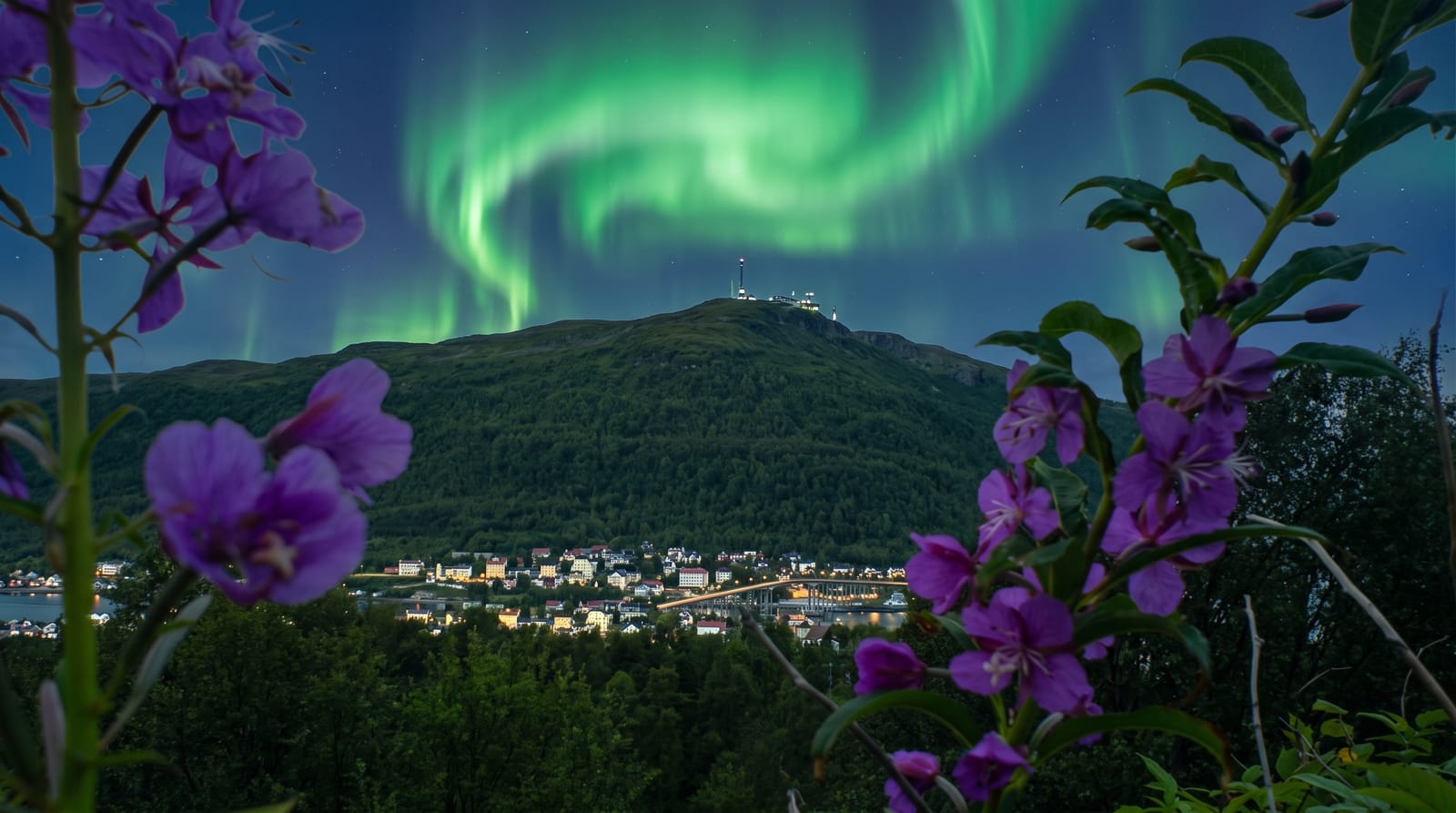
The reliable band runs through Finnish Lapland, Tromso and Iceland, September to March, with dark-moon weeks best. Two clear nights in the zone give most visitors their lights.
And one rule from every aurora guide alive: when the big display comes, stop shooting for a minute and just watch. The camera version is brighter, but it is not the one you will remember.