Deserts Worth the Detour
Six deserts that repay the effort of reaching them - Wadi Rum, Atacama, Sossusvlei, the Sahara at Merzouga, Uyuni and Antelope Canyon.

AI illustration.
Some links on this page are Amazon affiliate links - if you buy through them we may earn a small commission at no extra cost to you.
Deserts are the landscapes that teach silence. These six are worth building whole trips around - each one linked to our full page with seasons, access and the honest logistics.
1. Wadi Rum, Jordan
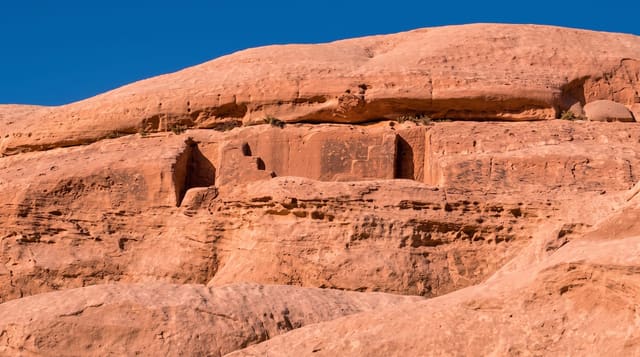
Sandstone mountains rising sheer from red sand, Bedouin camps in their shadow, and night skies that explain why people invented astronomy. Wadi Rum is best done overnight - jeep through the valleys by day, tea by the fire, sleep under more stars than seems reasonable. It pairs naturally with Petra two hours away; the Jordan good-to-know page has the courtesies.
2. Atacama, Chile
The driest place most travellers will ever stand, and the strangest: salt lakes with flamingos, geysers steaming at dawn, valleys so barren space agencies test rovers there. The Atacama clusters neatly around San Pedro, and its night skies host some of Earth's great observatories for a reason.
3. Sossusvlei, Namibia
Apricot-coloured dunes among the tallest anywhere, and beneath them Deadvlei: a white clay pan studded with camelthorn trees dead for centuries, black against orange. Sossusvlei at sunrise is the desert photograph everyone carries in their head - arrive at gate opening to climb the dunes before heat and light flatten.
4. Merzouga, Morocco
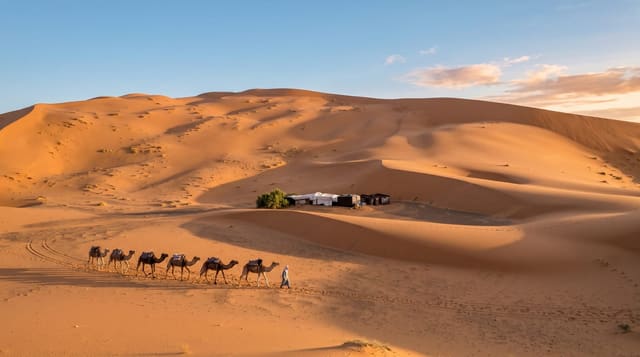
The accessible Sahara: proper film-set ergs of golden dunes at the end of an actual road. From Merzouga, camel caravans walk into the sand sea for the night - sunset from a dune crest, drumming at camp, dawn silence. Touristy? Somewhat. Still magnificent? Completely.
5. Salar de Uyuni, Bolivia
Not sand but salt: a blinding white plain to every horizon that floods into the world's largest mirror in the rainy season. Uyuni is a high-altitude expedition among cactus islands and coloured lagoons - see the Bolivia good-to-know notes on acclimatising first.
6. Antelope Canyon, United States
The desert turned inward: a slot canyon of flowing sandstone waves where light falls in visible shafts. Antelope Canyon is on Navajo land and visited only with Navajo guides - book well ahead for midday slots when the famous light beams appear.
The practical bit
Deserts punish improvisation: real sun protection, more water than feels sensible and warm layers for nights that plummet - the hot sun kit covers the day and a warm layer saves the night; a headlamp turns desert camps from stumbling to stargazing. Browse our national parks and viewpoints for more empty magnificence.
When to go and how long
- Wadi Rum Jordan Best season March to May and September to November Time to allow One to two days
- Petra Jordan Best season March to May and September to November Time to allow One to two days
- The Atacama Desert Chile Best season Year-round Time to allow Several days
- Sossusvlei and Deadvlei Namibia Best season April to October Time to allow A day
- The Sahara at Merzouga Morocco Best season October to April Time to allow One to two days
- The Salar de Uyuni Bolivia Best season May to November (dry); December to March (mirror) Time to allow One to three days
- Antelope Canyon United States Best season March to October; midday for light beams Time to allow One to two hours
Taken from each place page, where opening rules and the official link are kept.