Beaches Where Turtles Come Home
Sea turtles return to their birth beaches to nest by night - Tortuguero, Galibi and Mayotte host the spectacle, under rules that keep it alive.

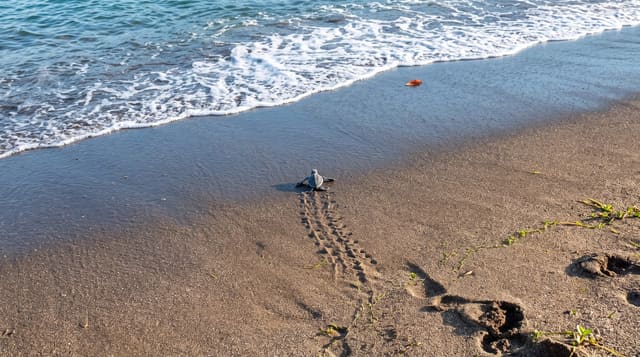
AI illustration.
Sea turtles navigate entire oceans and then, decades later, haul out on the very beach where they hatched - one of nature's most stubborn homecomings. Watching a nesting night, done under proper rules, is quiet, slow and unforgettable: a creature from a lineage older than the dinosaurs' extinction dragging herself uphill by moonlight to dig with the patience of geology.
Tortuguero: the turtle factory
Costa Rica's Tortuguero - "turtle catcher" by name - is the Caribbean's great green turtle nursery: a roadless strip of black-sand beach and jungle canals reachable only by boat or small plane. In season, licensed guides lead small groups onto the dark beach to watch females nest; the town switched from harvesting turtles to guarding them within living memory, and the turnaround is the conservation story guides tell with real pride.
Galibi: the remote option
At the mouth of Suriname's Marowijne River, Galibi hosts nesting greens, olive ridleys and - the giants - leatherbacks, on beaches shared with Kalina indigenous villages whose guides run the visits. Getting there is a boat journey; the reward is a nesting beach with almost no one on it and, on the right nights, the arrival of a leatherback the size of a dining table.
Mayotte: the lagoon nursery
The Indian Ocean island of Mayotte wraps one of the world's largest lagoons, and its quieter beaches host green turtles nesting year-round - with the bonus that its seagrass shallows let snorkellers watch turtles graze by day, no nesting disturbance involved. It is the most accessible "turtles on their terms" combination on this list.
The rules that keep it working
Nesting turtles are easily turned back: white light, noise, movement and crowds can make a female abandon her attempt. The universal code - go only with licensed guides, no flash or phone screens, red-filtered light held low by the guide alone, stay behind the animal, never touch eggs or hatchlings - is not etiquette but biology. Booked hatchery releases and "guaranteed encounters" deserve scepticism; the real thing runs on the turtles' schedule, and a no-show night is part of honest wildlife travel.
The practical bit
Nesting is night work in warm, wet places: dark clothing, closed shoes for soft sand, insect repellent applied before the beach (never on it - scent carries), and the wildlife kit's patience-tools. The rainforest kit covers Tortuguero's humid logistics. Seasons differ by species and coast - each place page carries its calendar, and our nature category maps more coastlines where the ocean's oldest commuters come home.
When to go and how long
- Tortuguero National Park Costa Rica Best season July to October for turtles; February to April drier Time to allow Two to three days
- The Galibi Turtles Suriname Best season February to August (nesting) Time to allow One to two days
- The Sea Turtles of Mayotte Mayotte Best season May to October Time to allow A day
Taken from each place page, where opening rules and the official link are kept.