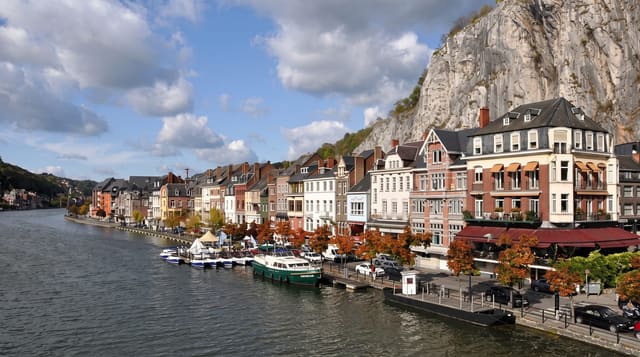
Freyr Castle
A Renaissance and eighteenth-century house on the Meuse below climbing cliffs, with a Le Notre-style garden.
Updated 31 August 2026
Freyr stands directly on the bank of the Meuse below a wall of limestone cliffs, begun in the sixteenth century and extended in the seventeenth and eighteenth into a long low house around three sides of a court open to the river. Louis XIV signed a treaty here in 1675 and Marie Christine of Austria stayed. The gardens laid out in 1760 in the manner of Le Notre are the strength: box parterres, water basins, radiating avenues, and a set of orange trees in tubs that have been in the same family since 1789, along with a maze of clipped hedges on the terraces above. The cliffs behind, the Rochers de Freyr, are among the oldest climbing grounds in Europe, worked since the nineteenth century.
What you'll find
- A Le Notre-style garden - parterres, basins and radiating avenues from 1760.
- Orange trees since 1789 - the same tubbed trees kept by the family.
- The hedge maze on the terraces - clipped walks above the house.
- The climbing cliffs behind - among Europe's oldest climbing grounds.
When to go
April to October; opening is largely weekends and holidays in the shoulder months and daily in high summer. Two hours. The gardens are best in early summer. Check opening before travelling.
Things to know
Opening days are limited and mostly weekends outside July and August. Interior visits are by guided tour in French. The Meuse road runs directly past and traffic is audible throughout. Parking is on the roadside.
Nearby
Dinant is north on the Meuse; Hastiere lies south.
What to pack for Freyr Castle
Chosen from what this place is for. Tap a kit for the full checklist.
- Comfortable walking shoes - Sightseeing means kilometres of pavement and cobbles daily. Find on Amazon
- A slim anti-theft daypack - Zips that close properly; keep it in front in crowds and on transit. Find on Amazon
- A refillable water bottle - Many cities have public fountains; save money and plastic. Find on Amazon
- A light layer + compact umbrella - For museum air-con and a sudden shower. Find on Amazon
Some links on this page are Amazon affiliate links - if you buy through them we may earn a small commission at no extra cost to you.
All packing kitsPlan your trip
Where to start if Freyr Castle is going on the list.
Booking links on this page are affiliate links - if you book through them we may earn a small commission at no extra cost to you. It never changes what we write about a place.
Opening times, ticket prices and seasonal closures change - check the official source before you go: official site.