De Westhoek Nature Reserve
The largest dune reserve in Belgium at the French border, with a bare shifting sand plain behind the beach.
Updated 31 August 2026
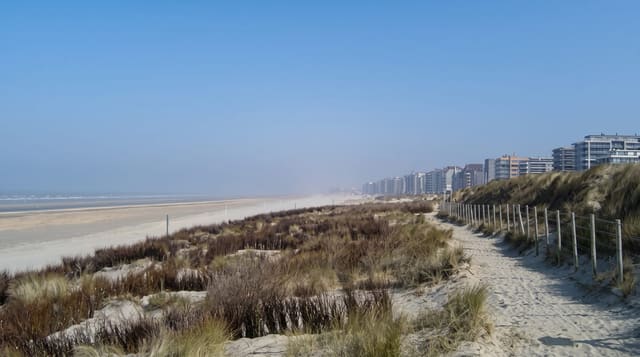
De Westhoek covers about three hundred and forty hectares at the western end of the Belgian coast, the largest dune reserve in the country and one of the least altered, running from the beach inland through fixed dunes, dune grassland, scrub and pine to a large open sand plain known locally as the Sahara, where the sand still moves and vegetation has not taken hold. That mobile dune is unusual on a coast that is otherwise almost entirely built up and stabilised. It is important for orchids, for the natterjack toad and for migrating birds, and it is grazed by ponies and cattle to hold back scrub. Marked paths cross it from De Panne, and the reserve continues over the French border as the Dunes de Ghyvelde.
Highlights
- The mobile sand plain - a bare dune area still moving.
- Fixed dunes and grassland - the vegetated dune systems behind the beach.
- Orchids and natterjack toads - the species the reserve is managed for.
- Grazing ponies and cattle - the stock holding back scrub.
When to go
April to October, with May and June for orchids. Half a day. Summer weekends bring beach crowds to the edges but the reserve itself stays quiet. Wind is constant on the coast.
Things to know
There is no shade and the sand is hard walking. Paths are marked but the open dune is disorienting in mist. Dogs must be on leads and stock grazing means gates. The surrounding coast is heavily built up, which makes the reserve feel enclosed.
Nearby
De Panne is at the eastern edge; the French border runs along the west.
Key facts
Source: Wikidata, item Q2844908, read on 18 October 2026.
What to pack for De Westhoek Nature Reserve
Chosen from what this place is for. Tap a kit for the full checklist.
- Reef-safe sunscreen - High SPF that will not bleach the coral you are swimming over. Find on Amazon
- Loose, light, long clothing - Covering up beats bare skin in the desert - and locals dress this way for a reason. Find on Amazon
- Quick-dry towel - A microfibre towel packs small and dries in minutes. Find on Amazon
- A wide-brim hat + sunglasses - Shade for your face and eyes where there is none overhead. Find on Amazon
Some links on this page are Amazon affiliate links - if you buy through them we may earn a small commission at no extra cost to you.
All packing kitsPlan your trip
Where to start if De Westhoek Nature Reserve is going on the list.
Booking links on this page are affiliate links - if you book through them we may earn a small commission at no extra cost to you. It never changes what we write about a place.
Opening times, ticket prices and seasonal closures change - check the official source before you go: official site.