Nijhum Dwip
A young delta island in the far south with planted mangrove, spotted deer and vast winter shorebird flats.
Updated 31 August 2026
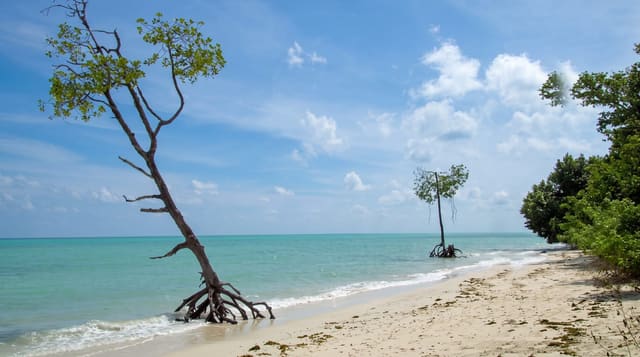
Nijhum Dwip, the silent island, rose from the Meghna estuary as a char in the mid-twentieth century and was planted with mangrove by the Forest Department from the 1970s, with spotted deer introduced into the plantation, and it is now a national park at the very edge of the delta: keora forest laced with tidal creeks, a deer population seen at dawn on the beaches and clearings, and mudflats around the island that carry very large numbers of wintering shorebirds and gulls, with several rarities recorded regularly. A small population fishes and farms. Getting there is a journey of launches, boats and motorbike rides via Hatiya, and staying means basic guesthouses, which is exactly why the flats remain as they are.
What you'll find
- Planted keora mangrove - the forest the island was given.
- Spotted deer on the beaches - the herds at dawn and dusk.
- Vast winter shorebird flats - waders and gulls in very large numbers.
- A young char island - land that rose from the estuary within living memory.
When to go
November to February for the birds and the calm season. Two to three days given the journey. Launch schedules from Dhaka change; the last legs are by local boat and motorbike.
Before you go
The journey is long, multi-stage and weather-dependent. Accommodation is very basic. There is no electricity for parts of the day and no facilities beyond the villages. Cyclone risk affects the transition months.
Nearby
Hatiya is across the channel; the open estuary lies south.
Key facts
Source: Wikidata, item Q3350292, read on 18 October 2026.
What to pack for Nijhum Dwip
Chosen from what this place is for. Tap a kit for the full checklist.
- Reef-safe sunscreen - High SPF that will not bleach the coral you are swimming over. Find on Amazon
- Padded shorts - The one thing that makes a full day in the saddle bearable. Find on Amazon
- Quick-dry towel - A microfibre towel packs small and dries in minutes. Find on Amazon
- Helmet - Bring your own if you have a good one; rentals vary wildly. Find on Amazon
Some links on this page are Amazon affiliate links - if you buy through them we may earn a small commission at no extra cost to you.
All packing kitsPlan your trip
Where to start if Nijhum Dwip is going on the list.
Booking links on this page are affiliate links - if you book through them we may earn a small commission at no extra cost to you. It never changes what we write about a place.
Opening times, ticket prices and seasonal closures change - check the official source before you go: official site.