Lucayan Heritage
What is known of the people who lived across these islands before 1492, and where their traces can still be seen.
Updated 1 September 2026
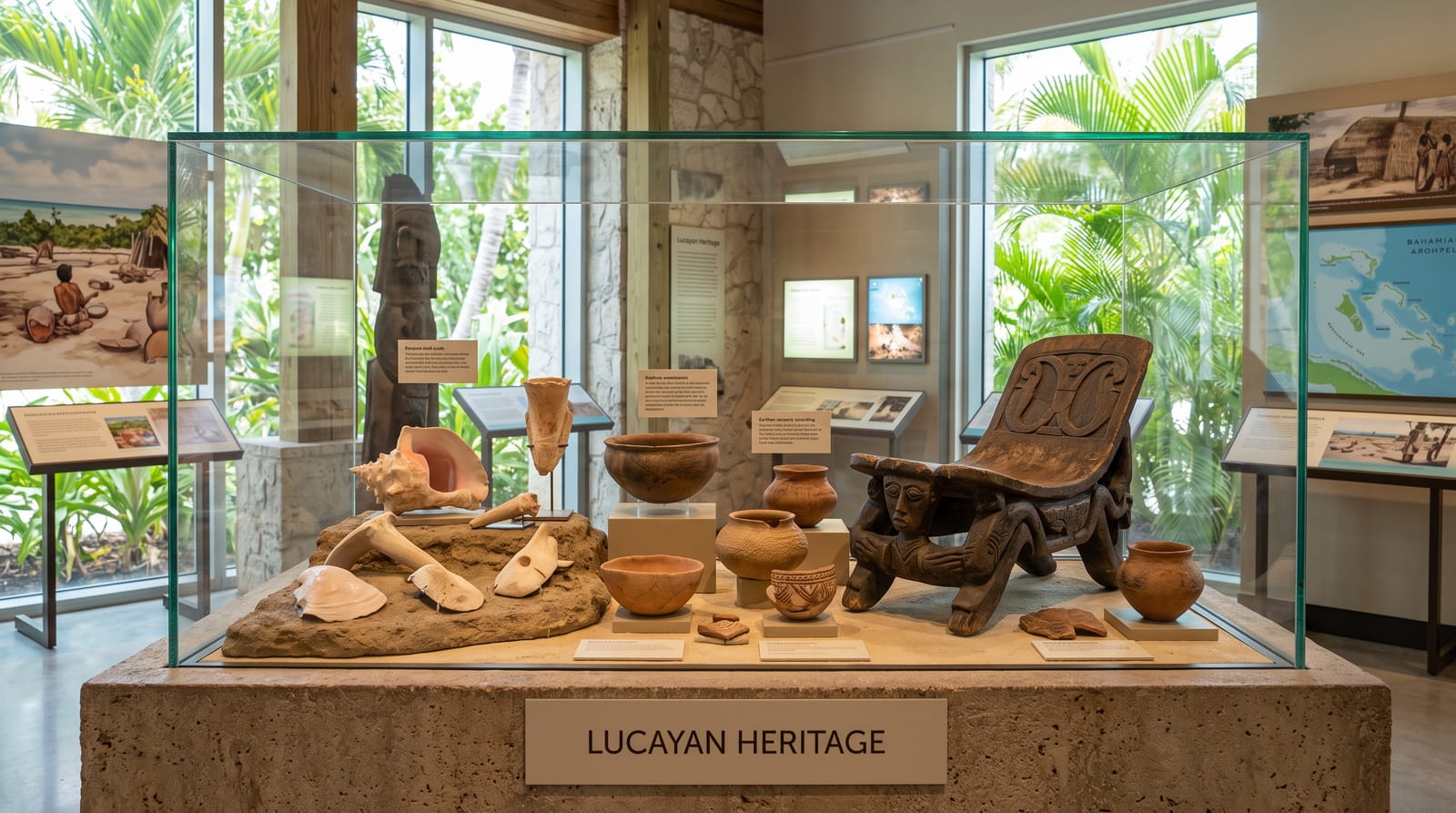
AI illustration
The Lucayans were the people living across the Bahamas when Columbus arrived, an Arawakan-speaking population related to the Taíno of the Greater Antilles, numbering perhaps forty thousand across the archipelago. Within about twenty-five years they were gone, taken to Hispaniola and elsewhere as forced labour and destroyed by disease. What they left is archaeological: duho seats and wooden objects preserved in blue holes, ceramics, shell tools, and the remains found in caves at Lucayan National Park on Grand Bahama, where skeletal material was recovered in the 1980s. Words survived into English through Spanish, including canoe, hammock and hurricane.
What you'll find
- Lucayan National Park caves - where remains and artefacts were recovered.
- Blue hole finds - wooden objects preserved in anoxic water.
- Museum collections - ceramics, shell tools and duhos in Nassau.
- The vocabulary - Lucayan words that entered English through Spanish.
When to go
Year-round for museums. Cave sites on Grand Bahama are open through the day within the national park. Archaeological work continues and new blue hole finds are reported periodically.
Practical notes
There is not a great deal to see: no standing structures survive and the material is scattered across small museum displays. Interpretation across the islands is thin and in places absent. Blue hole archaeology is not accessible to visitors. Anyone expecting a Taíno-scale heritage experience of the kind found in Hispaniola will be disappointed.
Nearby
Lucayan National Park is on Grand Bahama; the Nassau museums hold the collections.
What to pack for Lucayan Heritage
Chosen from what this place is for. Tap a kit for the full checklist.
- Quick-dry clothing - Board shorts or synthetics that shrug off spray and dry fast. Find on Amazon
- Head torch + spare batteries - Hands-free light is essential; caves are truly dark. Find on Amazon
- Comfortable walking shoes - Sightseeing means kilometres of pavement and cobbles daily. Find on Amazon
- Secure water shoes or reef boots - Grip on slippery launches and protection on rocky shores. Find on Amazon
Some links on this page are Amazon affiliate links - if you buy through them we may earn a small commission at no extra cost to you.
All packing kitsPlan your trip
Where to start if Lucayan Heritage is going on the list.
Booking links on this page are affiliate links - if you book through them we may earn a small commission at no extra cost to you. It never changes what we write about a place.
Opening times, ticket prices and seasonal closures change - check the official source before you go: official site.