Abaco National Park
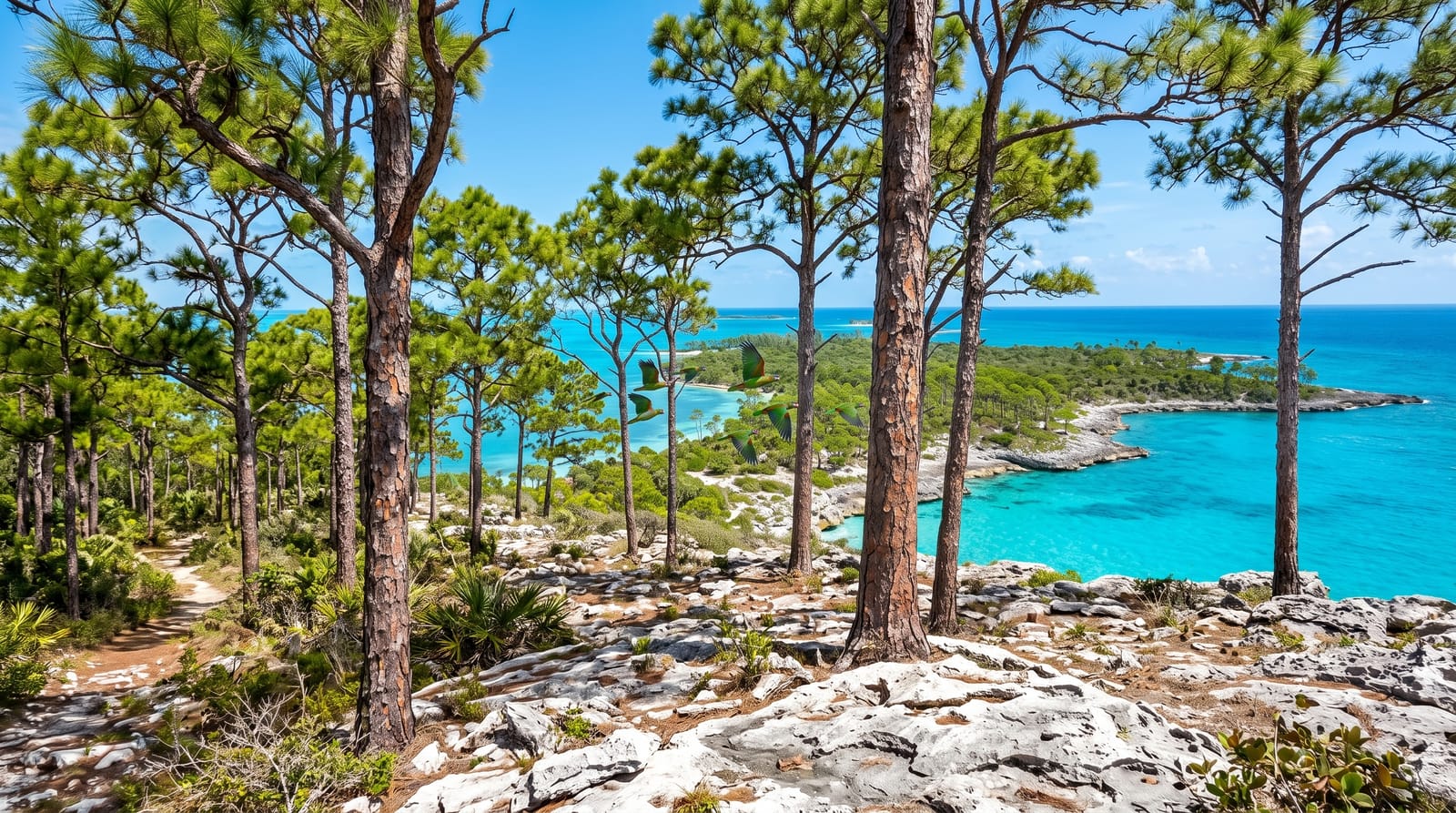
Pine forest at the southern end of Great Abaco protecting the ground-nesting Abaco parrot, which nests in limestone holes.
Updated 1 September 2026
AI illustration
The southern end of Great Abaco is covered in Caribbean pine, and around eighty square kilometres of it is protected for one bird: the Abaco parrot, a subspecies of the Cuban amazon found only here and on Inagua, and remarkable because unlike every other amazon parrot in the world it nests underground, in cavities and solution holes in the limestone beneath the pines. That habit protects the chicks from hurricanes and fire but exposes them to feral cats and raccoons, and the population has needed active predator control to recover. The park also holds the Bahama yellowthroat and the Bahama swallow, and a rough track runs south to the Hole-in-the-Wall lighthouse.
The landscape
- The Abaco parrot - the only ground-nesting amazon parrot in the world.
- The pine forest - Caribbean pine over limestone across the park.
- Endemic birds - Bahama yellowthroat, swallow and warbler.
- Hole-in-the-Wall - the lighthouse at the island's southern tip.
When to go
December to May is drier. Early morning is essential for parrots, which are most active and vocal at first light and again before dusk. A local guide makes the difference between seeing them and not.
Before you go
The track south is very rough and needs four-wheel drive; the road to Hole-in-the-Wall is worse and has been impassable at times. There are no facilities, no signage and no marked trails. Parrots are heard far more often than seen. Hurricane Dorian in 2019 hit the pine forest hard and the recovery is ongoing.
Nearby
Marsh Harbour is an hour north; Sandy Point is on the west coast.
Key facts
Source: Wikidata, item Q60767742, read on 18 October 2026.
What to pack for Abaco National Park
Chosen from what this place is for. Tap a kit for the full checklist.
- Broken-in walking shoes or boots - Grip and ankle support matter more than looks; never hike in brand-new boots. Find on Amazon
- Head torch + spare batteries - Hands-free light is essential; caves are truly dark. Find on Amazon
- Binoculars - The single best wildlife tool - even a compact pair transforms a sighting. Find on Amazon
- Layers + a waterproof shell - Mountain weather turns fast; a packable rain jacket saves the day. Find on Amazon
Some links on this page are Amazon affiliate links - if you buy through them we may earn a small commission at no extra cost to you.
All packing kitsPlan your trip
Where to start if Abaco National Park is going on the list.
Booking links on this page are affiliate links - if you book through them we may earn a small commission at no extra cost to you. It never changes what we write about a place.
Opening times, ticket prices and seasonal closures change - check the official source before you go: official site.