Hirkan National Park
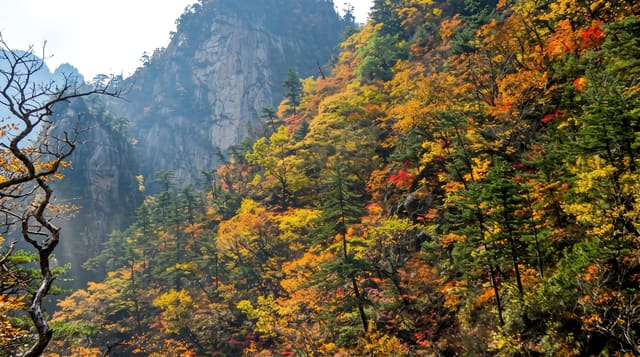
Relict broadleaf forest in the Talysh hills, part of the Hyrcanian Forests World Heritage property, with trees that survived the ice ages here.
Updated 1 September 2026
UNESCO World Heritage
The Hyrcanian forests run along the southern Caspian in a narrow belt, and they are old: broadleaf woodland whose lineage goes back tens of millions of years, sheltered from the glaciations that stripped the equivalent forest from the rest of Europe. Hirkan protects the Azerbaijani end of that belt and was inscribed as part of the transboundary Hyrcanian Forests World Heritage property in the 2023 extension. Ironwood, chestnut-leaved oak, Caucasian zelkova and silk acacia grow here, several of them found nowhere else, and the forest is dense, humid and full of moss.
Highlights
- The ironwood - Parrotia persica, with mottled bark and branches that graft into each other.
- The relict species - chestnut-leaved oak, zelkova and silk acacia, survivors of a much older forest.
- The forest structure - closed humid broadleaf woodland with heavy undergrowth and moss.
- The Talysh slopes - the hills the forest climbs, from near sea level up into cloud.
When to go
April to June is green and full, and September to November brings the colour, which in this forest is exceptional. Summer is hot and humid at low altitude. Rain is possible at any time of year and the tracks turn heavy.
Things to know
Trails are limited and poorly marked, and a guide from the park is the practical way to see anything beyond the entrance area. The Persian leopard is present in the wider area but is effectively never seen. Facilities are minimal and the access road is rough.
Nearby
Lankaran is half an hour east, and the road to Lerik climbs through the park.
Key facts
Source: Wikidata, item Q2383378, read on 18 October 2026.
What to pack for Hirkan National Park
Chosen from what this place is for. Tap a kit for the full checklist.
- Broken-in walking shoes or boots - Grip and ankle support matter more than looks; never hike in brand-new boots. Find on Amazon
- Binoculars - The single best wildlife tool - even a compact pair transforms a sighting. Find on Amazon
- Strong insect repellent - DEET or picaridin; the jungle is where bites and disease risk are highest. Find on Amazon
- Layers + a waterproof shell - Mountain weather turns fast; a packable rain jacket saves the day. Find on Amazon
Some links on this page are Amazon affiliate links - if you buy through them we may earn a small commission at no extra cost to you.
All packing kitsPlan your trip
Where to start if Hirkan National Park is going on the list.
Booking links on this page are affiliate links - if you book through them we may earn a small commission at no extra cost to you. It never changes what we write about a place.
Opening times, ticket prices and seasonal closures change - check the official source before you go: official site.