Parkes Radio Telescope
The 64-metre dish in a sheep paddock that carried television from the Moon in 1969 and still does front-line astronomy.
Updated 12 October 2026
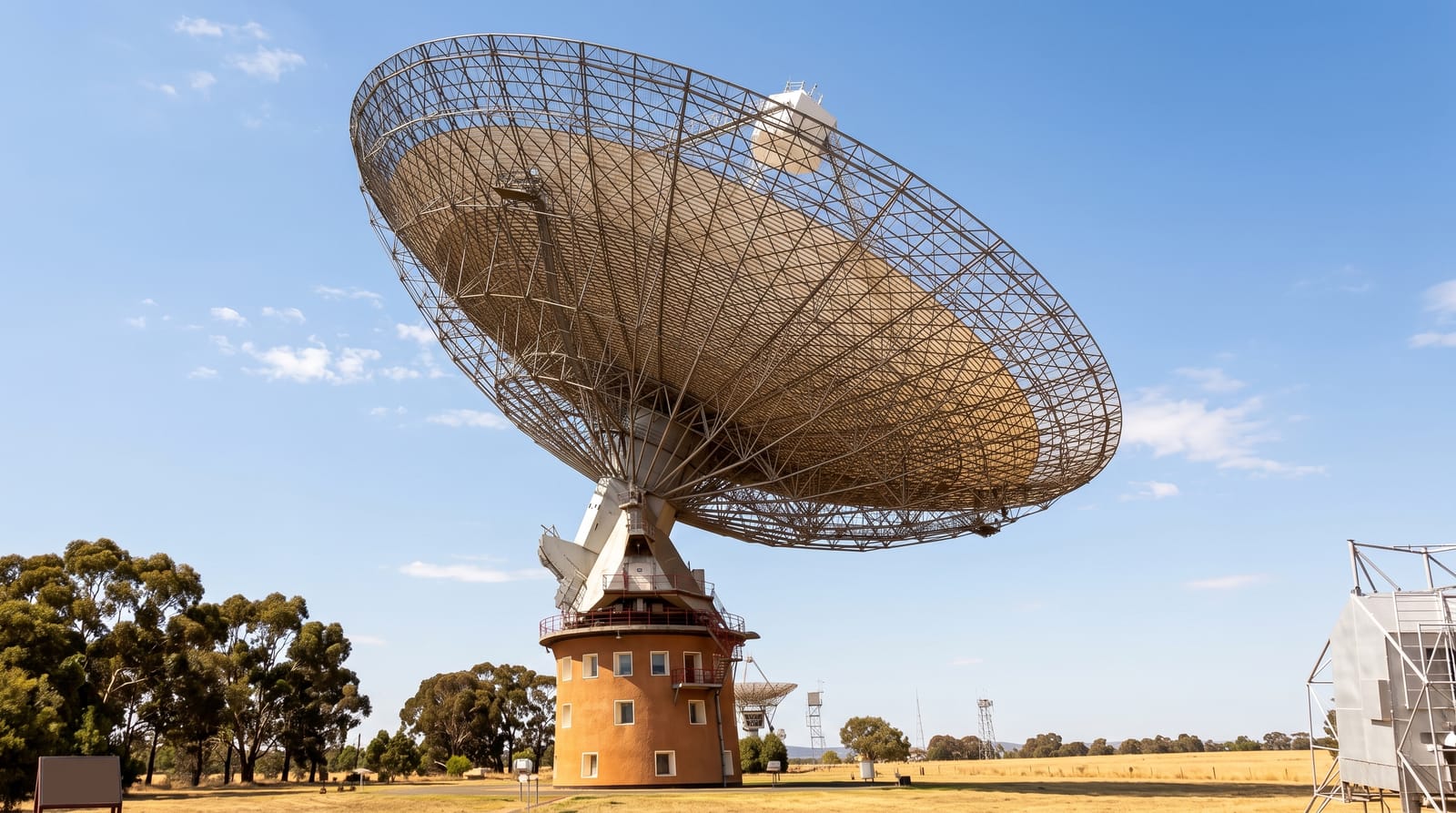
AI illustration
The Parkes radio telescope, known to Australians simply as the Dish and by its Wiradjuri name Murriyang, has been operating since 1961 and remains one of the most productive single-dish radio telescopes in the world, with a 64-metre steerable surface standing in open farmland. It received and relayed television signals from the Apollo 11 moonwalk in 1969, a story dramatised in a well-known Australian film, and it has since been central to pulsar astronomy, discovering a large share of the known pulsars, and to the study of fast radio bursts. A visitor centre at the base has exhibits, a café and a small cinema, and the dish is visible moving as it tracks.
Highlights
- The 64-metre dish - the telescope itself, often visibly slewing between targets.
- The visitor centre - exhibits on radio astronomy and the Apollo relay.
- The Apollo story - the 1969 moonwalk transmission told in detail.
- The paddock setting - the dish standing alone in flat farmland.
When to go
Year-round; the visitor centre opens daily with some closures on public holidays. The dish is an active research instrument, so it points wherever science requires. Clear days give the best photographs of the structure against the sky.
Before you go
Visitors cannot go up the dish or inside the control building; viewing is from the ground and the centre. Mobile phones and other transmitters must be kept off in some areas to avoid interference. The site is twenty kilometres from town with no public transport.
Nearby
Parkes town, known for its Elvis festival each January, lies south; Dubbo is northeast.
Key facts
Source: Wikidata, item Q148044, read on 18 October 2026.
What to pack for Parkes Radio Telescope
Chosen from what this place is for. Tap a kit for the full checklist.
- Spare batteries + cards - Cold and long shoots drain power; never run out at the good light. Find on Amazon
- Comfortable walking shoes - Sightseeing means kilometres of pavement and cobbles daily. Find on Amazon
- A compact tripod - Essential for night skies, aurora, waterfalls and low light. Find on Amazon
- A slim anti-theft daypack - Zips that close properly; keep it in front in crowds and on transit. Find on Amazon
Some links on this page are Amazon affiliate links - if you buy through them we may earn a small commission at no extra cost to you.
All packing kitsPlan your trip
Where to start if Parkes Radio Telescope is going on the list.
Booking links on this page are affiliate links - if you book through them we may earn a small commission at no extra cost to you. It never changes what we write about a place.
Opening times, ticket prices and seasonal closures change - check the official source before you go: official site.