Mount Gambier
A city built on a volcano whose crater lake turns brilliant blue each summer for reasons still not fully explained.
Updated 18 October 2026
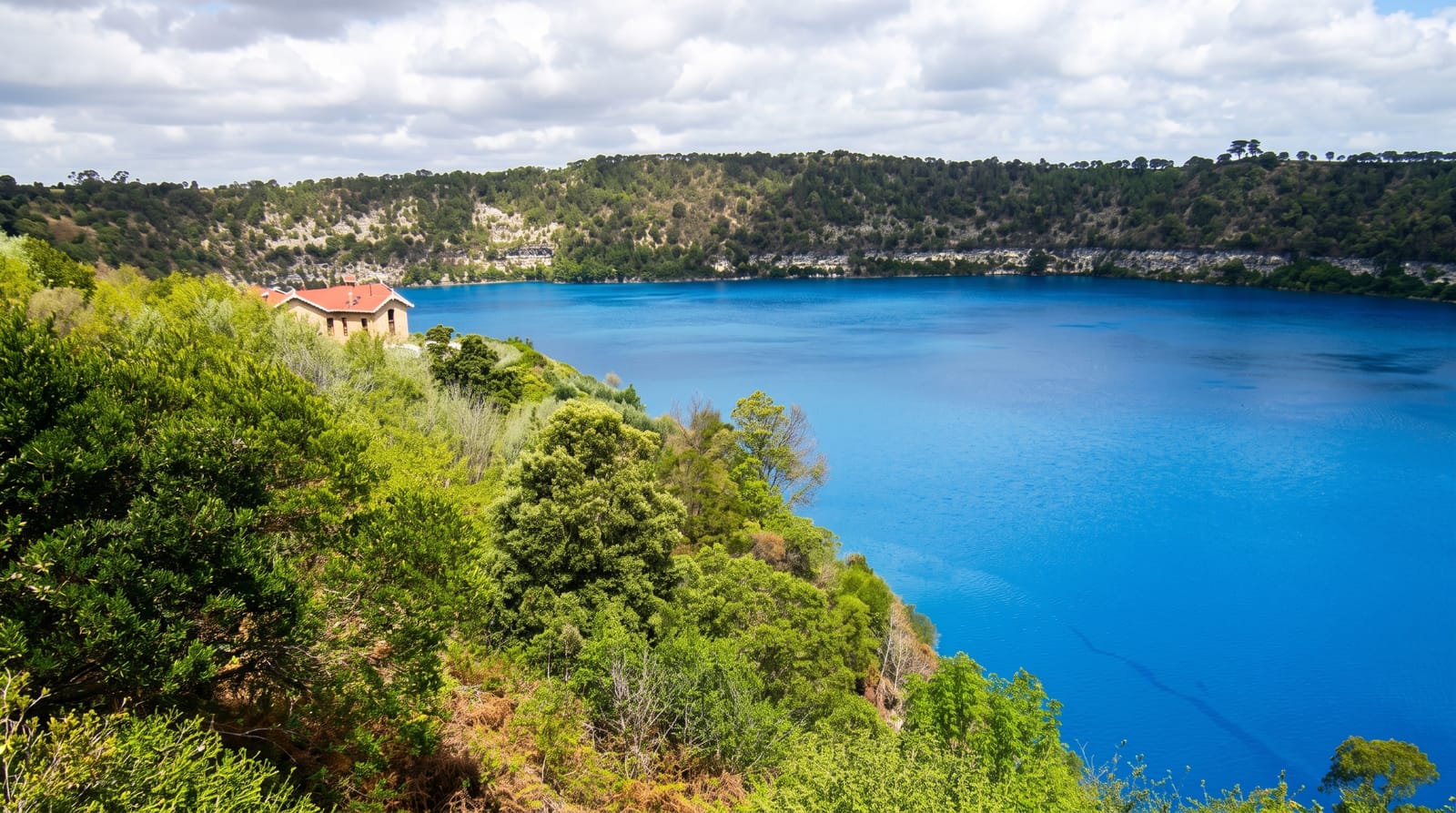
AI illustration
Mount Gambier sits on a volcanic complex that last erupted around five thousand years ago, and the city's water supply comes from the Blue Lake in one of its craters. Each year around November the lake changes from a dull steel grey to an intense cobalt blue, holds that colour through summer, and reverts in March, a shift linked to calcium carbonate crystallising in the warming water and scattering light, though the details are still studied. Beneath the city, limestone caves open directly into the streets: the Cave Garden is a sinkhole in the town centre with a waterfall, and Umpherston Sinkhole has been planted as a terraced garden reached by steps.
History
The Bungandidj people called the mountain Berrin and its peak ereng balam, home of the eagle hawk, and in 1800 Lieutenant James Grant of the survey brig Lady Nelson sighted the peak and named it after Admiral Lord Gambier, the first place named by the British in what became South Australia; the Centenary Tower on the summit marks that sighting. Stephen Henty, leading an overland party from Portland in 1839, was the first European to climb it and see the Blue Lake, the Henty brothers took up the land for a sheep station in 1842, and conflict with the Bungandidj followed the same year (Wikipedia, Mount Gambier).
Highlights
- The Blue Lake - the crater lake that turns cobalt each summer.
- Umpherston Sinkhole - a collapsed cave planted as a terraced garden.
- The Cave Garden - a sinkhole with a waterfall in the middle of the city.
- The volcanic craters - Valley Lake and the crater rim walks above town.
When to go
December to March for the blue colour, which fades by late autumn; from April to October the lake is grey. Umpherston Sinkhole is lit at night and possums come out to feed. Winter on the Limestone Coast is cold and wet.
Before you go
Outside summer the Blue Lake is genuinely grey and disappoints visitors who arrive expecting the photographs. The lake is a drinking water supply, so swimming and boating are prohibited. The city itself is a working regional centre.
Nearby
Piccaninnie Ponds and the coast lie south; Coonawarra and Penola are north.
Key facts
Source: Wikidata, item Q327348, read on 18 October 2026.
What to pack for Mount Gambier
Chosen from what this place is for. Tap a kit for the full checklist.
- Broken-in walking shoes or boots - Grip and ankle support matter more than looks; never hike in brand-new boots. Find on Amazon
- Reef-safe sunscreen - High SPF that will not bleach the coral you are swimming over. Find on Amazon
- Head torch + spare batteries - Hands-free light is essential; caves are truly dark. Find on Amazon
- Layers + a waterproof shell - Mountain weather turns fast; a packable rain jacket saves the day. Find on Amazon
Some links on this page are Amazon affiliate links - if you buy through them we may earn a small commission at no extra cost to you.
All packing kitsPlan your trip
Where to start if Mount Gambier is going on the list.
Booking links on this page are affiliate links - if you book through them we may earn a small commission at no extra cost to you. It never changes what we write about a place.
Opening times, ticket prices and seasonal closures change - check the official source before you go: official site.

