Innes National Park
Cliffs, surf and a shipwreck coast at the foot of Yorke Peninsula, with a gypsum ghost town in the scrub.
Updated 18 October 2026
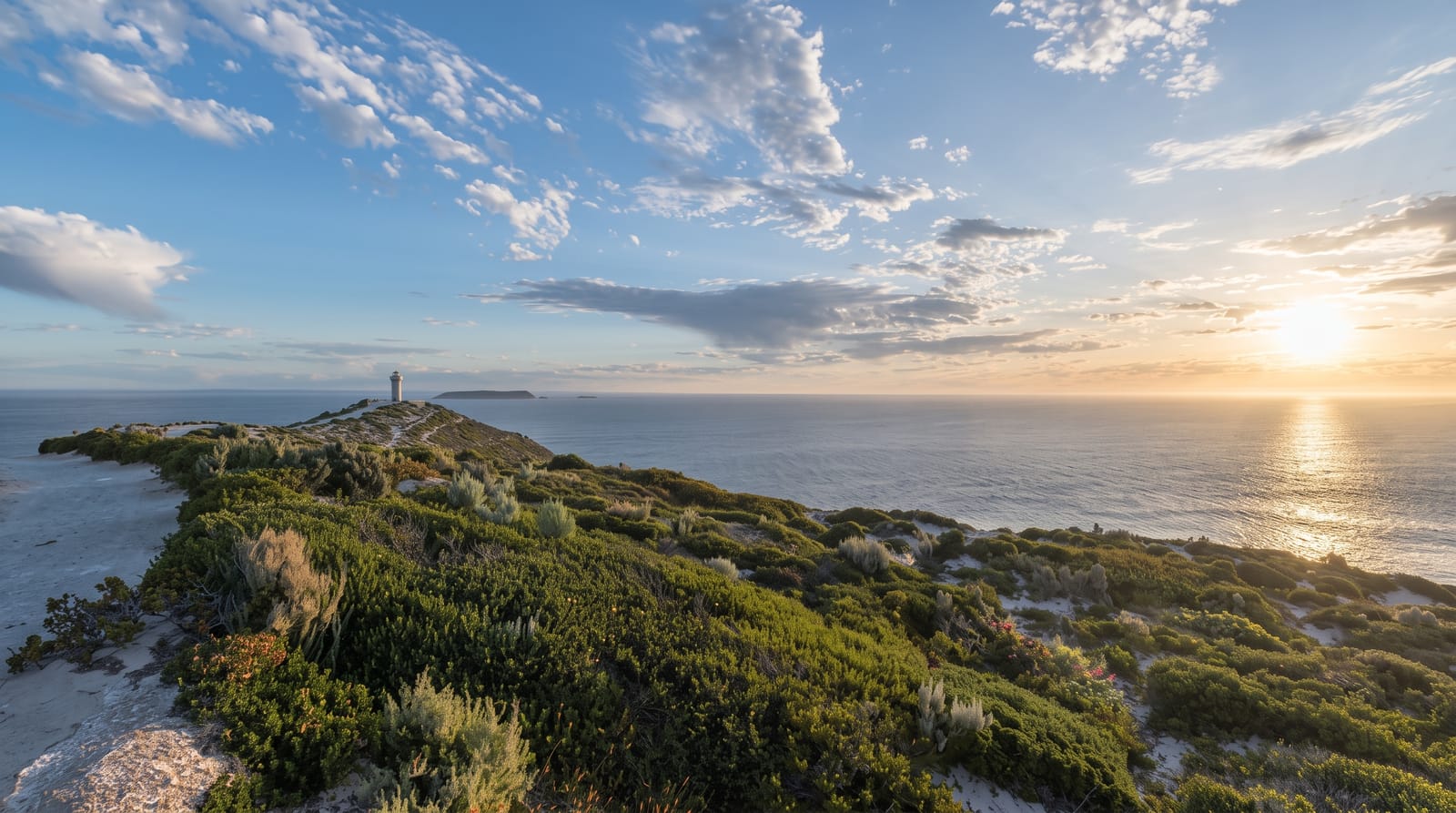
AI illustration
Innes covers the foot of the Yorke Peninsula where the gulf waters meet the Southern Ocean, a coast of limestone cliffs, granite headlands and surf beaches that has claimed dozens of ships, including the Ethel, whose rusted ribs lie on the beach named after her. Inland the park is low mallee scrub holding western whipbirds, ospreys and emus. Inneston, a company town built to mine gypsum, was abandoned in 1930 and its stone buildings survive, some restored as accommodation. Cape Spencer lighthouse looks out to Kangaroo Island across Investigator Strait, and Pondalowie Bay has a small fishing fleet and one of the state's better surf breaks. Since November 2020 the park has officially been Dhilba Guuranda-Innes National Park, co-managed with the Narungga people; this page keeps the earlier name.
History
The Narungga people, in four clans, have occupied the Yorke Peninsula for thousands of years, and European sheep grazing began near Cape Spencer in 1846. William Innes found commercial gypsum early in the 1900s and founded the mining town of Inneston in 1913, which reached about 500 people, until the Great Depression made mining uneconomic in 1930; in 1970 the town and land were sold to the state, and the park was declared on 5 March 1970 to protect the western whipbird, the malleefowl and the buildings of Inneston. It was renamed Dhilba Guuranda-Innes National Park on 14 November 2020 under a co-management agreement with the Narungga (Wikipedia, Dhilba Guuranda-Innes National Park).
Highlights
- The Ethel wreck - the rusted hull on the beach below the cliffs.
- Inneston - the abandoned gypsum town with restored stone buildings.
- Cape Spencer - the lighthouse and cliffs at the peninsula's tip.
- Pondalowie Bay - surf, fishing boats and dune-backed beach.
When to go
September to April for the best weather; winter is cold and windy but good for surf. Wildflowers in the mallee flower in spring. Campsites and lodges must be booked, and holidays fill them entirely.
Things to know
Vehicle entry is charged. The park is a three-and-a-half-hour drive from Adelaide, with limited supplies at the tip. Beaches have strong rips and are unpatrolled. Wind on the cliffs is close to constant.
Nearby
Marion Bay is the nearest village; Moonta and the copper coast lie north.
Key facts
Source: Wikidata, item Q1234100, read on 18 October 2026.
What to pack for Innes National Park
Chosen from what this place is for. Tap a kit for the full checklist.
- Broken-in walking shoes or boots - Grip and ankle support matter more than looks; never hike in brand-new boots. Find on Amazon
- Travel rod + reel - A packable multi-piece rod fits in a case and covers most holiday fishing. Find on Amazon
- Reef-safe sunscreen - High SPF that will not bleach the coral you are swimming over. Find on Amazon
- Quick-dry clothing - Board shorts or synthetics that shrug off spray and dry fast. Find on Amazon
Some links on this page are Amazon affiliate links - if you buy through them we may earn a small commission at no extra cost to you.
All packing kitsPlan your trip
Where to start if Innes National Park is going on the list.
Booking links on this page are affiliate links - if you book through them we may earn a small commission at no extra cost to you. It never changes what we write about a place.
Opening times, ticket prices and seasonal closures change - check the official source before you go: official site.