Hanging Rock
A jumble of volcanic pinnacles and boulders in the Macedon Ranges, made famous by a novel about girls who vanished there.
Updated 4 September 2026
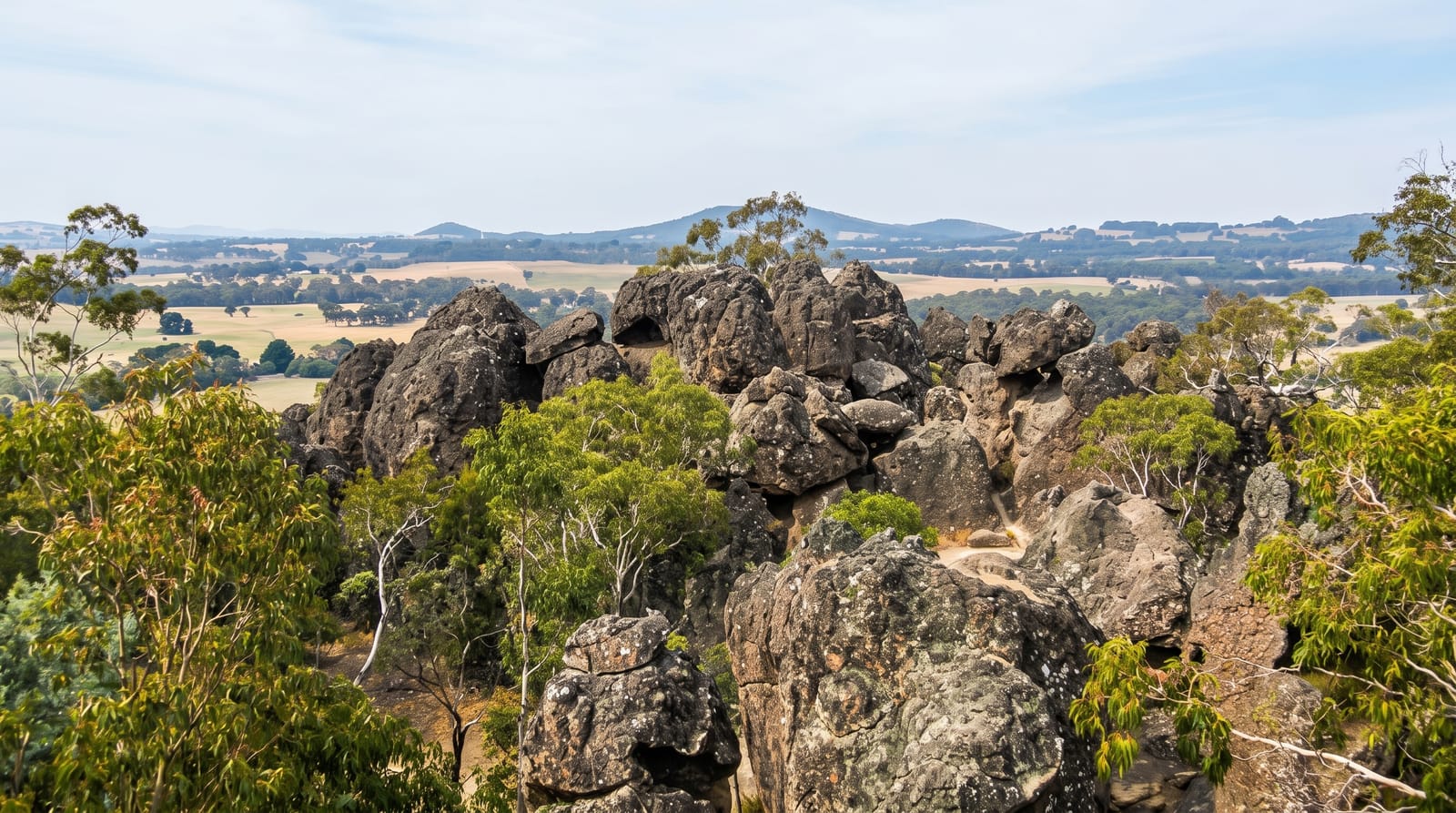
AI illustration
Hanging Rock is a mamelon, formed when unusually stiff lava was pushed up around six million years ago and solidified into a mass that erosion has since broken into pinnacles, balancing boulders and narrow passages. A track climbs about a hundred metres through them to the summit, past features named the Colonnade, the Hanging Rock itself and the Black Hole of Calcutta. The site is significant to the Wurundjeri and Dja Dja Wurrung peoples. Its wider fame comes from Joan Lindsay's 1967 novel about schoolgirls disappearing here on Valentine's Day 1900 and the film made of it, a fiction that many visitors still half-believe. Concerts and horse races are held on the flat below.
What you'll find
- The rock passages - narrow gaps and balancing boulders on the climb.
- The summit view - the Macedon Ranges and plains from the top.
- The named features - the Colonnade, Hanging Rock and other formations.
- The reserve below - picnic grounds, racecourse and concert lawn.
When to go
September to May; spring gives the greenest surroundings and summer can be hot on the exposed rock. The climb takes around thirty to forty minutes. Concerts and race days restrict access and fill the car parks.
Practical notes
The disappearance in the novel is fiction, not history, and there is no mystery to investigate. Vehicle entry is charged. The path is steep with uneven rock steps, and the summit area is small and crowded at peak times.
Nearby
Woodend and Mount Macedon are close; Daylesford lies west.
What to pack for Hanging Rock
Chosen from what this place is for. Tap a kit for the full checklist.
- Broken-in walking shoes or boots - Grip and ankle support matter more than looks; never hike in brand-new boots. Find on Amazon
- Layers + a waterproof shell - Mountain weather turns fast; a packable rain jacket saves the day. Find on Amazon
- Daypack with rain cover - 20-30 litres holds water, snacks, layers and a first-aid kit. Find on Amazon
- Offline maps + a power bank - Download the trail before you lose signal; carry backup charge. Find on Amazon
Some links on this page are Amazon affiliate links - if you buy through them we may earn a small commission at no extra cost to you.
All packing kitsPlan your trip
Where to start if Hanging Rock is going on the list.
Booking links on this page are affiliate links - if you book through them we may earn a small commission at no extra cost to you. It never changes what we write about a place.
Opening times, ticket prices and seasonal closures change - check the official source before you go: official site.


