Cutta Cutta Caves
Tropical limestone caves south of Katherine holding rare orange horseshoe bats and brown tree snakes in the ceiling.
Updated 4 September 2026
AI illustration
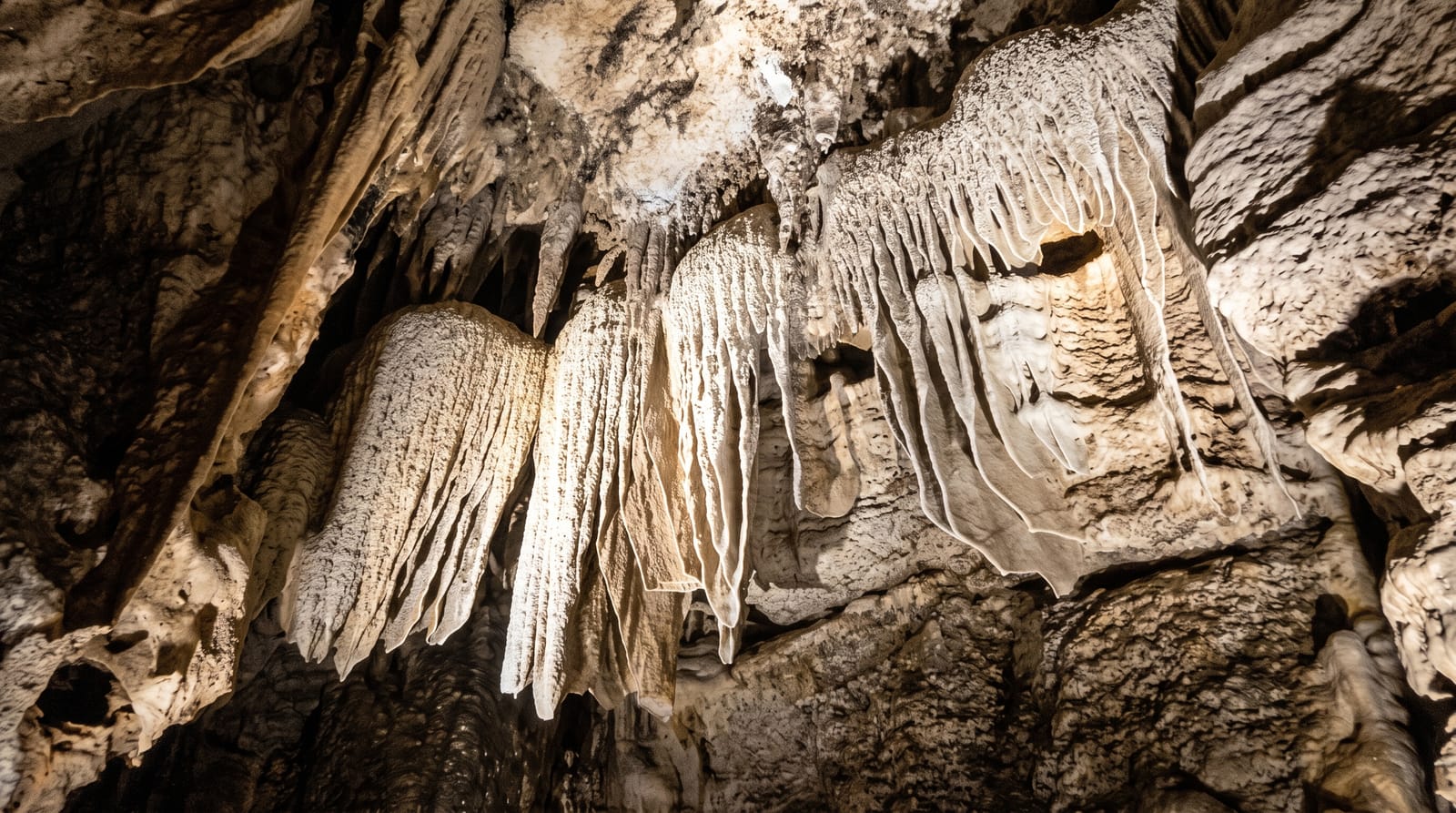
Cutta Cutta is one of the few tropical limestone cave systems in Australia open to visitors, formed in rock laid down some five hundred million years ago and cut by water that still rises into the lower chambers each wet season. Guided tours run through the main cave past stalactites, columns and shawls, and the wildlife is the distinguishing feature: orange horseshoe bats, a rare and vulnerable species, roost here in one of their few known colonies, along with ghost bats, and brown tree snakes hunt them in the ceiling. The name means many stars in the Jawoyn language. The caves flood during the wet and tours are suspended when water levels rise.
What you'll find
- The orange horseshoe bats - a rare colony roosting in the chambers.
- The brown tree snakes - hunting bats along the cave ceiling.
- The formations - stalactites, columns and shawls in tropical limestone.
- The flood marks - evidence of wet season water filling the lower cave.
When to go
May to September; the caves flood in the wet season and tours close, sometimes for months. Tours run to a set daily schedule and should be confirmed before travelling. The cave is warm and humid, unlike most show caves.
Good to know
Access is by guided tour only, at fixed times, and the caves close in the wet. The interior is hot and humid rather than cool. Bats and snakes are the highlight for some and unwelcome for others.
Nearby
Katherine and Nitmiluk Gorge lie north; Mataranka is south.
Key facts
Source: Wikidata, item Q136433980, read on 18 October 2026.
What to pack for Cutta Cutta Caves
Chosen from what this place is for. Tap a kit for the full checklist.
- Broken-in walking shoes or boots - Grip and ankle support matter more than looks; never hike in brand-new boots. Find on Amazon
- Head torch + spare batteries - Hands-free light is essential; caves are truly dark. Find on Amazon
- Binoculars - The single best wildlife tool - even a compact pair transforms a sighting. Find on Amazon
- Strong insect repellent - DEET or picaridin; the jungle is where bites and disease risk are highest. Find on Amazon
Some links on this page are Amazon affiliate links - if you buy through them we may earn a small commission at no extra cost to you.
All packing kitsPlan your trip
Where to start if Cutta Cutta Caves is going on the list.
Booking links on this page are affiliate links - if you book through them we may earn a small commission at no extra cost to you. It never changes what we write about a place.
Opening times, ticket prices and seasonal closures change - check the official source before you go: official site.