Noravank
A thirteenth-century monastery in a gorge of red cliffs, with a two-storey church climbed by narrow stone stairs on its face.
Updated 18 October 2026
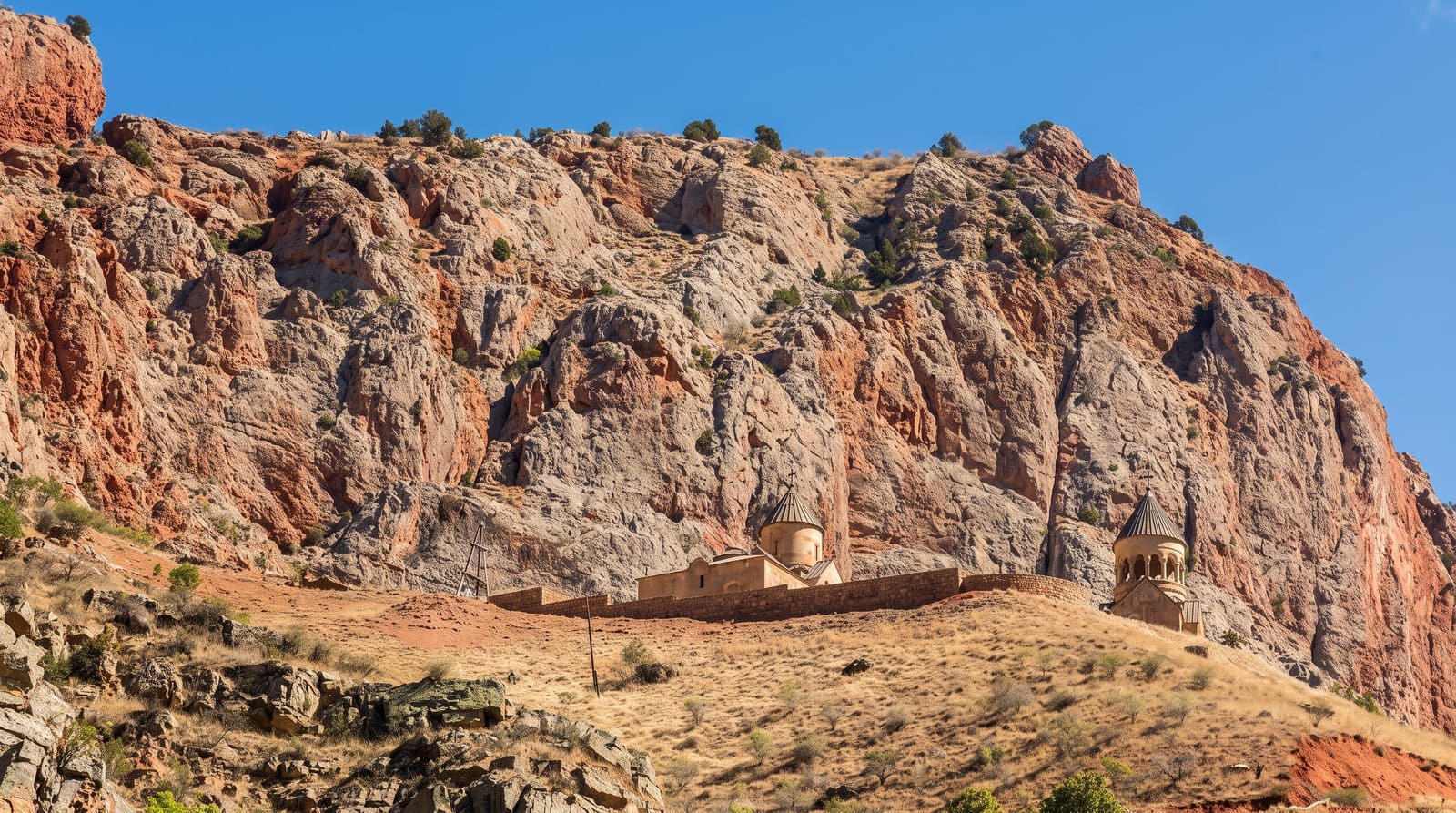
AI illustration
Noravank sits at the head of a narrow gorge whose walls are brick-red limestone, and the approach road twists between them before opening onto a small plateau with the monastery on it. The colour match between the tufa buildings and the cliffs is the reason photographers come at the end of the day, when both glow. The Surb Astvatsatsin church of 1339 is the remarkable one: two storeys, with the upper chapel reached by narrow cantilevered stone steps projecting straight out of the west facade, no handrail, an ascent that concentrates the mind. Much of the carving is attributed to the sculptor and miniaturist Momik, including tympanum reliefs of God the Father and the Virgin that are unusual in Armenian church art.
History
Bishop Hovhannes, a former abbot of Vahanavank near Kapan, founded the monastery in 1105, and in the 13th and 14th centuries it was the residence of the bishops of Syunik and of the Orbelian princes, a major religious and cultural centre closely tied to the university and library of Gladzor. The architect Siranes and the miniaturist and sculptor Momik worked here in the late 13th and early 14th centuries (Wikipedia, Noravank).
Highlights
- Surb Astvatsatsin - the two-storey church with cantilevered exterior stairs.
- Momik's carvings - tympanum reliefs and khachkars by the fourteenth-century master.
- The red gorge - the drive in between brick-red cliffs.
- Khachkars - carved cross-stones in the monastery yard.
When to go
May to October; the gorge road can be icy in winter. Late afternoon light on the red rock and tufa is the reason to time a visit for the last hours, and the site is quietest then too.
Good to know
The exterior stairs to the upper chapel are narrow, steep and have no railing, with a real drop; plenty of visitors climb up and then find coming down much harder. There is little shade on the plateau. The site is a standard stop on Yerevan day tours, so mid-morning brings coaches.
Nearby
Areni's wine caves and the Areni-1 cave are on the main road; Jermuk lies further north-east.
Key facts
Source: Wikidata, item Q1474586, read on 18 October 2026.
What to pack for Noravank
Chosen from what this place is for. Tap a kit for the full checklist.
- Head torch + spare batteries - Hands-free light is essential; caves are truly dark. Find on Amazon
- Comfortable walking shoes - Sightseeing means kilometres of pavement and cobbles daily. Find on Amazon
- Modest clothing - Shoulders and knees covered - the single most common requirement. Find on Amazon
- Grippy closed shoes - Cave floors are wet, muddy and slick with formations. Find on Amazon
Some links on this page are Amazon affiliate links - if you buy through them we may earn a small commission at no extra cost to you.
All packing kitsPlan your trip
Where to start if Noravank is going on the list.
Booking links on this page are affiliate links - if you book through them we may earn a small commission at no extra cost to you. It never changes what we write about a place.
Opening times, ticket prices and seasonal closures change - check the official source before you go: official site.